October 17th, 2014 §
My last post (“The Hardest Conversation”) showed you what a conversation with my teen daughter was like when we talked about my diagnosis of metastatic breast cancer in 2012. Today I wanted to share a conversation with my youngest child (now 8) that happened last year so you can see the variation in what their concerns were and how I dealt with each one.
As always, with cancer, age-appropriate explanations are important. Another vital piece of advice I’d like to share is that with all children, but especially young children, it is important to talk more than once about the topic. At the end of the first conversation I recommend asking young children, “Can you tell me what we talked about today?” to see if they have absorbed the most important pieces of information and that these pieces are correct. A day or two later it is always a good idea to ask, “Now that you’ve had time to think about our chat, do you have any questions?”
The following post was written in late 2013 on the eve of the surgery to put my medi-port in.
………………………………………………
 “Why do you have to have surgery tomorrow?” seven year-old Tristan asks from the back seat after we drop off his 11 and 15 year old siblings this morning.
“Because I need to have something put in my body called a port. It’s a little container made of something cool called titanium that lets the doctors put some of my medicines into my body in an easier way.”
“Can you see it?”
“Yes, you will be able to see that there is a lump under my skin, about the size of a quarter. But you will only see the lump. You won’t see the actual thing because that will be inside my body. You know how I have the scar on the front of my neck? It will be like that, here, off to the side, same size scar but with a bump under it.”
“Is it like the bubble I had on my neck when I was a baby?”
“Well, that was a skin tag, so that was a lot smaller. And they were taking that away. This is something they are putting in to help make it easier to get some of my medicines. And you know when you go with me and I have blood taken from my hand? Well now sometimes they will be able to just take it from there instead. So it helps with a few jobs.”
“Will you have it forever or do they take it out when your cancer goes away?”
(Driving the car, trying to keep tears in check, knowing this is a vitally important conversation. I’ve explained this to him before but I know it’s hard for him to understand.)
“Well, honey, remember I had cancer when you were a baby? Well, this time the cancer is different. A lot of the time you can have cancer and the medicines and surgeries make it go away and it stays away for a long, long time. Maybe even forever. Sometimes any cancer cells that might be left go to sleep and just stay that way. Sometimes you have bad luck and they wake up. Mine woke up after six years. And now the cancer cells are in places that I won’t be able to get rid of them all for good. I am always going to have cancer. This time my cancer is the kind that is always going to be here.”
“You’ll always need medicine. And the thing they are putting in?”
“Yes, honey, I will always need medicine for my cancer. And I will probably need to have the port in forever too.”
Long silence.
“I am glad you are asking me questions about it. I want you to always ask me anything. I will try to explain everything to you. I know it’s complicated. It’s complicated even for grownups to understand.”
Long silence.
“Mom, did you know people whose eyes can’t see use the ridges on the sides of coins to tell which one they are holding? So if you have a big coin with ridges that person would know it is a quarter?”
“That makes sense. How did you learn that?”
“At school. And so if it’s smooth you know it’s a nickel or penny. It’s important that they know what coin it is.”
“I think you’re right. That is very clever.”
( I stay quiet waiting to see where he will take the conversation next.)
“Remember when my ear tube fell out and was trapped in my ear and the doctor pulled it out and I got to see it? It was smaller than I thought it would be.”
“Yes, I thought the same thing.”
“I really wanted to see it. I wanted to see what it looked like.”
“Me too.”
“Can you show me a picture of it?”
“Of what?”
“The thing for tomorrow.”
“The port?”
“Yes. Or don’t you know what it will look like?”
“I know what it will look like. Sure, I will show you on the computer after school.”
“Okay.”
“It’s time for school but I am glad we talked about this. I want you to keep asking questions when you don’t understand something. I love you, Tristan. I hope you know how much. I know this is hard for all of us. I wish it were different. But we are going to keep helping each other. And talking about all of this is good. We can do that whenever you want.”
October 15th, 2014 §
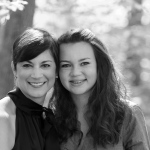 From the time my oldest child, Paige, was born everyone kept telling me, “Just you wait.”
When she made it through the terrible twos without much of a tantrum everyone kept telling me, “Just you wait.”
When she made it through elementary school and a move from NYC without trouble they kept saying, “Just you wait.”
“Just you wait,” they said, “girls are drama. You got lucky before. But the teen years? Oh boy… just you wait.”
Today she prepared me a bowl of soup and brought it up to my bedroom. I was resting after my surgery to remove malignant lymph nodes and tissue for testing yesterday, the room was dark. I invited her to come snuggle with me in the big bed. We’ve never let our children sleep in our bed so they think climbing in is a big treat.
I asked her if she wanted to talk about what was going on, about my news about having metastatic breast cancer. She did.
And so it began: an hour-long talk that started with her first question, “Are you scared?”
She asked questions about genetics and risks of getting cancer to what kind of treatments I might need.
She asked me again, as if to confirm for herself, “It’s not curable, right?”
We talked about my writing, about being public with my health status, about being open and honest with her and her brothers.
I told her that yes, I was scared. I explained that my fear usually comes from the unknown, in this case just how I will respond to treatments. I told her it was okay to be scared. That it’s normal, that sometimes fear makes you brave enough to do things you don’t think you can otherwise do.
I told her that I understood that sickness could be scary, that I didn’t want her to be afraid of me as I got sicker someday. “I would never be afraid of you, Mom. I’m only afraid of cancer,” she said. My heart squeezed and thrashed and the tears flowed.
We talked about her desire to be a doctor, a surgeon. She wanted to know what all of my surgeries and treatments had done. She wanted to know the difference between cancer “stage” and “grade.” We talked about the genetics of breast cancer and discussed the BRCA-1 and 2 genes (which I do not have). We talked about hormones and their role in puberty, menopause, and cancer. She wanted to know why outcomes are so variable. How will we know if treatments are working? I told her about the importance of her monitoring her own health, how hopefully we will have better screenings down the road.
I told her that for now I want her to live her life, for our house to be as normal as it can be for as long as it can be.
I told her she should try to focus on her schoolwork, her sports, and her friends. She told me that I was more important.
I told her that eventually I might need someone to help take care of me. “I will take care of you, Mom. You’ve always taken care of us,” she said.
We talked about her brothers, ages 11 and 6 and how she was going to have to help them. And her dad too. “I’m really good with hospitals and medical things, Mom… I’m just like you.”
She said she liked that I was open about it. That people knew. She thought it was best to be honest and appreciated the offers of support she’d received from friends and adults she knows.
I told her that what we were doing, lying there talking for an hour together about this, was the most important thing we could be doing today. I told her there wasn’t anything more important to me than my family. My job is to help them deal with this. Whatever this is.
I explained that what she needed from me would likely differ from what her brothers need; she is older and each of them would have different needs along the way. It’s my job to figure that out and address it. And my husband’s job now, too. How I take the lead on this will be important.
She asked if that was a lot of pressure, to have so many people reading my words, watching what I was doing. I told her it was. I told her it was my way of trying to help people. The same way that she wants to be a doctor to help others… well, I have always tried to see if I could help in my own way. And the way we talked before about the unknown being what’s scary? Well, my writing here means it’s less mysterious. Knowledge helps. Even if the knowledge is not what you want to hear, knowing is better.
Denial won’t change the course of things, and often makes things worse.
Secrecy is bad. Sharing and supporting are what I champion. And I know that de-mystification is a constant effort. I will continue to teach my children daily. I said I hoped that somewhere in all of this she could see how important science and medicine are in my world. And that if she does decide to be a doctor that is a noble effort. She will make me proud in whatever she does. As will my boys.
The funny thing is how much better I felt after we talked. The conversation was the hardest one I’ve had. The topics are gut-wrenching. But shining the light on them, on this disease, on what happens next, is the only way I know to cope, to help, to keep going.
We talked on and on as I combed my fingers through her long hair. I stroked her smooth, soft cheek. She was giving me strength.
And what I realized about people saying I should just wait because she’s going to eventually act out:
Waiting is a luxury.
Waiting means having time.
And that’s what I want most in this world right now.
October 12th, 2014 §

I make sure my family goes on trips without me now.
It is important that they learn to be without me.
Important that they get time away from here.
Important that they know there can be fun and joy even if I am not with them.
This is what I want.
This is what will be.
It is not easy to be the family of someone who is ill.
I know this is true.
And so I send them away to laugh, to be together, to have fun.
This is what I unselfishly demand.
In April of 2013 we all went to Florida. I didn’t know it would be our last trip together for a while. I could not focus very well. I just knew that life was not the same and it never could be. I had learned about six months earlier that I had metastatic breast cancer. I knew I would never be carefree again. I had intended to stay away from writing for that time, but on this particular day, in this moment, all I could do was realize the agony that was my situation. When I got back to the hotel room I wrote the words that had been in my head.
…………………………………………………
“Floating Away”
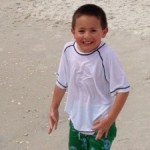 I sit on the beach, feel the sand’s angry texture rub my chemo feet in a way I wish it wouldn’t.
I watch my family in the ocean, turquoise and calm and vast.
My husband flips over, face in the water, takes some strokes out to sea.
His movement is graceful, effortless, just as it was the when I met him 22 years ago.
He was a sprinter on the college swim team then,
and while he laughs and says it doesn’t feel effortless anymore,
nor perhaps fast,
it does not matter.
In my mind’s eye he is that young man,
swimming fast,
joking with his team,
coming over to the stands to talk to me while chewing on the strap of his racing goggles.
I fall in love with him again every time I see him swim.
My three children float, bobbing in the ocean water.
I can feel the distance between us, it feels like a lifetime.
It is my family in the ocean floating away from me.
I see the quartet, I watch as an outsider.
I do this a lot lately.
I watch them from afar and think how it will be without me.
A new family unit.
Behind the big black sunglasses my tears stream down.
Suddenly Tristan is running from the water to me, across the sand.
He stands, dripping, face beaming.
“I just wanted to tell you I love you, Mama.”
I take his picture.
I capture the sweetness.
I grab him, hug him, feeling the cold ocean water on him, melding it to my hot skin.
I murmur to him what a sweet boy he is, that he must never lose that.
I send him back to the ocean, away, so I can cry harder.
By the time they return to shore I’ll have myself composed.
But my oldest immediately senses something amiss.
She mouths to me, “Are you okay?” and pantomimes tears rolling down her cheeks.
Yes, I nod.
I walk to the water’s edge to prove it.
October 7th, 2014 §
 There’s salt on my blue jeans
And rain left in my hair.
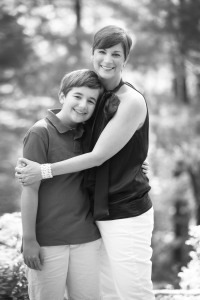
There is a spot of dirt behind his left ear
And mud on his shoes.
I don’t wipe the spot of dirt off.
I stare at it throughout the drive.
I think of when he was a baby, a toddler, a boy.
Now he approaches manhood,
A time when most young men would pull away.
He does not.
He still hugs me in public.
He tells me he loves me.
He doesn’t mind if anyone hears me tell him the same.
He is still mine for a little while longer.
As I contemplate the dirty spot,
I hear the words.
They write themselves
As they often do.
The salt, the dirt, the refrain.
“There is so much left to do.”
It is a track stuck on repeat.
Every moment of my life now it plays.
I showed him a better hamburger today,
He will remember that.
I reminded him about bringing dry socks to the game.
I am quite sure he will forget about that.
I can’t help but smile every time he looks my way.
Or waves from the mound.
During the delay he caught rain in a water bottle,
Shrugged his shoulders when I caught his eye.
He beamed his impish grin.
Later he asks me, “Do you need help?”
He thanks me for coming to his game.
He always thanks me.
He knows.
The salt is gone from my jeans.
The rain in my hair has long since dried.
The dirt and mud are gone too.
But there is so much left to do.
October 3rd, 2014 §
 It seems like you can’t rank anguish. You shouldn’t be able to “out-suffer” someone. How do you quantify misery?
And yet, somehow we do.
“My problems are nowhere near as bad as yours are.”
“I feel terrible complaining to you about it when you are going through so much yourself.”
I hear these types of comments all the time.
I make these types of comments all the time.
Placing ourselves in a hierarchy of pain and suffering serves to ground us; no matter how bad our situation is, there’s comfort in knowing there is always someone who has it worse.
Like being on a really, really long line at the movies or at airport security, as long as there is someone behind you, it somehow seems better.
Hospitals use a pain rating scale: “On a scale of 1 to 10, how bad is your pain?” When our son Colin was in the hospital for 9 days with a ruptured appendix, they asked him to rate his pain. I was intrigued at his difficulty in answering the question. At the time he was 5 years old and didn’t understand what they wanted him to do. Colin didn’t understand the concept of comparing one level of pain to another; His abdomen hurt… that’s all he knew. He used a binary scale to assess his pain: did it hurt or not? As adults we know better: pain is not a yes-or-no question. Rather, there can be levels, ranking, quantification, and comparisons.
These mental exercises are necessary to keep us going through hard times, no matter what type. Before I got cancer, cancer was a “go-to” negative reference point. I mean, how many times had I, and everyone I know, thought or said, “I’ve got health problems, but at least it’s not cancer”?
I had done that a lot.
A benign lump needs to come out? At least it’s not cancer.
A mole needs to be removed? At least it’s not cancer.
My son has hand and neck deformities and a cyst in his spinal column? At least it’s not cancer.
Then one day it was cancer.
So what could I pacify myself with?
At least it’s not terminal.
At least they can remove the body parts the cancer is in.
At least this debilitating treatment will be temporary and I have the possibility of returning to a normal life again.
Then there was the big one: at least it’s happening to me and not my child.
And when I found out that my cancer had metastasized, I could not calm myself with those comforting refrains anymore.
Now it is terminal.
Now they can’t remove the body parts it is in.
Now the debilitating treatments are permanent and I don’t have the possibility of returning to anything close to a normal life again.
I have often said I have hated becoming anyone’s negative reference point. “At least I’m not her” people now often think of me. I always thought that meant they pitied me. I didn’t want that. But now I realize that it is okay for people to be glad they haven’t walked in my shoes– in reality, that’s what I want. I don’t want anyone to be where I have been and where I am; I’d like to be the lightning rod that keeps other people safe. But we all know it doesn’t work like that.
Denial has never worked for me.
Denial doesn’t kill cancer.
I still believe it could be worse.
I know that is true.
And so, for today, I focus on the fact that I’m not the last one on line.
On the really challenging days sometimes that knowledge is all I have.
And on those days, that knowledge is enough.
October 1st, 2014 §
 Today is October 1st. It is officially Breast Cancer Awareness Month. To me every month is Breast Cancer Awareness Month. I will have breast cancer for every minute of the rest of my life. I need no reminder of what this disease is, what it does, what it can do.
To me, it isn’t about pink products, or a five mile walk, or a bake sale. It’s about life and death. My life and death. It is about having cancer detected early and doing everything possible and still being diagnosed more than five years later with stage IV disease.
October 1, 2012 was the day I found out I had metastatic breast cancer. That was the day my life changed.
The average life expectancy after diagnosis is given as 26 months. Today marks 24 months from my date of diagnosis.
I have a lot to say about October, about research, about education, about how those of us with incurable breast cancer are mostly forgotten. I want to do my part to make the voices of people with metastatic breast cancer heard. I will be posting the link a lot this month to the fund I’ve established at Memorial Sloan-Kettering for research into metastatic breast cancer. This month I will also repost some of my own favorite blogposts and also my most-read pieces. I hope you will find posts you have never seen before and find something new in a post you might have read when I first published it.
Some will be practical advice pieces. Some will be purely poetic. Some will be about me, some will be about our children.
I find that when I re-read a piece I find something different in it because I, the reader, am different. I encourage you to tell me posts that have resonated with you throughout the years that you would like to see again or want others to see.
I’m starting the re-posts today with a piece I wrote only about 6 weeks after my diagnosis of metastatic breast cancer.
……………………………………….
“And Yet the Morning Comes”
Each day is different. Each moment, too.
It still seems surreal, this diagnosis of metastatic breast cancer.
It’s strange how quickly the horrific can become regular: the chemo, the side effects, the new routines.
Oncology appointments, IV infusions, medication refills all start to fill my calendar.
I start making lists of things I need to do. I prioritize them.
It’s not always about what’s actually the most important, it’s also about finding things that bring me small moments of joy.
The small moments are the ones that bring tears to my eyes. Tristan’s little voice saying, “I love you, Mama. You’re the best Mama in the whole wide world” is enough to make me misty.
I still lose my temper. I still yell sometimes. Often it’s misplaced anger, a manifestation of my frustration with my situation.
I haven’t suddenly turned into the world’s most patient person. Sometimes cancer makes me the most impatient one, in fact. I feel the clock is ticking. I don’t have time for nonsense. But that’s not a way to be. I will still try to be better.
I try to be the one to do things with my children as much as I can. Even if there is a babysitter in the house Tristan always reads to me at night for his homework: that is sacred. I still save artwork and photographs and remind them to brush their teeth and clean their rooms.
I try to do the little things: helping Colin with a school project, keeping Paige company while she does homework, watching a sports practice if I can. I go to the grocery store and I work on the holiday card. I still take pleasure in getting the stubborn stain out of Clarke’s dress shirt that the dry cleaner couldn’t.
My motto is that I will do as much as I can for as long as I can.
I don’t ever have a moment that I forget about my cancer. I think that’s the part about it being new. Even when I was diagnosed the first time — even after I finished chemo and surgery and all of it– it still took at least a year for me to be able to push the daily fear down. Of course now the fear has been realized. I am living it. I am living my nightmare, one many people share.
And yet, the morning comes.
I see the light of day and I get out of bed. I see the faces of my children. I kiss my husband goodbye when he leaves for work. Each day I have is a day that matters. Each day is one to make a memory with my family and friends.
Each day is one more than I had the day before.
But let’s be clear: there is no joy in this disease.
My appreciation for my days should not be interpreted as supporting the nonsensical idea that “cancer is a gift.” There is nothing positive about this disease; I would give it back if I could. I did not need cancer to show me the value of things. I always knew these things were true. I never took them for granted. I knew what demons could be lurking.
I did all I could. It was not enough to keep it at bay. But maybe, just maybe, I can keep it at bay for a while.
I still haven’t fully come to terms with what this diagnosis means, but that’s because there’s no real way to know. We don’t know enough yet. It is the uncertainty that is the most difficult part for me. Will this chemo be the one that lasts for a while? Will it fail? When? What next? How long will that one last? My body holds the answers, but it’s not showing its hand yet.
I have to learn to ride this roller coaster. I’m just not there yet. And I don’t really know how long that is going to take.
I walk past people on the street and know they have no idea what is going on inside my body.
People in front of me in line at the gas station don’t know there’s chemo in my purse.
I look like everyone else. I have hair on my head. I ask the checkout person to pack the bags light because I can’t carry anything with my left arm now (the cancer has fractured two ribs on my left side).
Sometimes I want special treatment. I want a Get Out of Jail Free card. Most of the time, however, I want to stay home. Hide out. Be invisible.
I’m still processing. Reeling. But while I’m doing that I’m living.
August 22nd, 2014 §
 Grow up faster,
Need me less,
Reach the sky,
Stand up tall.
Make time go,
Speed it up,
Get it done,
Don’t look back.
Hear my voice,
Feel my embrace,
Know I tried,
Look straight ahead.
Keep forging,
Thinking,
Feeling.
There is no choice,
This world is all there is,
Make it last.
Ours will be far shorter a time than it should be:
Years compressed into months, days, hours, minutes.
It will never be long enough,
It simply could never be enough time with you.
August 17th, 2014 §
 My most recent round of chemo almost three weeks ago fell on my 45th birthday. I didn’t reschedule the appointment; I got up at 5 A.M. as planned and spent the day going to Sloan-Kettering getting my 7th Carboplatin and 14th Gemzar infusions. It seemed a fitting way to spend the day, doing what I can to see as many more birthdays as possible.
Thank you to those who donated to my fund for research on metastatic breast cancer at Sloan-Kettering in honor of my birthday, I so greatly appreciate it.
My blood counts finally are having trouble rebounding between the constant hits. The blood draw that they do to check my counts before chemo showed that my white count and ANC were the lowest we’ve seen this year (this means the patient is dangerously susceptible to infection). Chemo is sometimes postponed under these conditions but we opted to proceed. Twenty-four hours after chemo I received a shot of Neulasta to spur my bone marrow to make more white cells.
This type of injection often causes intense bone pain for days afterward. A three day regimen of over-the-counter Claritin (night before injection, night of injection, and one more the night after) seems to help many people with this pain. I did the Claritin and did well after (though I tolerated them well when I had them 7 years ago). If you suffer from terrible bone pain after Neulasta shots it might be something to ask your oncologist about. I learned about it from the nurses on my team.
My red blood cell count also took a hit the following week after chemo. I needed to get another blood transfusion. I’ll need Neulasta and blood transfusions more frequently now as the cumulative toll of this chemotherapy is taking effect. Muscle pain increased significantly this cycle as well. For days I was unable to bend over to even pick something off the floor. I couldn’t walk more than a few steps or leave the house. I’ll be meeting with my palliative care doctor on Tuesday to try to get some ideas on the best things to do for this new development. I’ll take this opportunity to remind you that palliative care does not equal hospice care. It is NOT for end of life care only. Palliative care is supportive care. The specialists help with all side effects at any stage of diagnosis/treatment.
Every day brings something new. It’s definitely getting more challenging in some of these ways but the good days are so grand to have.
School is going to start in another week and on the good days I am busy taking the kids to buy all of the things they need to start the year. It’s nice to be able to do some of these traditional August things with them. I treasure the most mundane activities of buying a new baseball glove, picking up school supplies, getting the back-to-school haircuts.
On Tuesday I will be back again for cycle 8 of Carbo/Gemzar; there won’t be a family summer trip. It’s been tough to see all of the photos online of everyone’s trips and summer fun and adventures. Cancer is a thief, stealing the carefree week my family and I should have had.
I always think these medical updates must be rather boring to read, I confess I hesitate to write them. I will probably start sharing more frequent quick updates on my blog Facebook page for those who are interested.
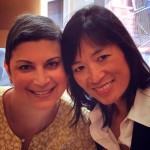
I’ll leave you with a few photos that make me smile. One is a new one with my beloved medical oncologist, Dr. Chau Dang (on my birthday). I couldn’t do this without her leading the team that treats me. The next one is part of my front garden in bloom last week. One is of our corgi, Lucy, who keeps me company on these housebound days.


And something I wrote a while ago that I read almost every morning:
Make the most of this day. Whatever that means to you, whatever you can do. No matter how small it seems to you. Don’t waste it.
I hope you all have a good week and I hope to have a post about resilience coming soon…
July 9th, 2014 §
 Now that all three of our children are at sleep away camp I get asked a lot “what I’m doing with all of my free time” and “what fun things I have planned.” Clearly what people think life is like for me are a bit skewed. I have nothing planned. I can’t travel and haven’t been able to take a trip for over a year. I’ve missed family celebrations, holidays, and get-togethers. I’ve eschewed visits from family and friends because I’m not well enough. What others consider “free time” is recovery from chemotherapy and struggling to do day-to-day functioning including the many medical appointments. Being able to make it out for a coffee date is a thrill and isn’t possible many days. Most of the rest of the time my “free time” is spent in bed fighting nausea or fatigue or pain or other side effects.
For the last few weeks my blood counts were sliding and I couldn’t do anything without huffing and puffing in a much more severe way than usual. I struggled to bend over to pick something off the floor without needing to sit down to catch my breath. My hemoglobin levels had been hovering around 8.2 for months and I pushed through but they dropped to 7.2 and by then it seemed I needed a boost to be functional. Ten days ago I received two units of red cells in a transfusion that because of some problems with the samples and testing and a five hour infusion ended up being a ten hour marathon day. It was so worth it. Red counts came up within days and I felt better starting about 24 hours after receiving the cells and that continued to increase within two to three days. My platelets were also very low at 24 but regenerated on their own (low platelets are a predictable result of this chemo regimen) and I was able to avoid a transfusion of those. This was, by the way, the first time I had ever had a blood transfusion in my life.
I had chemo yesterday: Carboplatin and Gemzar cycle #6 (that means I’ve had 6 infusions of Carboplatin and 11 of Gemzar so far). Starting now, but especially with cycle 7 and every time after that, there is a risk (reported at 27% for round 7, here is an article for anyone interested) of an anaphylactic reaction to the Carboplatin (and the other platinum-based chemotherapies like it). We are being conservative and premedicating with drugs that will hopefully help blunt or avoid this type of reaction altogether. There isn’t any reliable way to predict if it will happen to any individual patient. I did have a reaction to Taxol when I received it in the metastatic setting (after not having a reaction the first time I had 4 cycles of it seven years ago) but that is not a reliable indicator of a reaction to platinum-baed drugs.
It will be time for a scan soon I think, we are watching my tumor markers which have dropped consistently in the last few months which is fantastic but on yesterday’s test just stabilized without a drop. We’ll have to see if this is just stabilization (fine) or if this is the start of the chemo losing its effect. It is unsettling to think about losing another chemo combination that has been working, even though it’s a tough regimen to tolerate.
My voice has returned to almost normal unless I use it on the phone or talk a lot. With the kids gone I really am not talking much. I had an extra five days off chemo because my oncologist was on vacation and that allowed me to get things done I usually don’t have enough rebound time to do. The transfusion timing helped too.
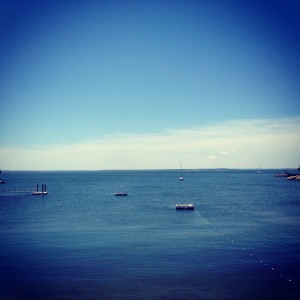 I haven’t been outside much, the humidity and heat have been too oppressive for me, but I am hopeful it will break soon. I do try to make it to the beach once a week to get a change of scenery.
We will get to see the kids this weekend and I can’t wait to hug them and hear all of their stories before they go back. They love camp, always have. They look forward to it year-round and now that they all go it’s great they can share these stories and experiences (they are 15, 12, and 8. Last year the youngest begged to go for a week to try it out. We said yes, knowing his siblings would be there and he would have a blast. Five days in he called in tears, begging to stay. That repeated every week until after a month we said it was time to come home!).
Some may wonder why, at this time, I let them go instead of keeping them home with me. I do it because it’s not about me. It’s about them. It’s something they love. It’s an important routine, tradition (this is the sixth year for the oldest). In my eyes, it’s important that they have a change of scenery, freedom to be kids, get away from the ways my cancer and its chronic treatment limit what I can do, and therefore what they can do. It’s a gift I can give them and I also feel it reassures them that I am doing better than I was a few months ago. This is important.
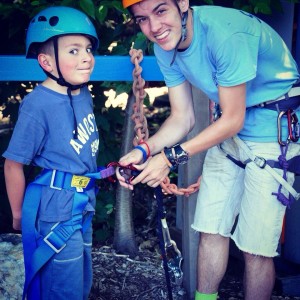 I love having them away from electronics, away from wondering if asking me to take them somewhere or do something with them will be “too much” or “bothering me” which I know the older ones are always concerned with. I want them to be with friends old and new, having fun with young and energetic counselors, trying new things. There are so many (most/all) physical activities I cannot do with them that they can do there. So many new games to play, achievements, laughs, experiences. I never hesitated when they were ready to sign up last October for this summer. I knew that no matter what, they needed and deserved it. On the left is my favorite photo from camp so far: Tristan getting hooked in to try rock wall climbing for the first time. It makes me laugh every time I look at that facial expression!
That doesn’t mean it’s easy for us to be apart. We are very close. Especially the older kids worry about me I am sure. But I stay in touch by email, will see them on visiting days, and I send them weekly care packages.
But the truth is that separation is good. It’s a selfless act for me to teach them how to to be without me. One of the most important things, in my mind. Coddling them and making them stay home is not what I feel is best for them right now. It is part of our job as parents to teach our children how to be independent, how to solve problems on their own, how to go off in the world without us for whatever reason. I will always want more time with them. It will never be enough for me. But this is my old age. I must teach them as many lessons as I can, while I can, for as long as I can. And that is true for everyone, but of course I have not only the urgency to do it NOW but also I have no idea how long I have and will likely be debilitated in some form until that time comes.
Yes, it’s true no one knows how long they have to live. But those diagnosed with a terminal disease know what is most likely to kill them. And that their time is not just going to be shortened, but consumed daily with the treatment and effects of that disease. It’s not having a normal, healthy life that is relatively good and healthy until a sudden accident happens. It’s just not the same as the general worries of growing older or aches and pains. It’s never-ending. I don’t get to count down how many chemotherapy (or other treatment) sessions until I’m done this time. Being done will mean there is nothing left for me to try. Anyone who has had chemo or radiation or some other type of therapy knows how important it is to have an endpoint, a countdown. Knowing that will never happen (and in fact what you’re really hoping for is a lot of them, because that means you still have options) is one of the mental struggles each week, since it isn’t just spending one day a week getting chemo, it’s how it makes you feel each day after that.
My hair is growing slowly back on this current combo. I know many people mistakenly think this means I’m “better.” I do like that soon I won’t be covering my head and that means I can be more invisible in public. But I also know how many comments I get on the occasions I have done it that people think I am done with chemo or all better. Not all chemotherapies cause hair to come out. My hair will come and go numerous times by the time we are done with this. Its presence or absence only indicates something about which chemo I’m on, not its success or failure.
Someone on Twitter asked for my piece on what to say and how to be a friend to someone who has cancer/serious illness. Here is a link for anyone that missed it and is interested (it’s too long to include the text in this post).
Also, I am including two posts from last year at this time. One on the eve of the kids’ departure for camp and one written while they were away. Of course I was doing even better than I am now, my thoughts were similar, but not as urgent, strong, painful as they have been the last seven months.
I’ll post again with an update if there is anything to report on change in treatment, scan results, etc. For now we stay the course which is not easy, but is the best possible choice of the options I have right now. And that’s the best I can do.
I appreciate the support, as always!
…………………………………………….
In these last remaining hours (Camp) original post here
In these last remaining hours
Before my children disappear
One,
Two,
Three…
In these last remaining hours before they go and spread their wings again,
Leave this nest,
I miss them already.
I put the dinner pots and pans away.
Wipe the crumbs from the table,
Load the dishwasher,
Play fetch with the dog.
I sit in the garden,
Listen to the wind in the trees,
The birds settling down before nightfall,
As we settle, too.
I tuck them in one last time,
Hear their doors click shut.
One,
Two,
Three.
Tomorrow night there will be no mess to clean,
No yelling upstairs that the TV has been left on again,
No trunks piled high with carefully labeled belongings in the dining room.
I will cry, I know.
Not because I am sad that they are going– no, that gives me great joy.
Children being children.
Forgetting stress at home and doing new and varied things.
I cheer their independence.
I will cry because I know they will always need me somehow and I just wish I could be there for them to outgrow
by choice,
by time,
by age.
I hear the mother bird in the tree calling out.
I don’t know to whom.
I will be like that tomorrow,
calling out,
with no child to hear.
……………………………………………………….
Like dollhouse rooms left abandoned (original post here)
Like dollhouse rooms left abandoned,
The rooms stay tidy:
Beds made tight,
Pillows square,
Hampers empty.
It’s been one week since the children left for camp.
Littlest Tristan was due back yesterday but a few days ago he said he was having so much fun he wanted to stay another week.
I realized this week that after being sick for the previous two that I needed this time to catch up, to rest, to regroup.
I miss them but am so glad they are having fun doing what they love.
I pack up care packages,
write letters,
wake in the middle of the night and mentally picture our children sleeping in cabin beds.
Our dog Lucy follows me, sleeps in my room now, not Paige’s.
She doesn’t want to be alone and stays within feet of me every moment.
I tell her it’s okay:
The kids will come back.
The rooms will get messy again.
There will be crumbs dropped at the dinner table and car rides galore.
Paige and Colin and Tristan will come back tired and dirty and happy.
They will come back.
They will.
That is the key.
I think of absence like a hole:
How different it is when it’s temporary and filled with happiness,
Rather than when that hole is a pit of grief. Of ache. Of loss.
The way it will someday be for them.
January 10th, 2014 §
 The car has always been a place of refuge for me.
The shower, too.
Water to rejuvenate
Clearing away the old,
Ready for a new day ahead.
The moment of awakening is significant.
I have learned quickly what the next few hours will be.
I try to give a nurse a complete report but I encounter one problem immediately.
I really cannot type accurately.
My body shakes, my hips cry out in bony futile gasps. I gather up my pump cords, release myself from the wall’s grip.
I walk, counter-clockwise around the nurse’s station with a vengeance, trying to push the pain and discomfort away.
……………………………………..
I am Angry at this morning and that which has me here.
The tears arrive.
The radiation pain seems to be on the way in.
How long with it last? Does that mean it’s working? I and everyone else ask.
“I don’t know” is the way to do it. I say it aloud to the dark, embarrassed after the first word that I realize I am alone in the room.
I hear my voice, speaking to someone not present.
I can’t help but cry as I push the pole.
The movement makes it better. It reminds me of being carefree on a summer day, wind in my hair from the sunroof, feeling the sun on my face.
I think of my friends readying their homes for the day before work and school.
I can feel the radiation, where it burns, or at least the spots where tumors are trying to escape their home,
where they try to find new lands to conquer in a cat and mouse inside my body.
It doesn’t matter what stinking metaphor you use for it; in this case, all roads lead to Hell.
I contemplate eyeliner while the nurse stands, patiently waiting to see how I’ve done overnight.
…. But there is no one there.
I focus very hard on the tasks at hand: morning medicine most especially.
I start to tell my nurse that I weighed myself already today. Or yesterday. Or two days ago. But I can’t remember now. And so I remain mum.
In each moment my mind leaves. I don’t know where it goes. But in those gaps which feel like seconds, minutes have gone by.
The tea is divine, hot silky relief from the cold my body cannot push out.
I realize whatever it is I thought I could accomplish at the keyboard won’t happen once again.
I can’t concentrate. I find gibberish on the page. It takes hours to do a few moment’s work.
Extra time lost.
Time lost.
My precious time.
I stay committed to sitting up, bedside, fighting the urge to recline.
I listen to music trying to keep myself alert.
I think about my children, wondering what each is doing…
I realize today I am too foggy from medication.
I won’t be able to do much for a while. I am too busy talking to people that are not there.
I will rest, let the pain calm, let my head settle.
December 21st, 2013 §
 When I was growing up and there was a particularly tough day my mom would use the expression, “Mama said there’d be days like this.”
Yesterday was one of those days.
My husband and I left the house before dawn. At about 8 AM I started my appointments. First was a physical exam with vitals taken and a review of symptoms. I met a new oncologist who was filling in while so many of the doctors were away (Friday of a holiday getaway week). We arranged this match because she is the Principal Investigator on a new clinical trial the team has been discussing as a good fit for me. As regular readers know, in my last post I explained that my cancer has progressed in some spots (stable in others) so we need to try to find something better now.
We reviewed my scan results and what she and my regular onocologist think we should do next. A slot in a new trial opened this week and it seems to be a reasonable next step to try another non-chemotherapy method. I’m going to save the details of that study for a later post but for those of you who know and understand the jargon, this one involves a Novartis drug called LEE-011 which is a CDK 4/6 inhibitor in combination with an anti-hormonal agent. This clinical trial is what I’m signing up for next.
The protocol for this drug is very challenging. It involves many trips to the city, especially in the first month where it will be once or twice a week, sometimes just for a blood draw. Some of those visits will be 8 hour sessions where blood is taken a few times to check drug levels in the blood before and after taking the pills. None of the blood draws can be done near my house since the conditions and testing all must be carefully controlled as part of the study. I’ll enumerate side effects and other details in a later post but this one looks to affect me more in daily functioning than I’ve had to deal with in the last few months. I’m definitely nervous.
We talked for a long time about the study. I had already gotten word from my oncologist about her own recommendation. I signed consent forms. I scheduled the necessary tests. They require a CT scan (I just did one, though it falls 2 days outside the testing window. We should be able to get an exemption for that so that I don’t need to redo it). I will need a PET scan, likely need a repeat bone scan, an echocardiogram (this drug can have cardiac side effects), an electrocardiogram, blood test, urine test and, (rats!) a liver biopsy. All of these must be completed in the next two weeks during my “washout period” (interval of time where you are not taking any chemotherapy agents and so you are starting with a clean slate to measure effects in a new clinical trial). Of course, the holidays are not an easy time to accomplish all of these.
I then went to get chest x-rays to monitor my pleural effusion (fluid in the sac around my lungs that makes breathing difficult). After those x-rays and fasting until almost noon I had 40 minutes to finally grab a quick bite. Then I went to the main hospital to meet with a pulmonary physician to decide what to do about the pleural effusion and find out how bad it actually is.
I had a full medical history and symptom assessment with a nurse and then met my new pulmonary doctor. He told me that my left lung is compressed to about 50% of its usual size from the fluid that is there. He estimated 1.5 liters of fluid have accumulated. He said it “layered” on x-ray which means it’s still flowing and therefore would be easier to extract. We decided to do a procedure called a thoracentesis to drain it. One of my morning blood tests that had to do with clotting had come back high, something that would mean we couldn’t do the test. We figured out it had been drawn from my port, which should never be done for clotting tests because they use an anti-clotting liquid called Heparin to flush the port each time and that would lead to inaccurate results.
Through a lab snafu it took 2.5 hours to get the new results rather than 40 minutes. By the time we finally had the all-clear to proceed it was about 5 PM. I still had barely eaten or had anything to drink. For the draining they sit you on a table with your feet dangling and have you bend over a stand for support. It is very much like having an epidural placed. They use local anesthetic to numb the skin and then stick a needle between your ribs, insert a catheter and vacuum extract the fluid (which should take about 10-15 minutes). The doctor got the catheter in, got a small sample of fluid going and…
My blood pressure plummeted. My heart rate dropped. I got hot and woozy and clammy. Yup, I passed out. They had to remove the drain and get me on oxygen and lay me down. I revived quickly, but we could not continue. So, I have the pain from the needle in my back but nothing to show for it. I will now have to go back on Christmas Eve to try again (fully hydrated and fed, hopefully this will be the key). I was obviously disappointed and emotional by this point. I had to go get the X-ray you need to confirm that no damage was done by the needle, and we made a train that got us home at 8 PM. It was a long exhausting day without too much to show for it in terms of relief.
It’s hard not to feel defeated on some of these long days when it just seems the mountain is so big to climb. Right now we are making a change to try to get better results in controlling cancer progression. I won’t be able to to travel for the holidays anyway, but now I will be spending time in hospitals rather than resting at home and taking a break. Cancer doesn’t give a damn about Christmas. Or families. Or anything that matters to me. But my doctors do. And they continue to show caring and concern and work so hard to try to make things better. Without that help and support this would be so much harder. Even when mistakes happen (and yesterday there were quite a few with blood draws and lab tests and so on), every doctor apologized. I definitely shed tears many times yesterday out of frustration, which doesn’t happen too often.
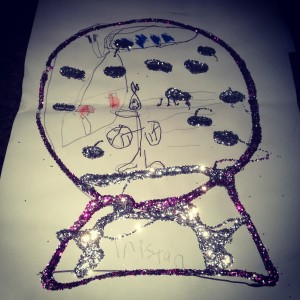
As I waited for my results I watched the office staff exchanging gifts, talking about holiday parties and Christmas cookies. One by one they packed up their belongings and turned out the desk lights. I was the last patient left in that department. That was hard. But I also know that I got to walk out of the hospital last night. I still got to go home and sleep in my own bed. And when I got home I made it just in time to hug my children and see Tristan’s artwork, all sparkly and smile-inducing. He asked me at bedtime why I couldn’t go on vacation with the rest of the family again this year. I explained to him that altitude makes it harder for me to breathe. The air is thin, and I would not feel well. I asked if he understood. “Yes, but I am still sad you can’t come.” “Me too, honey. Me too.”
I’m going to need to dig deep over the next 6 weeks. I’m going to need to ask for help with child care and logistics while I’m recovering from procedures and having so many trips to Sloan-Kettering. That’s not easy either. I find it very hard when I feel that I’ve not been strong enough, or that I’ve complained about the way a hard day has gone. I know it’s normal to need to just cry and complain and say to the cold night-time sky, “This isn’t fair. This isn’t how it is supposed to be.” Sometimes you just need to vent, though.
I need to be strong for the next few days and what they will bring. I want to make the holidays joyous for my family to the degree I can. These are the tasks that make me feel like me. The family shopping is done, the teachers’ gifts distributed, the tips for those who help during the year have been handed out, the holiday cards sent. These are the things that I know I could get a “pass” on. But they are the things I value. I will always try to show my gratitude to others.
Yes, Mama said there’d be days like this. But tomorrow is another day. And I don’t lose hope that it will be better.
August 20th, 2013 §
This is the last week of summer before school begins.
 This summer was a big one for us. Youngest Tristan went off to sleepaway camp for one week and loved it so much that in the end, he stayed for a month. Paige and Colin returned to camp as seasoned veterans and had a wonderful time in their home away from home. All learned new skills and made new friends. Paige and Colin’s constant banter of camp stories at the dinner table are now supplemented by Tristan’s own stories.
I’m so pleased they could be in a place where they could just be kids, not worried about me, free to be carefree and happy. It is my gift to let them go, to not keep them here for my own needs. While I want to spend as much time with them as I can, I know that this is what they all needed to do this year.
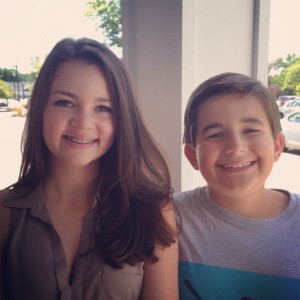 I sit back and smile now, loving that they all have a common reference point of their weeks at camp. Despite the eight year age gap they all find laughs and joy in their summer adventures. They look older to me, of course. And while others are sad about the passage of time and their children growing older and being independent, I say again that I cheer it.
You see, my job now is to prepare them for life without me. My goal is to show them how to accept the help of others but not be reliant on it. I choose to show them every day that there is determination and nobility in facing what life throws you. You may not be able to change the final outcome, but you can change what you do to be ready for it. The strongest way of teaching this right now is by living my life deliberately, making choices and showing them the best I can be. This doesn’t mean denial. Nor does it mean I don’t lose my temper or raise my voice or fall apart sometimes. To be emotionally numb or invariable in my response to what is happening is not healthy. I try to show them that expressing what they feel is a better option. Emotions of anger and sadness and grief and fear are fine to have. It’s beneficial to talk about them, but dwelling on them won’t make things better. Acknowledging their reality, their truth, their basis is what’s needed.
As I always say when I get bad medical test results: a short pity party is good. Then you have to pick yourself up and move on.
 It has been almost eleven months since my diagnosis of stage IV breast cancer, and there isn’t a day that goes by that is free from concern. I notice myself being more and more affected by the daily chemotherapy, feeling more fragile, more vulnerable. I have already had one bad respiratory illness this summer, and I worry about the school year and all of the potential colds and infections that will be transmitted. I don’t want to think about the ways cancer affects my daily life, but I must. The decisions I make about activities, treatments, and chemo all directly affect my life… both in length and quality.
I push myself to do the most I can. I try to do all of the little things that add up to a full day: school supply shopping, back to school haircuts, camp laundry, new shoes, sports registrations, and walking the dog. I also request meetings with school administrators, coaches, and anyone new in my children’s lives for this fall that need to know how my kids’ home life differs from the one they had a year ago.
I’m a planner. I take comfort in routine, the familiar, the predictable. Unfortunately, those are now removed from my life forever. Yes, I know life always tosses everyone curveballs. That’s what life is. But I experience it in a whole new way. I have no way of saying life will ever return to “normal” or even a “new normal.” There will not be a “better”… I am not “sick” in that I cannot recover.
I still feel the drive to help, to counsel, to educate. But am finding it more difficult. I hate saying no but know I will need to start saying this more. In-person interaction is very difficult for me. While no one would know it to look at me, social interaction is extremely draining these days. I try to minimize contact knowing that when I am in public I am under scrutiny. People want to know how I am. They want to be reassured. They look at me for clues as to how things are. There is no reassurance I can offer. This is a disease of progression to the end, a story that will not have a happy ending.
I want the story that I am living to be a good one, to the highest degree it can be. I want the story for my family and friends to be one full of love, memories, and devotion. These people are the center of my world.
I want the story to be different from what it has been, different from what it will be.
As a writer I am used to editing. Revising. Changing what I don’t like.
But I can’t edit this story.
I can’t start it all again.
And so I write through it.
The only way out is through.
But this one… well, this one is quite simply going to have a sad ending, as many stories do.
June 26th, 2013 §
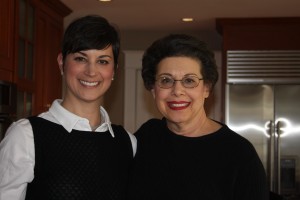 I’ve again invited my mother, Dr. Rita Bonchek, to write a piece for the blog. Her previous posts on the difference between guilt and regret, grieving the death of a parent, what it’s like to read my blogposts about cancer, and how to help children understand death have been well-received. As a psychologist specializing in grief and loss I think her perspective and ability to share insights are welcome additions to the posts I make. I know that she gains comfort from talking with other parents who have children with cancer and sharing their feelings about the way that cancer has affected their roles as parents (and often as grandparents). Her post appears below.
I think the only thing I would say that I might disagree with here is that I don’t think it has to always be a one way street. Mom refers to a time when I was helping her with problems she had in her own life. Yes, perhaps it’s important to be aware of when you are asking your child for help or advice. However, if this is the way your relationship is (ours is, for example), then I believe that maintaining some of this dynamic adds to the sense of “normalcy” that may be elusive but also can be comforting to both parties. That is, if I am not in an immediate medical crisis, helping my mother with a problem she is having feels good to me, rewarding, reminiscent of the way things were before. If the street is always one way, that adds to the feelings of separateness between us, a strong reminder that everything is different.
A suggestion we both have is to focus more on parents taking care of themselves, finding ways to cope in a way that is right for them. Certainly parents and children do not always have the same strategies to deal with medical crises. The parent also may need support to deal with his/her grief during this fragile time. Individuals may find help in talking to a therapist or other supportive figure or attending a support group for parents.
There are constant ebbs and flows in the parent/child relationship based on how treatments are going, anxiety about upcoming tests or bloodwork, and the side effects of treatments. It may not always be clear how much the parent needs to be parent at any given time. Open communication is so important. One of the hardest conversations my mother and I had recently was one in which I openly laid out some ways in which she could be more helpful to me now. That conversation led to a wonderful new phase of support. She feels good that she knows better what I need, how to be helpful to me and to my family. I cannot expect her to be a mind-reader, and the ways that I need support change with how my treatments are going. I will be undergoing treatment for the rest of my life, so it’s important that we are as honest and supportive of each other as possible. I know that she has her own challenges in dealing with my diagnosis. She feels good now knowing some of the things she can do that are most helpful. I truly believe that is what makes a parent feel good is to know they are a help, rather than an additional source of stress for their child during this difficult time.
My mother and I both hope that this piece will be an introduction to this topic. There is so much to say about changing relationships during medical crises. Perhaps today’s post will allow you to raise some of these topics with a family member.
……………………………………
Dr. Rita Bonchek writes:
Throughout this blogpost, I repeatedly refer to children. Even though adult in years, they are our children. When they are diagnosed with cancer, the relationship between parent and child will, by necessity, change. I would like to suggest how parents can strengthen the relationship and cope more effectively at this time.
When Lisa completed cancer treatment after her initial diagnosis (double mastectomy and chemotherapy in 2007, oophorectomy in 2008), everyone, including her doctors, believed that there was an infinitesimal chance that the cancer would return: that period of time was in the past and life would move forward. When the cancer returned in the form of an incurable metastasis in 2012, we were all devastated.
Families have one type of relationship when all of its members are healthy and a different type when one member is ill. But cancer isn’t necessarily just being ill for a period of time, recovering and continuing on with life. Cancer can be a life and death everyday concern. So, what happens? The conversations change because references to cancer are screened , levity is uncomfortable because how can one laugh about trivial jokes when something so serious is occurring and discussions that involve long-range planning are avoided since how long will long-range be.
Who we were as parent and child before the diagnosis of cancer is not who we are and become after the devastating news. The prior carefree mutual relationship now shifts from both of the parties interacting and sharing problems and concerns to only focusing all attention and sensitivity towards the child. There is now a one-way street. How could this not be? When one asks the question “Whose needs are being met?” it must only be the one who lives with the cancer. The goal is, as much as possible, to reduce stress and tension between mother and child but, most importantly, within the child.
There are some tensions that occur when a parent offers to help a child with household chores, fixing meals, carrying packages, etc. A child’s snappish response of “I can do it myself” may indicate that to accept the offer is to admit a weakened condition. Or, any offer to help may cause reminders that at some time sooner or later that help will be needed. It may be better just to do the chore without asking as in folding laundry, unloading the dishwasher, making a meal that could be frozen if the gesture is not accepted. It is MOST important that we do not take personally such behaviors as negativity or curtness. There can be mis-directed anger at a parent instead of directed, expressed anger at the overwhelming madness-sadness of the cancer diagnosis.
It can be helpful to establish ground rules. The parent can ask “What CAN I do for you that would be helpful?” “What should I NOT do that might be upsetting to you?” Those of you who read this blog-post will surely have suggestions that all of us, who are trying to function each day as best as possible for ourselves and for our children, can benefit from reading.
From the day of the diagnosis, our worlds have changed irrevocably for the worse and we must adjust. I may sound as if I knew exactly what to do and employed suggestions proffered. Not so. Just ask Lisa. I let her down. I had personal problems during the time after her diagnosis of metastatic breast cancer and I vented and asked for her advice as she was trying so hard to just get by.
I felt only Lisa knew the participants well enough to understand my dilemmas and to help me. Time after time, I apologized, I vowed that I would not involve her again and she forgave me. But once was not enough, even twice was not enough, for me to learn my lesson and to seek help elsewhere. If I had remembered to ask myself “Whose needs were being met?,” I hope I wouldn’t have placed Lisa in that position. Our children may no longer be as available to support us.
When I was in practice as a psychologist who specialized in grief and loss counseling, I tried to help my patients to understand, process and deal with major losses. I often explained to them that denial was an effective coping mechanism if it allowed them to absorb the overwhelming loss little by little, bit by bit. But denial cannot be total and the reality of the situation must at some time be acknowledged. So, although I do recognize the possibilities of breakthroughs in medical science, I do not believe in nor count on miracles.
I will let my thoughts go a certain distance into the future when I must, but I function day by day as a way of living . I choose not to focus on what may occur in the future because it may not occur. What a waste of time and energy that would be. I cannot focus on the possible downturns during the treatment, on any pain or suffering Lisa could be experiencing but is not telling me about.
The reality is that though I can support and comfort her, there is nothing I can do to make her physical and emotional suffering go away. If I indulged in this negativity and worry about Lisa in my everyday life, I would have no life. I try to remember- not always successfully- that worrying benefits no one. If my worrying could provide even a tiny extension of Lisa’s life, I would worry myself sick.
A line in Joyce’s “ Ulysses” states this emphasis on the present: “Hold to the now, the here, through which all future plunges to the past.”
To derive satisfaction from life, Lisa and I agreed that auditing classes at Franklin & Marshall College would distract me with an activity that would challenge me and bring me satisfaction. And so it has. The last thing we want our children to do is to worry about us. Whatever we do for ourselves, we do for them. Find some interest or activity that gets you through each day.
Lisa and I have quite different personalities and behaviors. As her readers know, she is very open in describing her thoughts and feelings. In contrast, I was a very private person. When Lisa first started writing, I was uncomfortable seeing private information about our family being disclosed publicly and shared with people I did and did not know. But, very soon, I began to appreciate the role that Lisa’s writing played and continues to play in her life and the lives of her readers. And so I changed and re-evaluated my stance on privacy. In answer to the question “whose needs were being met?” I substituted my privacy desire for Lisa’s openness. I stand with Lisa to help cancer patients and their loved ones live with cancer and not die from cancer.
Our daughter, Lisa, is an incredible daughter, wife, mother and friend. I cannot and will not imagine living my life without her.
June 4th, 2013 §
 I just want to see my son play baseball,
Watch him wave at me when he’s on base.
I just want to take my daughter shopping for makeup,
Applying powder to her porcelain skin.
I just want to read with my youngest one,
Snuggled up in bed together turning pages of a book.
I just want to grow old with my husband,
Continue to share our lives as we have for twenty-two years already now.
I just want to sit in the garden when we are old.
I just want to talk about the good old days.
I don’t want to read about mTOR inhibitors or side effects or months of disease-free progression.
I want to read beach fluff and skim through cheesy magazines.
I want to get a pedicure and have a nap in the chair.
I want choosing the color of my nail polish to be the toughest decision I have to make for a day.
I don’t want to read reports from the ASCO conference or tweets about new research findings.
I just want it to go away.
But it can’t.
It won’t.
I will never know another day of my life without metastatic cancer or chemo or treatment or dread.
But I will search for joy.
I will.
I will do what I can every day to find that joy,
And if I can’t find it I will make it.
This is my pledge,
This is my promise.
For them.
Some days it is hard to do.
Some days fear and sadness are too much.
Some days I do not know how I will do this with grace,
But I will try.
I must make the most of this time:
Helping others, educating, writing.
I know no other way to do this.
But it’s the hardest thing to do.
I cry, I give in to the emotions, but only for a few minutes.
No good can come from that.
I gather strength.
I re-commit.
I go on living.
The bad days will come someday.
But that day is not today.
That time is not now.
And so I am a parent, a wife, a friend, a sister, a daughter, a writer, and everything else I have been until now.
That is who I am.
That is who I will continue to be.
For as long as I possibly can.
May 15th, 2013 §
 I find myself in silence a lot,
Tuning out the noise.
No room for anything but thoughts.
I try to forget for a few minutes,
I stare at a spot on the wall.
I lose myself.
No clue how long it has been.
The clock says it’s been six minutes,
I am glad that they’ve gone by.
But then I realize I have wasted them:
Six minutes of my life.
I want them back,
Feel I should use them for something better,
Something constructive.
I am mad at myself:
That was a waste of time.
I want days of suffering to pass,
But I also know that this is the only time I have.
I take a trip inside my head
I don’t know where I go.
Somewhere else,
Anywhere else,
Far away from here.
If you’d let me, I would run away,
I would go find a way
To keep you safe from this,
Safely far from this.
Some days I long to tell you how I truly feel,
But there’s no room for that in this,
No room for that in this.
It is not a choice.
That I know.
And when I finally do go
It won’t be for lack of want, or heart, or strength.
When I die it will be because that is what cancer is,
This is what cancer does.
And when it comes to being fair,
There is no room for that in this,
No room for that in this.
May 10th, 2013 §
 My mother, Dr. Rita Bonchek, is a psychologist who specializes in grief and loss. A career discussing death and dying, however, was insufficient preparation for hearing the words, “Mom, I have metastatic breast cancer.”
Mom and I have reacted very differently to the news of my stage IV cancer. I was online within days writing posts about the steps I was taking. I wrote immediately about how to help children in the days following a diagnosis like mine. As my readers know, I’m very open about this part of my life.
My mother, on the other hand, is much more private. She would never write a blog the way I do. She didn’t want to share this news with people; she wasn’t ready to talk about it. I respect her decision but that approach doesn’t work for me. Sometimes our different ways of thinking lead to disagreements. Despite our differences we always support each other.
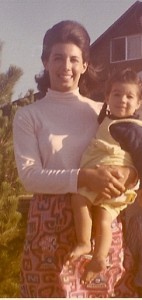
I thought it might be helpful for readers to hear what she has to say about reading my posts. Some of us with cancer choose to be very public with our daily lives but our parents are often forgotten in the discussion. I think the timing of Mother’s Day weekend is perfect to share this piece. I love you, Mom (photo at left: 1970).
…………………………………….
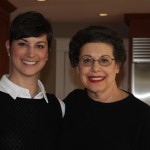 I am Lisa’s proud mother and I have followed her blog from its first day. As her mother, I read her blog from a unique point of view, and I want to share my perspective with you.
Those of you who are reading this blog follow Lisa and her incredible writing. It is her understanding of human behavior, her expression of feelings of her heart and thoughts of her mind that make so many people want another blog from her as soon as the one being read is finished.
Yet, as the mother of this outstanding-in-all-aspects daughter, my reading of Lisa’s blogposts is complicated because each piece contains an extra layer of heart-wrenching pain for me. Lisa’s blog is a precious sharing of her everyday life, of medical explanation and analysis of each and every test result, of measured consideration of her hopes, fears, etc. Parents rarely get the opportunity to get “up close and personal” to this extent with a child. As Lisa’s mother, knowing her innermost thoughts is a gift and a curse.
If you (or anyone else but Lisa) were writing about a life journey with a cancer diagnosis, I could handle reading about the physical assaults on your body and the emotional assaults on your psyche because I would be more objective and not involved in your everyday life. I could read your blog, feel empathy and sorrow for the diagnosis, but step away from it. However, I am enmeshed in Lisa’s writing.
Lisa’s father stopped having the blogposts sent directly to his e-mail because he was often caught unaware with heavy emotional subject matter arriving at inappropriate times. He now accesses the blogposts only when he feels emotionally prepared for whatever he may find.
While this would also be a very reasonable decision for me to make, I have the ambivalent feelings of wanting to be close and share every moment of what Lisa thinks and feels at that moment versus retreating from the declarations of how her life is now and her fears for the future for her and the family – her family and my family.
Lisa and I share the personality trait of always wanting to know the truth so we are as well prepared for the worst as we can be. Lisa and I promised each other that we would never withhold any information to protect each other. The honesty Lisa promised me is the honesty she has promised to all of you, her readers.
On one level, her blog reveals to me everything I want to know, but on another level what I unconsciously don’t want to know. This emotional see-saw of wanting to read it but not wanting to read it is a decision that I must make each time a new blog-post appears in my inbox.
Why is this “to know or not to know” decision so difficult for me? When I read Lisa’s writings, I imagine the sub-text that she does not reveal: how she is managing to keep her family’s lives as “normal” (whatever that means) as possible.
Lisa is, as most mothers are, the hub of her family’s life. When Lisa writes in a blog-post that she was very tired and rested for hours, I know that her closed bedroom door makes every family member who sees that closed door go into overdrive with founded or unfounded concern and fear.
Lisa and I share the goals to make the most of each day and to cherish and to love one another. These are life affirmations within our control when so much of life is out of our control. Share our goals as you and I, Lisa’s readers, benefit from Lisa’s greatest gift to us: who she is and how she lives her life, in sickness and in health.
May 2nd, 2013 §
I have my father’s walk,
A slow, deliberate, long-gaited stride.
I have my mother’s smile, her voice, compassion.
I can’t yet see myself in my children,
I wonder if it is always that way.
I remember as a teen the day I actually could match my father stride-for-stride,
My smaller feet dwarfed by his size 13 shoes.
I remember thinking I was a grownup then.
I was wrong, of course.
I had no clue what being an adult was.
I learned.
Yes, I did.
I yearn to go back to those days,
Perhaps I was not carefree but I was taken care of.
Knowing my parents were in charge,
I felt safe, protected.
Now I am a parent in charge,
I must be ready.
My children try to match my steps, still unable to.
I yearn for the day they can.
I hope I will be beside them when they are old enough to mirror my stride.
Not just beside them in spirit.
That’s not enough.
I want more.
When they think they are grownups
I want to be there too.
April 18th, 2013 §
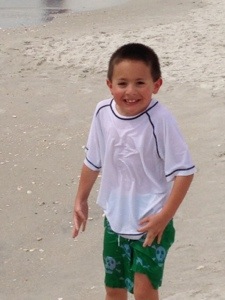
I sit on the beach, feel the sand’s angry texture rub my chemo feet in a way I wish it wouldn’t.
I watch my family in the ocean, turquoise and calm and vast.
My husband flips over, face in the water, takes some strokes out to sea. His movement is graceful, effortless, just as it was the when I met him 22 years ago.
He was a sprinter on the college team then, and while he laughs and says it doesn’t feel effortless anymore, nor perhaps fast, it does not matter. In my mind’s eye he is that young man, swimming fast, joking with his team, coming over to the stands to talk to me while chewing on the strap of his racing goggles. I fall in love with him again every time I see him swim.
My three children float, bobbing in the ocean water.
I can feel the distance between us, it feels like a lifetime.
It is my family in the ocean floating away from me.
I see the quartet, I watch as an outsider.
I do this a lot lately. I watch them from afar and think how it will be without me. A new family unit. Behind the big black sunglasses my tears stream down.
Suddenly Tristan is running from the water to me, across the sand. He stands, dripping, face beaming. “I just wanted to tell you I love you, Mama.” I take his picture. I capture the sweetness. I grab him, hug him, feeling the cold ocean water on him, melding it to my hot skin. I murmur to him what a sweet boy he is, that he must never lose that. I send him back to the ocean, away, so I can cry harder.
By the time they return to shore I’ll have myself composed. But my oldest immediately senses something amiss. She mouths to me, “Are you okay?” And pantomimes tears rolling down her cheeks.
Yes, I nod.
I walk to the water’s edge to prove it.
April 2nd, 2013 §
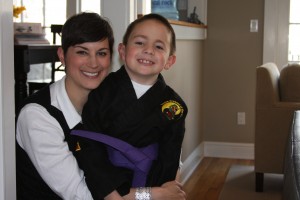 It’s been a wonderful but long few days. I was so run down yesterday that after our egg hunt I got into bed and pretty much didn’t get out for 9 hours. Tristan’s birthday was absolutely delightful. We held a birthday party, something he’s never had before. We’re not big on parties in our family; instead, we always have small family celebrations.
One year, Tristan was at Shriners Hospital for Children on his birthday having hand reconstruction surgery. When the surgeon you want has an opening in his schedule, you don’t say no because it’s your four year-old’s birthday.
When we’ve done parties it’s been my tradition to have a no-presents party. Our children get presents from us and close friends. Party guests, however, are not allowed to bring them (it’s fascinating to me how many people have a difficult time following this rule). Instead, they’re asked to bring the money they would have spent on a gift and donate it to charity (we designate Shriners Hospital for Children). Each party we’ve had in the past has raised at least $500. Paige has had two or three parties through the years, Colin has had two. In those particular years they got the party, cake, and presents from family members. This was more than enough.
 We put a donation box out at the party and everyone can stuff the box. This year Paige wrapped and decorated the shoebox. The children who are bringing the donations also get a lesson in the joy of giving to others. Often the parents tell me that their children don’t understand why they can’t bring a present. That’s okay with me, I think it’s fine to force a discussion about giving to those in need. My children take pride in doing something good, and even when they are young and want to know why guests can’t bring gifts, I feel no guilt in explaining that not all children can afford to pay for the operations they need. When parents say to me, “Oh, I would love to do that but I don’t know how my child would respond,” I never quite understand that. It’s our jobs as parents to be role models, to show our children what’s important.
When I had my own 40th birthday party a few years ago I did the same thing I have my children do: I asked guests to bring donations to charity in place of a gift. We must be willing to do ourselves what we ask of our children.
Shriners Hospitals provides care regardless of financial situation with an emphasis on orthopaedic care, spinal cord injuries, and burns. Tristan’s complex hand reconstruction helped him tremendously, he was able to have 3 procedures at the same time (a tendon transfer, a z-plasty to widen the web space, and a ligament tightening at the base of his thumb). Should he need cervical fusion surgery for the hemivertebrae and malformations in his neck that is where we will go (I’ve written elsewhere about Tristan’s congenital deformities in his spine and left hand). The team in Philadelphia including Dr. Randal Betz, Dr. Scott Kozin and physician’s assistant extraordinaire Janet Cerrone are very special to us.
 Invitations and stickers from Easton Place Designs and the most adorable cookies from One Tough Cookie helped to make the day special. Tristan loved his karate party, and I love that I’ll be sending a big envelope to Shriners Hospital in Philadelphia from Tristan. I am so grateful to the families who helped to make this birthday so special for Tristan. I thank them on behalf of the children who will benefit from their generosity. Everyone does what’s right for them. This type of birthday celebration is what feels right to me.
…………………………………………………….
In case you missed it, Seth Mnookin had a great piece on Slate about the Time magazine cover about cancer. He and I had a great talk about this and I’m quoted briefly in the piece. You can read it here.
** Also, a reminder I’ll be on Doctor Radio (SiriusXM channel 81) this Wednesday, April 3rd at 1 PM EST on the Oncology Show. You can check the schedule here, and it does repeat a few times during the week. I am going to try to get an audio file for those of you interested in listening who won’t have access to it live. The topic? One of the most popular here on the blog: how to talk to people with cancer in a sensitive and caring way.
March 28th, 2013 §
 Limboland is part of stage 4 cancer. On a daily basis I don’t know what’s happening inside my body. I often think about the cancer cells and wonder what they’re doing. Are they dying? Multiplying? It would be so nice to have a reliable blood test to easily and accurately measure how many of them there are at any given time. But these tests do not yet exist for us.
My CA 15-3 test again showed a slight elevation from two weeks ago. The numbers have been bouncing around over the last few months (expected) with a slight upward trend (undesirable). It’s hard to know what this means. A few points here and there are not cause for alarm. This volatibility is inherent in this test (which is why some oncologists don’t do this test at all, and why it can’t be used as a screening device. Also, in some people the test doesn’t reflect changes in the amount of cancer present at all). So… it’s a bit to me like trying to juggle Jello.
Of course I want to walk in and have my number be lower than the previous time. But that’s not always possible. With the exception of my hands I’ve felt good for the last two weeks. I’ve been in a frenzy of activity this week with Tristan’s 7th birthday this weekend (more about that in the next few days) and lots of activities with the kids. How I feel is important; while blood tests can show how my counts are, lack of pain in new areas is good too. I received my monthly injection of Xgeva today as well.
I’m back at Sloan Kettering next week and Dr. Dang and I will huddle and strategize. Today my local oncologist and I talked about some ideas about how to treat this test result and what it potentially really means. Right now it seems we are in watchful waiting (not that there is anything new about that). As of today no repeat PET scan is scheduled. We will see if that decision changes next week. My prediction is we wait two more weeks to see where the levels are then and re-evaluate at that time.
Chemo starts this Sunday. I’ve been doing the maximum recommended dose for 5 days, and a slight decreased dose for 2 days. I think this time I’ll be pushing to the maximum dose for all 7 days. It’s hard to know what price I’ll pay for doing so, especially during a very busy week next week (Sloan appointment and then another gig on the Doctor Radio Oncology Show on Wednesday at 1 PM which I hope to attend in person). My hands are my biggest issue, this is just what happens with Hand/Foot Syndrome. I continue to treat my hands with all sorts of products and care, but the truth of the matter is that this is what Xeloda does when it is taken and leaches out of the capillaries. The only true remedy is a decreased dose or discontinuing it altogether. That’s not in the cards right now (thankfully).
It is always hard to hear news that’s not what you want. I’m sure some people would be filled with anxiety and upset after this type of news. I like to give myself a ten minute pity party and then get on with life. If I give myself up to worry and dread for the next two weeks, what have I accomplished besides ruining two precious weeks of my life? Instead I went to the grocery store and stocked my house with food for the long weekend. I came home and played with my new dog (sweet Lucy is especially lovable in times like this).
I am a role model: my children are watching how I handle all of this. Raising polite and kind children is not enough. My children’s mastery of resilience is as important as any other life skill I can teach them. If I become debilitated by anxiety, don’t pick myself up and press forward, I am teaching them a lesson they do not need.
It’s okay to be emotional or upset at bad news. Complete denial serves no one. Acknowledging emotions of anger, sadness and fear but still displaying strength, stamina and persistence is what I try to do.
I hate the turn my life has taken. I hate that this is what is happening to my family and to me. For now, though, I continue to focus on all of the things I can do, and am doing. I pour my heart out on this screen. Some people think I must be depressed all of the time if I have these dark emotions evident in my posts. I can assure you that this is not what I am like all the time. Those feelings exist, and are important. I wouldn’t be human if I didn’t have them. It’s important to get them out not only for my own well-being but also because I know many readers with cancer tell me I’m speaking for them.
So, it’s not what I wanted, but I’m not sounding the alarms. We watch, we wait, we treat. I consciously do the best I can every day. Some days I do better than others. Some days I have a short temper and take my anger at cancer out on my husband or my kids. I’m not perfect. I apologize to them. I tell them I’m trying my best but sometimes it just breaks through. They see that I am human too. I make mistakes.
I draw strength from you all every day. Thank you for your support.
March 22nd, 2013 §
 The moving truck has been in their driveway all day.
Six year old Tristan came sobbing to my bedroom a little while ago.
“The truck is in their driveway. My best friend is moving. I am so sad. I’m so very sad.”
I brought him into my bed and held him as he cried, hiccuping and shaking and hanging his head.
“I know you are sad,” I told him. “I’m sad they are leaving too.”
I told Tristan that he will still see Alex again before he leaves. He can write Alex a letter before he goes and we’ll be able to call him and even FaceTime him too.
I told Tristan I know it is hard when you have a friend leave you. I explained that what he is feeling means he loves Alex a lot.
I was crying too, tears running down my cheeks onto his shirt. I was crying for his pain over having a friend move away but I confess that’s not all I was crying about.
Tristan doesn’t fully understand why this hurts me so much.
I hurt because I can’t stand the thought of it…
I cannot help but wonder: if this is how he feels when a friend moves away, how will he cope when I go away forever?
I know my family will accept my death. There is no other way. But the fact I have to spend my days thinking about these things tears me apart.
I know the impact of the death of a parent is everlasting.
I know it is something you deal with but never get over.
I hate that I will do this to my children.
I hate that I cannot ever fully have this out of my mind.
I hate cancer.
But I love my family more.
Tristan, I’m doing everything I can to make that horrible day as far from now as I can. I don’t want to die and leave you, or Colin, or Paige, or Daddy, or Nana, or Grandpa, or Uncle Mark. I don’t want to leave my friends. I don’t want this life to end, and certainly not so soon.
But when that day happens and I do die, it is more than just about being what I want.
Not everything is in my control. If it were, we wouldn’t be where we are now. Trust me.
Wanting my life to be long, wishing for it, hoping for it… these things just aren’t enough.
Cell biology and tumor features and available treatments will have more to do with the length of the rest of my life than any wishes or hopes or dreams.
But I’ll still keep those wishes and hopes and dreams, sweetheart, because I won’t give up on you.
March 4th, 2013 §
 Once or twice a week I awaken in the middle of the night with a poem in my head. I reach for my phone and I type frantically. I go back in the morning, or after a few days, and read what I’ve written. I know the words are important, streaming from my head like water breaking through a dam. This poem came from one of these middle-of-the-night sessions.
If you let me
If you let me
I’ll cry you a river
Scream at the moon
Hold your hand
Kiss your mouth
Feel your heartbeat
Dream of more
Fear the end
Wish it were different
Pound my fists
Swear a blue streak.
If you let me
I’ll give you strength
Find a reason
Deliver some hope
Take a needle
Feel the pain.
If you let me
I’ll be grateful
Feign bravery
Take a stand
Do my best.
In the end
I’ll whimper softly
Try again
Give a last kiss
Take a last breath
Slip away.
February 27th, 2013 §
There are always eyebrow-raising things people say to those with cancer and/or their families. Maybe not everyone would find each of the comments listed below to be offensive but they’ve been submitted by readers as ones they wish they hadn’t heard. I like to revisit this topic every so often to allow people to post comments and add to the list. Some of these come from the comments the last time I discussed this topic (
here).
At the bottom you will find a link to the post I did on suggestions about what TO say and how to help a friend with cancer or other illness.
I’m not going to respond to each of the statements below. I’m just going to list them for your consideration. Some are just strange. Some miss the mark. Some are downright rude.
They weren’t all said to me, but they were said. Gee, that almost makes me want to have an award for the most offensive one listed below…
**please make sure to see the link in red at the bottom of the page for a post of things that are recommendations of what to say
……………………………………………………………
“It will all be okay, I just know it.”
“Someday you will put this all behind you” (to a stage IV patient)
“Don’t worry, things will get better.” (to a stage IV patient)
“So when will you be all better?” (to a stage IV patient)
“When will your cancer be gone?” (to a stage IV)
“But you don’t look sick.”
“Lance Armstrong cured his stage IV cancer. You can too.”
“But I thought you had chemo and surgery last time. How could it be back? This is why people shouldn’t do chemo.”
“Do you think it was a waste to do chemo last time?”
“Live in the moment.” “Be strong.” “Fight hard.” “Keep your chin up.” “Don’t give up.” “Attitude is everything.”
“We just need a miracle for you.”
“If anyone can beat this, you can.”
After telling someone I had stage IV: “Wow. I’m going to miss you.”
“Is it terminal?”
“What’s your prognosis?”
“It could be worse, you know.”
“Everything happens for a reason.”
“It’s all part of a larger plan.”
“You’re only given what you can handle.”
“All you need to do is think positive.”
“Half the battle is the mindset. Be determined to beat cancer and you will.”
“Now that you’ve been through this you’re due for some good things to happen.”
“I’m sure it’s fine/I’m sure it’s nothing.”
“Well, you’ve been needing a vacation for a while and now [during chemo] you get to lie around and read books all day. What could be better?”
“Well, do they think [the chemo] is going to do any good?”
“At least it’s not on your face where everyone could see the scars, besides you don’t really need your breasts anyway.”
“A new-agey friend asked me if I had been really angry about anything 7 years before my diagnosis that I had repressed. (What had I done to cause my DCIS?)”
“I was advised to write a letter to my husband detailing how much I loved him so he could have something when I died. [My husband] was standing next to me as I was being given this little chestnut.”
“One said to me the day after my malignant melanoma diagnosis: ‘Maybe this will help you evaluate all the things you need to change in your life.’ ”
“Last year I had part of my cervix removed surgically for PRE-cancerous cell growth. I was at home recovering from surgery and still had days to await the results of whether or not I had clear margins, etc. Those days that drag on and you just wonder and hope. My mother in law came over with dinner (nice) and then proceeded to stand there and tell me about every person she knew with cancer, how they died, and how their families went on.”
“When my mother was diagnosed with breast cancer, I was a wreck. My (now ex) husband got tired of it really fast and made a rule to confine my sadness to one day per week: “you are only allowed to cry about this on Fridays.” If I felt like I absolutely had to cry Sat-Thur, I had to do it in private.”
“The worst thing said to me was right before I was to have a new lump checked out. I was a 7 yr breast cancer survivor at the time, with 3 children ranging from 14-8 yrs old. When I told a pastor’s wife I was worried about the lump, but was most worried about my children if I got bad news, she responded, ‘Oh, they will get over it. You’d be surprised how quickly. I know I got over my dad dying in a year, and I was about their age.’ ”
“Gosh, I thought chemo was supposed to make you lose weight”
“Nearly every person I told about my mother’s death felt the need to tell me about some relative of theirs that had passed away and how awful their death was.”
“The very stupidest thing was said to me recently, a few months after treatment ended for a recurrrence. I was out to eat with my youngest son, now 16, and ran into an acquaintance. She said she’d given it a lot of thought, and wanted me to know that there were “perks” to dying at early age, in case I did. I’m 47. (and feeling fine by the way, and had just told her so.) But she proceeded to tell me 3 of “the perks” if I were to die early. One “perk” was that I wouldn’t be the grieving spouse, another was that I had already parented “through the fun years” and wouldn’t have to see my kids make bad life choices, and the other one….oh, I wouldn’t have the aches n pains that came with old age like she was experiencing. She was “sincere” and had “thought about it,” and is a nurse!! Just blew my mind.”
1. Random stranger on the street: Do you have cancer? Me: Yes. RS: How long do you have? Me: –
2. On telling peripheral people (e.g. hairdresser, or friend of a friend) of my diagnosis, they proceed to tell you that their uncle/cousin/friend’s mother had cancer and then that they died. I guess they are trying to make a connection and it’s the first thing that pops into their head, but I really did not want to hear about death at that time.
3. An email from a friend of a friend (a homeopath) telling me that breast cancer is caused my a negative relationship with your own mother. This is definitely not the case!
4. People asking me if I knew how I got my cancer (and then offering me something to read about some “natural” therapy they have heard about or are selling).
5. I fully got sick of hearing the words “positive” and “strong”; so much so that I banned my family and friends from saying them.
“People choose their sicknesses. He chose to have cancer by not managing his negative energy and he chose to die by not fighting.”
“Someone I know has pancreatic cancer. She didn’t suffer too many adverse effects throughout chemo which was fortunate for her. Her daughter, who knows I went through chemo all a year earlier, made a comment that her mother must have a particularly strong constitution because she didn’t have trouble with side effects. Ya, unlike like the rest of us weak wussies who who were knocked out by chemo! I knew that she was grasping at any tiny sign that her mom might experience a full recovery so I kept my mouth shut.”
………………………………………………….
So what DO you say? A post with suggestions for what to say/do appears here: “What to say to someone with cancer/how to be a friend to someone with a serious illness.”
February 26th, 2013 §
The months and years go by. Like all of you, I mourn the quick passage of time. “Where did the school year go?” I hear my friends asking.
Projects we hoped would be accomplished — tasks we hoped would be done — sit unfinished. Organizing photos, cleaning out a closet or a room, reading that book a friend recommended— many things went undone in the dark and cold months of winter.
Maybe there were emergencies, maybe there were health issues, maybe you just couldn’t get the energy together to accomplish everything you wanted.
Regardless the reason, there can be a bit of disappointment when a season ends.
Growth happens in fits and spurts, not with smooth, sliding grace.
With each phase comes
pain,
discomfort,
unease,
restlessness,
sleeplessness,
yearning.
At the time of my mastectomies my reconstructive surgeon placed tissue expanders in my chest. These were temporary bags of saline that would be slowly filled to stretch out my skin to make room for the silicone implants that would eventually take their place. Each week, like clockwork, I returned to my surgeon’s office. He accessed a port in each expander with a needle, and added saline to each side to make it bigger.
Each time after a “fill” my chest would feel tight. The skin wasn’t big enough for the volume inside, and it would react to the increased pressure by stretching. Until the skin could replicate there was achiness, tightness, a slight ripping or tearing feeling.
A similar sensation happened to me during my pregnancies; the growth happened fast, I got stretch marks. I had visible proof my skin just couldn’t keep up: the growth was too rapid, too harsh, too vigorous.
I often wonder if mothers and fathers get psychological stretch marks when we are asked to accommodate changes we’re not quite ready for.
What can we do? What options do we have? None. We must “go with the flow” and do the best we can. Our children grow and change whether we like it or not.
We do them no favors by trying to protect them, coddle them, and keep them young.
We give them wings to fly when we give them tools to be
confident
and caring
and inquisitive
and trusting
individuals.
I am often moved to tears as I watch my children grow.
I sit in wonder at the succession of infancy, childhood, and adolescence.
I know that as a mother I lack many skills, but I also know that the words I have written in my blogs and essays will one day be a gift to them tooNot a gift to the children that they are, but instead a gift to the adults that I am raising them to be.
Each June as the school year ends I marvel that another academic year has passed.
The growth happens too fast.
The growing pains hurt.
The stretch marks might be invisible, but they are surely there.
February 15th, 2013 §
 When I was diagnosed with Stage 4 breast cancer last October I could not envision the future. I wasn’t sure if I even had one. Or if I did, for how long.
It has been four months now. Some people don’t even get four months after a Stage 4 diagnosis. But I am here. And my cancer is responding.
Last October I wouldn’t let myself think about Spring. Or Summer. Or a three year renewal on a magazine. I’d wonder if I would outlive the expiration date on the can of food I’d put in my grocery cart. I renewed my son’s USTA membership for 10 years and hoped fervently it would be my job to renew it in a decade, not Clarke’s. I wondered if I’d see out the rest of my car lease. I just didn’t know what to expect.
In some ways I still don’t. My future is unknown. But that is good, I’m coming to think.
When I go to an appointment with my oncologist and he isn’t changing anything, telling me it’s time to try a different treatment, or handing me a piece of paper with a list of scans, I am happy.
On Thursday I had my usual 2 week appointment with my local oncologist. My tumor markers were down 7 points, erasing the blips up I’ve had lately. The tests are not precise. 7 points doesn’t correlate to a particular reduction, but it’s good news. It means I can continue with my current chemo. I did increase my dose this round and will repeat that again this time. We are hoping to find the “sweet spot” where I get therapeutic efficacy but still have manageable side effects. That’s the goal.
My oncologist talked about another goal for me today. We both know for now these two week intervals are needed. But one goal he would love to achieve is even more stability with my body’s response so that I can have longer stretches of time between appointments. Having bloodwork, checkups and my monthly bone drug (Xgeva) all at once would be grand.
When he told me my results I said, “that’s a two week reprieve.” He said he wants me to be able to think in longer increments. I’d love that too. I’m thinking about seasons now.
Spring.
Summer.
Autumn.
Next winter.
Beyond.
Let’s go for it. Let’s make plans. Let’s see what happens. Together.
February 5th, 2013 §
Today’s brand new post is over at Huffington Post. You can click here to read it: The Hardest Conversation.
This piece is about the conversation I had with Paige after my diagnosis in October of Stage 4 breast cancer. As the oldest of my three children, she has many questions that the younger children don’t. I wrote the piece back in October but kept it to myself.
I waited until I felt she was ready to read it and give her approval before I published it. I would not publish a piece like this without her permission. She said, “You should publish that, Mama.” I think she knows it might help someone else. We both hope it will.
I’ll be back with an update in a day or two. I’m back on an increased dose of chemo this week and did try switching to the new bone=strengthening drug.
Thanks for all of your comments, emails, and support!
January 15th, 2013 §
One of the things that still astounds me about grief is how it only takes a moment to be jerked back into its grasp, even years after a loved one has died. It still happens to me with Barbara. I’m going along, minding my own business, and I see something, hear something, touch something and it reminds me of her. And it hurts just as much as it did three years ago.
Our senses betray us, provide the conduit to those places in our memory we think are closed and safe. I’m not sure I’ll ever be safe. I think we stay vulnerable, sensitive, fragile. That’s what happens when you really love someone.
…………………………………….
October 6, 2009
The moments catch me off-guard,
like my brother used to do
when we were kids.
He’d lay in wait
around the corner
in the hallway upstairs,
behind the jog in the corridor
outside my bedroom.
He would leap out,
scaring me,
terrifying me,
and I would scream
and shake
and cry.
That’s what these moments do:
they make me
scream
and shake
and cry.
Last night it was Paige,
with her round angelic face,
eyes pink with tears bursting,
coming into the kitchen while I was on the phone with my parents.
“I went to the computer…
to send some email to some friends…
and all of the emails from her are there…
there’s just a whole list of emails from her there…
it just says ‘Barbara Adams’ the whole way down…
and I just keep thinking how she’s never going to write me back…”
And so we cried.
Together.
And we talked.
Together.
Tonight
I was cleaning the kitchen,
packing up backpacks,
doing things I thought were “safe.”
I thought I would be protected from
emotional assault.
I opened Colin’s green homework folder and
put in his math assignment.
A sheet was already inside the folder,
a red squiggly crayon line decorating one edge.
I pulled out the paper with reckless abandon,
expecting an innocent scribble,
a wasted silly drawing.
But instead, it was a piece of writing paper.
On it, neatly printed in his finest handwriting,
it said, “Bye-Bye Grandma”
and there was a tombstone shape in the middle
that said “Barbara Adams 2009.”
There were green zig zags on the top and bottom,
red squiggles on the left and right,
bright colors all around.
I wasn’t ready for it.
I didn’t know it was there,
in the shadows,
waiting,
lurking,
coiled to take advantage when I dropped my guard,
waiting for me to be vulnerable.
And so I acted just like I did when I was a
child and my brother scared me.
I screamed.
I shook.
And I cried.
I vowed not to let my guard down like that
Again.
I love you, Paige.
I love you, Colin.
I love that you loved your Grandma so much.
I loved her too.
I miss her too.
And my hurt may dull a bit,
but it’s never going to go away,
because some of my hurt is for you.
It hurts not only that I don’t have Grandma in my life,
but also that you don’t.
And that’s what makes me cry the most,
because I know how much she loved you both,
and little Tristan too.
One day
we’ll have to explain to him just how special she was
and how much she loved him
and all of the the special things she did to show it.
Thinking about the fact that she’s not going to be here to
show him for herself just breaks my heart…
It makes me want to
scream,
and shake,
and cry.
January 14th, 2013 §
Today’s post is not about cancer. This post, about grief, still affects me every time I read it. I am hoping that those of you new to the site are finding this month of re-posts to be a good introduction to my writing. Hopefully it’s allowing you to see some of the life experiences that have gotten me to where I am. It’s been very interesting for me to go back and re-examine so much of my writing through this new lens of metastatic cancer.
This post was written the day after my beloved mother-in-law’s sudden death in a car crash.
………………………………….
Written September 17, 2009
She went up to bed tonight,
Still pink-eyed and shaky.
Finally calmed enough to hopefully get some rest.
And as she walked into her room,
Somehow,
From beneath her bed,
The bright kaleidoscope patterned paper
Caught her eye.
I heard the sobs,
The wails,
The primal,
yearning,
cry.
“My birthday present.
From Grandma.
The one she gave me early.”
She stood pointing at it,
Gaze averted,
Like a child pointing at a dead
Animal in the middle of the road.
Together we looked.
And then all at once it hit me.
I knew what she was talking about.
Two weeks ago,
When my in-laws were visiting,
Paige’s grandmother had given her a wrapped box
And said,
“This is for your birthday.
Put it somewhere safe.
Don’t open it until October 28th.
I know it’s something you’ll like,
But you have to wait until then,
Okay?”
And so,
Because that’s the kind of 10-year old she is,
Paige didn’t peek,
Or lift the corner of the paper,
Or ask her brother what was in it.
Instead,
She carefully put it under her bed
To wait until October.
We had no way of knowing we’d never see Grandma again.
No way of knowing that was the last present that would be bought.
No way of knowing that a truck which had no business trying to pass anyone,
Much less several vehicles at once,
Would slam head-on into my in-laws’ car and kill our loved one.
Tonight,
The very sight of the box,
And the thought of its giver,
Brought her to tears,
Racked her with sobs,
Riddled her with grief,
Filled her with anger,
And sadness,
And loss,
And pain,
And confusion,
And did the very same
To me.
January 5th, 2013 §
From June, 2009. I’ve been thinking about writing a new post about the word “inspirational” for a few weeks now. I am sure I will someday soon. For now, I want to share this post from a few years ago that a few people mentioned as one of their favorites. Of course some things have changed since then. I need to think about some of the things I’ve said here.
But I do still believe in setting an example.
I still believe in doing my best.
I still believe in doing as much as I can for as long as I can.
………………………………..
What does it mean to “be an inspiration”? A few people have said that to me recently: I am an inspiration. At first I laugh. I guess I’m an inspiration because I’m still alive. Maybe that’s enough.
What’s inspirational about me? Trust me, I’m not searching for platitudes here. I’m trying to get at “what makes someone an inspiration” and why do people think I and so many other breast cancer survivors qualify? There’s definitely more than one day’s blog in this question.
Is it being a mother and worrying about your children more than yourself? No. That’s what every mother does.
Is it summoning strength to confront chemo when it’s your greatest fear?
Is it putting a smile on your face when you are crumbling inside?
Is it speaking the words, “I have cancer” to your children, your friends, your husband, your parents, your in-laws, your brother, and all of the people in your life enough times that eventually it starts to sound normal?
Is “inspirational” when you offer to show your post-mastectomy body to women so that they will know the results just aren’t as scary as they are thinking they will be?
Is it answering everything and anything people want to know?
Is it putting words and feelings in black on a white page?
The essence of inspiration is being strong.
When you least want to be.
When you are faking it.
Strength.
When you lack it.
When you have to dig deep for it.
When your kids need dinner and you want to vomit from the chemo.
When you are too weak to climb the stairs.
And you don’t think you can get through another day.
Or hour.
Or minute.
Or second.
And you just want the pain to end.
Somehow.
Some way.
Any way.
Just have it go away.
When your pride is gone.
Dignity is gone.
All of it.
Being inspirational means being tough.
It means feeling rotten but not wanting others to.
It means wanting to put others at ease with how you are doing.
It means being a lightning rod for everything bad.
A catalyst for everything good.
A spark.
A resource.
A friend.
A wife.
A lover.
A mother.
A daughter.
It means telling your parents you feel okay when you don’t.
A little fib so they will go home and get some rest for the week.
Take some time off for themselves before they come back in 8 days and do it all over again.
A break so they don’t have to see their little girl suffer anymore.
Because 6 days in a row is enough.
For anyone.
Because looking good makes others feel better about how you are doing.
So you put makeup on.
And dress well.
And put a big smile on your face.
So they will think you are feeling good.
And when you switch the topic of conversation, they will go along with it–
They will believe you when you say you are feeling better.
Okay, so maybe I am inspirational. I don’t call it inspirational. I can only admit to the smaller things. The micro things. Inspirational sounds big. Important. It’s hard to accept that one.
But I think I’m convinced.
The reason I’m going to finally concede is that I just realized something:
That was my goal.
Except I wasn’t calling it inspiration.
I was just calling it doing it right.
I was calling it setting an example.
I was trying to show my family, especially my daughter, how you can tackle an obstacle– a big one.
I was just doing my job.
January 3rd, 2013 §
Today my son Colin turns 11. All of the usual things go along with that: cupcakes, presents, hugs, reminiscing. As I looked back at the pictures of me, pregnant with him, I just can’t believe how the time has gone. Clichés are clichés because they’re true: the years go by faster and faster.
Christmas of 2001 was spent in New York City awaiting Colin’s imminent arrival. I was so huge and uncomfortable that I couldn’t get around too well. I was sure that baby’s head which felt like it was between my knees was going to emerge any second. Christmas came and went. As New Year’s approached I begged my obstetrician to induce me. Colin wasn’t due until January 10th but it was clear he was “fully cooked.” And big.
I called my parents and told them to come to the city. I just knew I wasn’t going to go much longer, and wanted backup so we could go straight to the hospital without worrying about Paige, then 3.
The morning of the 3rd of January Clarke was getting ready for work, staying home slightly later than usual after the holiday. I awakened feeling a bit off. I told him so. He lingered more, wondering if this would be the day. Shortly after 9 a.m. I said the contractions were starting. Only a few minutes apart. We called the garage for our car, but within 20 minutes the contractions were fast and furious. Out the door we went, got a cab, and started the 20 blocks to the hospital. By the time we got there I was in agony. Already a few centimeters dilated for the last 2 weeks, I knew there wouldn’t be much time.
After some (only funny now that it’s over) problems with an IV, a new nurse, and a whole lot of painful yelling on my part, I finally got into a delivery room. The nurses sent Clarke out as they prepped me for the epidural (with all of my yelling, they probably wanted to give me general anesthesia to shut me up… I was not doing well with the contractions). As I bent over for the anesthesiologist to get the epidural in my back, I could feel it… this kid was on his way out, nothing I could do about it. I sat up, yelled, “He’s coming!” as they sort of shook their heads, thinking they had time.
A nurse saw Colin clearly on his way into the world, and ran down the hall for Clarke, who had gone to the pay phone to check voice mail (pre-cell phone days). They both came running in, just as Colin came out. Literally 10 more seconds and Clarke would have missed the birth of his son. I would have loved that epidural.
He takes the cake for my most dramatic birth of the three children. At least after him, they agreed to induce my third, knowing I’d never make it the fifteen miles to the hospital here in Connecticut.
With the fullest head of black hair and 8 pounds, 13 ounces of bulk, Colin looked huge. And old. And that never changed. He was 20 pounds by four months. And always tall.
He was a challenging toddler (that’s code for “pain in the neck”) but grew into a lovely boy. He still is. He’s an athlete and quick learner with zeal for trivia and memorizing facts. He’s a caring and protective big brother and a loving football and ESPN-watching companion for his father.
I never thought I could have a son. I thought I would only do well raising girls. When Colin was born I knew we’d have to figure it out together. I can throw a football with some semblance of a spiral. I am getting used to a child who wants to wear sweatpants most days. Who forgets to lift the toilet seat sometimes. Who takes off dirty clothes and drops them on the floor.
But that boy of mine lights up my heart. His smile is spectacular. His giggle is infectious. He recently decided to grow his hair from the crewcut he’s had since he was a toddler. He’s a big kid, dwarfing most in his grade. His heart and his mind are just as large. I hope he knows just how much we love him, and how proud we are of him. Someday he’ll read this and hear it again. The words I say to him often will be here for him to read whenever he wants.
Happy 11th birthday, Colin. I love you and am so proud of who you are. You are smart and funny and caring and loving. You are a fabulous big brother to Tristan, an adoring younger brother to Paige, and an integral part of this family. Your “sidling” hugs make me laugh every time. You cheer me with your guitar-playing and I love to watch you play tennis. Math is your favorite subject and you have your father’s easygoing disposition. I just adore you. I can’t wait to see what you are going to do with your charming self when you grow up. You make my heart soar.
You made quite an entrance into this world. I hope you similarly make the world take notice as you grow.
December 20th, 2012 §
Today marks the six year anniversary of the day I was first told I had breast cancer. When the radiologist told me the news, she also said she didn’t know exactly what it was or how bad it was.
This is why you do not schedule mammograms or biopsies right before a holiday. Especially Christmas. You’ll be going on vacation… and if you aren’t going on vacation, the doctors, nurses, and pathologists will.
I was told on December 20, 2006 that I almost certainly had cancer based on the mammogram and ultrasound images. I’d need a biopsy to confirm it. But they couldn’t do the biopsy until after the new year. It’s hard to hear, “We think you have cancer. Now go on your vacation and when you come back we’ll figure it all out.” Weeks later I was told I had extensive DCIS and would need to have my left breast removed. I opted to have a double mastectomy. A few weeks later a second look at the slides revealed I had some breast cancer in one of the lymph nodes that had been removed (I am now a big advocate for a second opinion on pathology). I was reclassified as having stage II breast cancer. I had chemotherapy; later, a salpingo-oophorectomy.
Almost six years later, I have now found out that I have stage IV (metastatic) breast cancer (details here).
Yesterday I went to an appointment with my local oncologist. I go to see him every two weeks right now to review bloodwork and to discuss dosing for the next round of chemotherapy which starts tonight.
The concept of “good news” has been completely redefined since my new diagnosis. There is no cure, so I can’t hope for that. There is never going to be a day I am not aware of running out of time. Now “good news” gets defined as stable disease. If you’re lucky, and the chemo is working, good news can even mean reduced disease. Now I hope for that.
I look at my oncologist’s face when he walks in the room. I scan it for signs of what kind of news day this will be. The day he told me about my metastasis I read his face. When he walked in that day I asked him how he was and he said, “Not good.” I assumed it was something about him, his family. I immediately starting worrying about the bad news he was going to tell me about someone else. But it was my bad news. It was my nightmare.
I never used the word cured. I never said it. And I don’t like when others do with my kind of cancer. I always prefer the technical terms NED (no evidence of disease) which means it may be there, but we can’t detect it with the tests we have done. I don’t even like the term “cancer-free” for my particular cancer… again, there might be cancer there, but just not enough to be detected or can’t be with the tools used.
Five years had come and came and gone. Even nurses in other specialties would say at my checkups, “Oh! Five years! That means you’re cured!” and when I’d explain to them that it actually didn’t mean that at all with my kind of breast cancer they would look at me quizzically.
“SEE?! I told you!” I want to go back to say to all of them. I was vigilant for a reason. It “shouldn’t” have happened based on the statistics, the predictions. But it did. And now the only life I’ve got is spent dealing with it.
……………..
I watched my oncologist’s face yesterday. We’ve had some bloodwork results in the last two months that have been a good first step but he hasn’t been willing to budge much on declaring that this chemo is working. One or two data points are not enough for either of us to feel confident, actually. But yesterday we got our fifth data point.
I still have metastatic cancer. That isn’t going to change.
But I have some news I can finally share: my bloodwork is showing “indisputably” (in the words of my doctor) that my cancer is shrinking. The chemo is working. The pills I’ve been swallowing, seven or eight a day for seven straight days at a time, in alternate weeks, are doing what we’d hoped. The cancer is still there. But it’s smaller. But it’s responding. It’s been consistently trending down since I started on Xeloda. Now, with more than a few data points, we can finally characterize the effect and I can share it publicly.
……………………….
So what does that mean? I know that’s the question most will ask. It simply means this is the chemo I stay on for now. It means that I just keep doing what I am doing. I’m not “cured” or “feeling better” or “cancer-free.”
It means that modern science and pharmaceuticals are giving me some time. For today, the cancer is responding, shrinking. And in the land of stage IV cancer, that’s unmitigated good news. Make no mistake, it’s no Christmas miracle. It’s not happening for any other reason than the fact that I am aggressively taking as strong a dose of this drug as I can tolerate, and it’s doing its thing.
Six years ago I went on Christmas vacation and feared for my life. I was scared and confused and miserable. Now, six years later I’m in a much worse place vis-a-vis cancer but my mindset is different.
I’m coming to terms with accepting the life I have — the one I thought I’d have is gone. I have created a new one. The best one I can.
For today, I celebrate the good news. I will go to my children’s school holiday parties. I will smile. I will make memories. I will not focus on side effects. I will find beauty in something small.
I will savor the things I can do today.
December 17th, 2012 §
My father had a story published in The New York Times Metropolitan Diary today (12/17/2012). I will be at Shriners Hospital with Tristan on Tuesday for his orthopaedic check so I’ll leave Dad’s story with you for your reading pleasure. Here is the link to the original story or you can read the text below.
………………………………..
Dear Diary:
As a heart surgeon, the closing of the Stage Deli reminds me of the annual meeting of the American Association for Thoracic Surgery in 1975.
Having grown up in Manhattan, I sought out the Stage Deli for lunch with a friend, also a cardiothoracic surgeon. In the midst of pastrami on rye, I noticed an older gent at the next table keel over. In front of his horrified wife, and long before 911, public defibrillators or E.M.T.s, my friend and I put him on the floor and began CPR. Someone called an ambulance, and – leaving our food behind – we desperately maintained CPR while the ambulance careened through the city streets to the then St. Clare’s Hospital on 51st Street.
As soon as we reached the emergency room and got the drugs into him that we needed, we were able to defibrillate his heart. It transpired that he was a tourist from California who arrested in the right place at the right time – in front of two cardiothoracic surgeons. We learned later that he recovered completely and lived 11 more years. (His wife sent greeting cards on each anniversary.)
Gratified, we returned hurriedly to the Stage Deli, where the customers who remained from the earlier episode were delighted with news of the outcome. TV camera crews were filming, and the event later made the nightly news, giving the Stage Deli considerable publicity. Fresh sandwiches were brought to us, and we felt – transiently – that we were being treated royally.
But we were brought down to earth when we went up to the cashier and learned that there is no such thing as a free lunch – at least not in New York. He offered us a 50 percent discount!
— Lawrence I. Bonchek, M.D.
December 15th, 2012 §
I’m re-posting this piece today in light of the school shootings nearby in Newtown, Connecticut. I know there is a lot of material out there this weekend on children and grief, but I’d like to add mine as well. This post was originally written a few days after my mother-in-law, Barbara, was killed suddenly in a car crash in 2009. I think these observations apply now, too.
I will honor childhood today.
………………………………………………….
Children are different.
From adults.
From each other.
I had to give two of my children different directives this morning:
One I told, “It’s okay to be sad.”
One I told, “It’s okay to be happy.”
I needed to tell my 7 year-old son that it was okay to cry, to be sad, to miss his grandmother.
I miss her too.
And it’s okay to let your emotions show.
It doesn’t make you a sissy or a wimp.
What it does make you is a loving grandson.
A grieving boy.
A bereaved family member.
But my ten year-old daughter needed a different kind of permission slip today.
I sensed she needed permission to smile.
To laugh.
To be happy.
I needed to tell her that it was okay to forget for a moment.
Or two.
To forget for a few moments that Grandma died.
It’s okay to still enjoy life.
The life we have.
Grandma would want that.
I told her that Grandma loved her so much.
And was so proud of the person that she is.
I reminded her how Grandma’s last phone call here last Sunday was specifically to tell Paige how proud she was of her for walking in a breast cancer fundraiser with me.
It’s okay to still feel happiness.
And joy.
It’s okay to let that break through the sadness.
Children are different.
But they take their cues from us.
I know my children.
I know that this morning what they needed from me was a sign that it was okay for them to feel a range of emotions.
It’s healthy.
Because what we are living right now is tragic.
And confusing.
And sad.
And infuriating.
If it is all of those things for me,
It can only be all of those things and more
To my children.
December 10th, 2012 §
I wake up in the middle of the night with a start:
Heart racing, breathing fast.
It was a dream, I soon realize. What I fear is not true.
The despair, the nightmare, the horror.
All of it was a creation of my mind.
In the dream I was searching for him.
He was gone.
He just disappeared.
My child jogged off into the woods, his identifiable gait
Seen from behind,
Tennis whites lit up the woods–
But where was his racquet?
I realize now in the dream he didn’t have it.
He ran off never to be seen again.
Did not get to his destination.
I searched. I could not find him.
I failed him.
I quickly erase the fiction from my mind,
It’s not true I tell myself:
It’s a dream.
Focus on something else.
It’s 12:56 AM.
My heart settles back to its rhythm
I hear the rain,
My children are safe in their beds.
I can relax now.
But ease does not come.
My fear is misplaced.
The nightmare still persists.
The reality is a different image.
There is a nightmare.
A waking one.
One that’s real and true, one I cannot shake off with time, or more sleep, or distraction.
My nightmare is loss, it is my children out of my grasp, it is separation.
I still fear all of those things.
But it is I who will wander off into the unknown
Leaving others behind
Waking in the middle of the night with only an image of me,
Fleeting,
As they search for me in vain.
I will be there, with them, but only in memories.
It will have to be enough.
But I know it won’t be.
After all,
This is what cancer nightmares are made of.
This is what grief does.
I cannot do more, be more, than I am right now.
But I can want more.
It is a parent’s prerogative.
I am greedy.
I make no apologies for wanting to see the things I want to see,
Wanting to share the things I want to share,
Wanting to live the life I want to live.
This is what I want.
This is what I hope.
This is what I dream.
December 3rd, 2012 §
A thermos of tomato soup sits in the cup holder.
Trees become a blur outside my window as we make our way across the Pike from Boston.
I take note of the wispy clouds in the azure sky.
Usually I can’t truly appreciate the view because I am the in the driver’s seat, focusing on the cars in front of me.
This Thanksgiving I am in the passenger seat.
I am the one handing items to our three children in the back.
I’ve given up a few things I am not so good at night now, things that take too much energy or cause pain.
I wear big sunglasses to shield me from the bright glare.
More than once on this trip they’ve hidden hot tears when a gentle song comes on the radio about love and missing someone you care about.
We talk about next year.
We talk about the trip we’ll make to see family again.
I nod, I say, “Of course.”
I do not protest.
But the voice inside my head wonders if they are pipe dreams, if I will actually be able to do that.
Cancer is in the driver’s seat on this trip.
But I hope it won’t be for long.
November 21st, 2012 §
I load the dishwasher, put in a load of laundry and buy Colin a new white dress shirt
Because I can.
I walk the two blocks between the doctor’s office and the drugstore on a crisp autumn day
Because I can.
I give my children an extra hug, just one more kiss, an additional “I love you” before the bus
Because I can.
But still I worry about today, tomorrow, and the next day.
How can I not?
I put makeup on yesterday.
I can tell it puts people at ease.
If I look “healthy” then they can relax.
If I don’t look sick they won’t have to worry how to act or what to say.
They tell me “You’d never know to look at you. You’d never know you have cancer. You’d never know you’re sick.”
Some moments that’s true. Some moments I feel good. Some days, in fact. And I treasure those.
Some days it’s a lie. It’s not how I feel.
I know it’s a compliment. I take it as such.
The phlebotomist asked me at my oncology appointment yesterday if I’m ready for Thanksgiving.
I wasn’t sure whether to cry or laugh.
Ready?
I don’t know.
Giving thanks. That’s a loaded phrase.
I am grateful I have some time. I am thankful for the kindness that gets shown to me every day by my family and friends.
I appreciate every person who tells me they are lifted by my words, learn from them, say they express something they have felt or even just wondered about.
For every email I get of support,
Every offer of help,
Every playdate,
Every Facebook post, photo, comment
I give thanks.
But cancer sucks. This diagnosis is my nightmare.
But I also know that tragedies happen to people every single day. A life can be lost without warning. I have learned of two sudden deaths of friends’ loved ones this week and I see the pain those losses have caused. I learned it for myself when my mother-in-law died. She did not have time to say her goodbyes.
I don’t like that my life revolves around this disease right now. I try to keep my life focused on others as much as I can. I try to check in on friends who have their own troubles. I try to keep up with the kids. I try to be a good wife and keep the house running. I wish I could be a better wife right now. I try to be strong. I try to suffer on my own time. I try at these things but don’t always accomplish them.
It’s an isolating predicament. Few can know the anguish, the daily trials, all of the parts of my life which don’t get shared with anyone. I share some here, of course, and with friends, but much of it is my own. For now, this is how it needs to be while I continue to process and try to make sense of this new chapter.
Thanks to you all.
…………………….
I was honored to be featured in this blogpost from the American Cancer Society titled “Cancer survivors are truly remarkable people” which focused on the post I wrote in the days after my diagnosis giving tips on how to talk to children about stage IV cancer.
……………………..
Many have asked about the fractures on my left side. The one that is painful is the one in a rib up near my collarbone. That will probably take two months to heal. It is a fracture caused by cancer in that bone. The cancer must shrink first. Only then can the bone heal. So it will be a slow process.
I start round 4 of chemo tomorrow, on Thanksgiving night. Same full strength dose because I was able to tolerate the last round again. Same regimen: 7 days on, 7 days off.
November 17th, 2012 §
Of course memories and legacies are on my mind all the time now. I can say for sure that I won’t be remembered for my cooking. I might be remembered for my lack thereof, however! One thing I make well is a citrus cheesecake. I’m quite sure Clarke married me for this dessert. I’ll share it here someday soon.
I miss Barbara, my mother-in-law, every day. It’s been three years since her death in a car crash. I wrote a post about Thanksgiving two years ago and referred to one of Barbara’s traditions– a delectable treat called cranberry ice. So many people asked about it that I posted the recipe. I thought I’d share it here again because I know some people have already made it part of their own holiday traditions. I think that’s just lovely. I’m reposting the information here in case you want to give it a try:
……………………………………………
The way we serve cranberry ice is as a side dish, in place of cranberry sauce. The tart, sweet, cool flavor is delightful.
I like to make a double recipe so there are leftovers… I am giving the instructions for that; if you want to halve it, you may. Because you need to beat it with a mixer as it freezes, don’t make it late at night.
You will need:
2 bags of fresh cranberries
2 packets Knox gelatin
Lemon juice
2 cups of sugar
2 cups of water
Freezer-safe bowl and a food mill, ricer, or strainer
Directions:
Boil the cranberries fully until the skins fully split. Drain the cranberries and run them through a ricer, food mill, or strainer to remove the skins. (I use a food mill that Barbara gave me. It has a hand crank on the top and you turn it around and around and the skinned cranberry puree drops out the bottom. A more updated version is here). Once you have all of the cranberry puree in a freezer-safe bowl, set aside. Take the 2 packets of gelatin and dissolve in 2 cups of water. Add this to the cranberries. Add about 2 cups of sugar (less if you like it very tart). Then add a bit of lemon juice to taste.
Take the bowl and put it in the freezer. As it freezes, take it out a few times (2-3) and beat with electric beaters for about 30 seconds to fluff it up. This will keep the texture airier. If you don’t do this, the consistency will be far too dense and hard. Once frozen, serve with your meal using an ice cream scoop. It doesn’t melt immediately because of the gelatin. Barbara always served in lovely cut-glass footed bowls. I haven’t found ones I like yet, so mine was served in regular bowls today.
November 15th, 2012 §
Each day is different. Each moment, too.
It still seems surreal, this diagnosis of metastatic breast cancer.
It’s strange how quickly the horrific can become regular: the chemo, the side effects, the new routines.
Oncology appointments, IV infusions, medication refills all start to fill my calendar.
I start making lists of things I need to do. I prioritize them.
It’s not always about what’s actually the most important, it’s also about finding things that bring me small moments of joy.
The small moments are the ones that bring tears to my eyes. Tristan’s little voice saying, “I love you, Mama. You’re the best Mama in the whole wide world” is enough to make me misty.
I still lose my temper. I still yell sometimes. Often it’s misplaced anger, a manifestation of my frustration with my situation.
I haven’t suddenly turned into the world’s most patient person. Sometimes cancer makes me the most impatient one, in fact. I feel the clock is ticking. I don’t have time for nonsense. But that’s not a way to be. I will still try to be better.
I try to be the one to do things with my children as much as I can. Even if there is a babysitter in the house Tristan always reads to me at night for his homework: that is sacred. I still save artwork and photographs and remind them to brush their teeth and clean their rooms.
I try to do the little things: helping Colin with a school project, keeping Paige company while she does homework, watching a sports practice if I can. I go to the grocery store and I work on the holiday card. I still take pleasure in getting the stubborn stain out of Clarke’s dress shirt that the dry cleaner couldn’t.
My motto is that I will do as much as I can for as long as I can.
I don’t ever have a moment that I forget about my cancer. I think that’s the part about it being new. Even when I was diagnosed the first time — even after I finished chemo and surgery and all of it– it still took at least a year for me to be able to push the daily fear down. Of course now the fear has been realized. I am living it. I am living my nightmare, one many people share.
And yet, the morning comes.
I see the light of day and I get out of bed. I see the faces of my children. I kiss my husband goodbye when he leaves for work. Each day I have is a day that matters. Each day is one to make a memory with my family and friends.
Each day is one more than I had the day before.
But let’s be clear: there is no joy in this disease.
My appreciation for my days should not be interpreted as supporting the nonsensical idea that “cancer is a gift.” There is nothing positive about this disease; I would give it back if I could. I did not need cancer to show me the value of things. I always knew these things were true. I never took them for granted. I knew what demons could be lurking.
I did all I could. It was not enough to keep it at bay. But maybe, just maybe, I can keep it at bay for a while.
I still haven’t fully come to terms with what this diagnosis means, but that’s because there’s no real way to know. We don’t know enough yet. It is the uncertainty that is the most difficult part for me. Will this chemo be the one that lasts for a while? Will it fail? When? What next? How long with that one last? My body holds the answers, but it’s not showing its hand yet.
I have to learn to ride this roller coaster. I’m just not there yet. And I don’t really know how long that is going to take.
I walk past people on the street and know they have no idea what is going on inside my body.
People in front of me in line at the gas station don’t know there’s chemo in my purse.
I look like everyone else. I have hair on my head. I ask the checkout person to pack the bags light because I can’t carry anything with my left arm now (the cancer has fractured two ribs on my left side).
Sometimes I want special treatment. I want a Get Out of Jail Free card. Most of the time, however, I want to stay home. Hide out. Be invisible.
I’m still processing. Reeling. But while I’m doing that I’m living.
October 27th, 2012 §
Today is day 3 of the second round of chemo. My blood counts were good this week and I was able to go ahead with full-strength dosing of 2000 mg of Xeloda twice a day for 7 days. Side effects need to be monitored each round to see what dose I can take each time.
I’m tired after a very active week. Tomorrow (Sunday) is Paige’s 14th birthday. We have a giant Crumbs cupcake waiting for her birthday dinner tomorrow night. My friend Alex is bringing over a special meal of her favorite foods from The Rye Country Store so it will be ham and other assorted treats for everyone.
She likes when I tell her stories about her babyhood/childhood. I’ve decided to finally give her the scrapbook I kept for her during the first few years of her life (okay, fine, until Colin was born and I didn’t have time for that anymore!). It has photos, letters I wrote to her every few months about what she was doing and how we spent our days. I think she will love it. Tonight I will read each letter and page through the book.
We’re in Hurricane Sandy preparation mode. I’ve got two refrigerators stocked, generator propane tanks filled, case of oil for generator, porch furniture moved, flashlights galore, batteries, water, etc. I’ve done as much as I can to be ready and yet still I feel unprepared.
It’s all about control. Loss of control is a tough one. There’s been a lot of that around here lately. I try to give myself ten minutes a day where I cry and lash out at what is going on. I let it out, and then I move on. There’s no other way to be in my mind. To focus on the negative only ruins the days. I need to keep reminding myself of that.
I try to do as much as I can to be “normal”… to do the things I usually do like some laundry and grocery shopping and going to Tristan’s karate class. It helps the kids to feel that things are going okay and also keeps me distracted. My motto is “I’ll do as much as I can for as long as I can.” That is how it’s going to be.
I don’t know what the storm will bring to us and to so many of you in its path. I hope we will all be safe. My best to you all for minimal damage and disruption. As always, thank you for your kindness in all of its forms.
xoxo
October 24th, 2012 §
To my dearest children,
Someday you will understand the depth of my love for you. Perhaps it might take until you are adults, perhaps made more vivid if you are fortunate enough to have children of your own. No matter when, no matter how, I hope you will someday learn this powerful emotion I feel for you. You give me strength. You make me fight. You give me joy. You make my heart swell with pride.
I want to see it all. I want to see every day. I want to know every phase of your lives.
You see, I am a quitter.
I know, those of you who know me are probably chuckling and saying, “Yeah, right.”
It’s true.
There are very few things I’ve finished that I have started. I think I was always afraid of not doing something well. I would start and quit… or just not start at all.
But let that be a lesson: there is no such thing as perfect. Try. Fail. It’s okay. Take a chance. You have no idea where it might lead.
Hard work doesn’t always pay off. People don’t always get what they deserve. That’s just the way it goes.
I didn’t finish my Ph.D.
I never wrote a book.
But my darlings, let me tell you something I take pride in: you. Parenthood is a lifelong commitment. There is no backing out, changing your mind, saying “it’s too much.”
There is one job I’m good at and it’s being your mom (I’m a pretty good wife but I do tend to nag even though it’s for your dad’s own good). Your flaws and your talents make my heart soar in equal measure… they are what make you you. You are each so different, so unbelievably deliciously divine in your own way. Never doubt that my heart bursts every time I look at each of you. I’m pouring every ounce of love into you that I can. I’m going to just keep doing it every day.
Being your mom is the best thing there is.
October 14th, 2012 §
Thanks to Annie at PixelCurrents, Inc., I now have a “Tweets” tab on my home page. If you don’t tweet and want to see what I’m saying throughout the day, you can always check that page. Hopefully this will also help reduce the number of updates needed.
I’m on day 4 of chemo, hanging in okay. Should start feeling more effects in next 48 hours. Awful fatigue, painful/sensitive/cracking hands and feet and some other things are to come.
Sold tickets at the school carnival for two hours yesterday which was fun and normal except for the part where some people looked at me oddly or started crying when they saw me. That’s hard to take. Things like “chin up!” aren’t particularly helpful nor is “Everything happens for a reason” or “You’re only given what you can handle.” Attitude isn’t always everything. Genetics can trump all. I fight with science. My old post where I asked people to tell me the strangest thing someone said to them about cancer is getting some new comments. You can read the post and add your comments here. Some of them are jaw-dropping.
Please don’t send me suggestions of things like ozone treatments or anything like that to cure my cancer. I’m not interested. Don’t tell me about your relative or friend who died a long, painful death from this particular disease. That’s not helpful, though I’m sorry they had that experience. It’s not that I’m insensitive, but when you’re scared, what you don’t need are people telling you how bad it’s gonna get. Hearing details of a death from the condition you have — I’m not ready for that yet. I know most of what’s ahead. Trust me. And if I don’t… just let me learn it for myself. Also, “Rah-rah! You’re going to beat this! Stay strong and chin up!” doesn’t do much.
I know that people don’t know what to say. In most cases I know their hearts are in the right place. I don’t share these quotes to shame people. I share them to educate, to help teach people comments that might be interpreted by people with cancer in a particular way.
Throughout the last five years everyone always asked me, “why don’t you just move ON?” When they said “You’re done with treatment, go live your life. We think you have a long and healthy life ahead of you” I could not. I was always vigilant with my health.
I was right. And so was my oncologist. Five years doesn’t mean cured. There is a reason why I never said I was cured and THIS IS IT. I’m told I had a single digit chance of recurrence. Statistics were not on my side. I’ve always been an outlier. In the negative.
This one time, though, I am doing what I can to be an outlier in the right kind of way. Let’s hope this works and gives me lots of time.
As always, I appreciate the concern and offers of help I receive every day. I am loved, and I know it. I don’t take it for granted.
October 10th, 2012 §
Many friends and family are now following my Twitter feed. If you are, let me know. My username there is adamslisa. It’s nice to see more of you there. I do update a lot there in between big posts here. Daily life is there. I don’t always catch new followers.
My meeting with my local oncologist was about an hour. Some tests are back, (still waiting on a few and Sloan Kettering will run some other tests with their own pathologists) and they indicate that the cancer is “strongly estrogen receptor positive” (not a surprise). This means there are a variety of drug agents we can start with to try to keep this under control. The two-prong goal is to actually shrink the disease that’s there and also keep it from progressing for as long as possible. In most cases, older women are more likely to have slower growing disease and younger women to have more aggressive disease. We’ll have to see if the drug therapies (starting with anti hormonals) will work. Of course I’ve been on Tamoxifen or Armidex all along and also had my ovaries out, so I am already in an estrogen-deprived state. Not sure what that will mean for likelihood of working but the science of it is complex and I’m learning as I go. There are injectable agents and IV chemo to throw into the mix too. All will have side effects, of course.
We learned that the pain I have in my shoulder and chest is actually two fractured ribs from where bones are weakened by cancer. That will not heal until the disease is reduced. If the pain gets too much before we do that I will need 2-3 weeks of targeted radiation to kill those cancer cells and allow the bone to heal. I’ll start an infusion of Zometa to help strengthen my bones in the next week. That is an IV drug given monthly to help my bones.
The actual plan of what I will start with be decided Thursday, once I see what clinical trials are available. At this point most likely will be starting with the standard combo of Aromasin and Effexor. These are oral chemo, anti hormonals. They have side effects. Mostly bone pain, joint pain, mouth sores, dry mouth. I need to do reading on them soon. This is the first line of defense. I get to keep my hair during these. PET scans will be about every 2 months. Bloodwork in the form of tumor marker tests will be monitored monthly. I was one of the 2/3 of women who have elevated numbers at time of metastasis so at least there is something useful in looking at those. This is one reason some doctors don’t like these tests routinely: one third of the time there will be a metastasis without an elevation in these tests. They also can be elevated for a reason other than metastasis, so there are false positive results.
I have disease in the fractured areas, in T12 of my spine and in a spot on my upper femur near my hip. Today I will have a brain MRI to see if there is any in my brain. The PET does not have the ability to show that. Of course we hope with all of our hearts there is not.
How long has the cancer been there? Hard to say. I mean, the reason you do chemo is because you figure that once cells have left the breast you might be missing some. Any cells that are left can start growing at any time. That’s what the anti hormonals like Tamoxifen and Arimidex (an AI, or aromatase inhibitor) are designed to keep at bay to a greater extent than doing nothing. My doctor feels there are periods of exponential growth which eventually reach critical mass. This cancer has probably been there for about six months or less. In my spine and femur the cancer is confined to the soft part of the bone, the marrow.
I’m having trouble eating, pretty much confined to liquid and soft foods like yogurt. I’ve lost a lot of weight and know I need to get my strength up for the assault that is about to hit with treatment. I’m trying. Right now I am very weak, in body and spirit. But this will change. It must change. I’m adjusting and gaining knowledge and I had better get my head around this soon. But that is hard. I am angry and sad and scared and I go through every emotion multiple times a day. I cry at everything and nothing. I snuggle with my children as much as I can. I talk with Paige about what’s going on, she wants to know everything. We do not talk about prognosis and timing, only that it’s not curable and treatment won’t ever end. We talk about advances in treatment and how new things are coming along every day. We talk about the role Herceptin has played in giving life to those with the HER2Neu form of the disease. I do not have that form, but my mother did. The infusions she received of Herceptin (at that time not yet FDA approved but she got under ‘compassionate use’ exemption) saved her life we believe.
So, brain scan Wednesday afternoon, Sloan Kettering Thursday. Then we will have a plan and will start immediately. Until then, resting and trying to eat and control the pain in the fractured areas.
I won’t lie: every moment is a nightmare. There isn’t a second I am not thinking about cancer now. I hate that part, how it eats my life as it consumer my bones. I know this is normal for now but I hope someday soon I can think about other things. I don’t know if that’s a pipe dream.
My friend Andrea sent me the most magically colored flowers yesterday. The note said, simply, “Anything is possible.” I alternate between wanting, needing to believe that and thinking that might be giving myself false hope. But then I think of how much I believe in science, and drug advances, and I want to believe that’s true.
Thanks for all of the continued love and support. These posts take a lot of time and energy so they won’t always come immediately. I am using time to rest and do tasks around the house that need to be taken care of, doctors’ appointments, etc. Thank you notes have taken a back seat and for now an email of gratitude is all you might get from me. I wish I could do more, but please understand why this is the case. And as always, the disclaimer: I am presenting my interpretation of what I am being told by my doctors. It’s not medical advice. It is sometimes simplification of complicated medical scenarios. I’m doing my best to distill it down but I’m not a doctor.
Much love,
lisa
October 7th, 2012 §
My Facebook page has bloomed into a virtual garden. Friends have posted photos of their favorite flowers in a digital display of love and support. I love this idea. Each person has posted a picture more lovely than the next and I can’t tell you how much I appreciate it.
Many readers have asked about how I found out my cancer had returned/metastasized. I will write that account soon: it’s important. However, I need some time to write that up completely. I’ve been spending the weekend with my two older children having long talks about what’s happening. Their love and concern is heartbreaking. These talks are among the hardest conversations a parent can have but are the most important. These days are setting the foundation for those to come.
Monday afternoon at 4:30 I will meet with my local hematologist/oncologist and find out the details of my pathology report and talk more about the diagnosis. Thursday I will meet with my breast oncologist at Sloan Kettering and discuss treatment options with her as well. I have used both of these physicians since my original diagnosis so I don’t have to start from scratch with my medical history over the past few years.
I expect immediately after these meetings I will begin my first phase of treatment– whatever that is. I won’t speculate at this point what it might be, there are a variety of forms it might take.
I’m healing from surgery, my neck is very sore, with a good sized incision at the base of my throat. I had a nice tracheotomy scar there already since the age of 5; unfortunately, this one is puffy and angry and red and makes me miss my old one a lot. I couldn’t talk yesterday, but today I’m back jabbering away. I alternate between strength and falling apart, but I don’t think that’s anything unusual. It’s still all mindboggling. A week ago I was readying for a trip to the same oncologist, with no clue what news awaited me.
My appointment is late in the day Monday, so the next update might not actually get written until Tuesday. I’ll be in touch.
October 5th, 2012 §
I loved the book The Age of Miracles by Karen Thompson Walker. I had the pleasure of meeting the author a few months ago. In the book, the earth’s rotation starts to slow. The days stretch longer with obvious consequences on daily life with some not-so-obvious effects on personal lives. I found the book immensely readable, creative, and thought-provoking (My teen daughter thoroughly enjoyed it too. It’s absolutely appropriate for that age group).
My own life has suddenly taken an opposite turn. It feels as if the world has sped up. The days are flying by. There just isn’t enough time.
It’s only been four days since we had an inkling from my oncologist that I had metastatic breast cancer, three days since I have known for sure. And now, in the middle of the night, it’s time I long for. The Earth is spinning so fast… how can it be I’ve been awake for two hours? Have I spent them wisely? What else could I be doing with those days, minutes, seconds?
I’ve done so much already.
I wanted to share a few ideas on things I’ve done already, many of them pertaining to my children. In the dizzying days after a metastatic cancer diagnosis there is so much emotion that it might be hard to think about what to do. You feel helpless. In some ways you are helpless until you get more information. But in the meantime here are some tips about what you can do.
I understand that not all of my readers have children. But for those of us who do, helping children adjust to this news is vital. It not only helps the children but can help relieve some associated stress for the parent.
- Don’t share your news until you know for sure what your particular diagnosis is. I don’t think you need to know your exact treatment; that takes time. But even knowing a general range of what might be used is helpful. If you have had cancer before, children will usually want to know if you will be doing the same thing (especially if it has to do with hair loss) or if it will be different.
- In my case I needed to have a mediastinoscopy with biopsy after my status was confirmed. It’s an outpatient surgery that inserts a camera through an incision in your neck to grab some lymph nodes for biopsy. I decided to focus on that concrete event mostly… it’s something children can wrap their heads around… Mom is going to the hospital (not uncommon in my household), having a small operation, will be back tomorrow night. I explained the cancer, the metastasis, and answered lots of questions, but I think the “one step at a time” was more easily tangible with the surgery as the immediate hurdle. If you will need an overnight stay for your particular surgery I think it’s best not to spring that news on children if possible. An overnight absence is best with a few days’ notice. Children, in my experience, are usually a bit clingy after bad news and that would provide the opportunity for follow-up questions and reassurance.
- Be sure you understand your diagnosis. Explain what words mean to children and to your friends. There are many misunderstandings about cancer and stage IV cancer. The word “terminal” might be scary. Stage IV cancer is not the same diagnosis in different diseases. Prognoses vary and some types of metastatic cancer can be slow-growing or respond well to treatment, allowing years of life.
- I think the phrase “it’s not curable but it is treatable” is important to teach and use.
- Wait to share your news publicly until after you have told your children (except with a few close friends you can trust to keep the information to themselves. This determination may not be as easy as it sounds). This also gives you a day or two to begin adjusting to the news so that when you do discuss it with your children you might have emotions a little more in check.
- As soon as you tell your children, be sure to tell adults who work with your children on a regular basis. If your children have learned the news, by the time they go to school, lessons, and sports, their teachers need to know. Email coaches, teachers, school administration, guidance counselors, school psychologists, and music teachers. Grief in children is complicated and it’s important that all of the adults know and can be on the lookout for odd behavior. Also, they need to be understanding if things don’t seem to be running as smoothly at home or a child seems tired or preoccupied. Two-way communication is key. Adults need to know they have the opportunity to bring any problems they see to your attention easily. Encourage them to do so, whether what they observe is positive or negative.
- Use counselors, especially school psychologists. My first call yesterday morning before I left for surgery was to reach the high school psychologist. Because Paige is in a new school (high school) I didn’t even know which person it would be. Even though it was only 9 in the morning when I called, the psychologist had already received my email (forwarded from the guidance department to the appropriate person) and had a plan in place to find my daughter during 2nd period study hall. She was able to introduce herself, talk to my daughter, and let her know how to get in touch with her as needed. They set up an appointment to meet to talk more in depth after their initial chat. Paige likes her, feels comfortable with her. This resource is invaluable. After my mother-in-law was killed in a car crash 3 years ago, the middle school guidance counselor became a refuge for Paige. When she was sad, distracted, needed a place to go have a good cry or talk, she had a safe place with an adult to help her. These individuals are part of my team. We are working together and it’s so important to use them.
- I have always felt that it’s important to be honest about a diagnosis; that is, open and public. I know this doesn’t work for everyone. The downsides of being public about a diagnosis are outweighed by the negative pressure for children if they have to keep a secret and bury feelings about such a serious topic. Children take their lead from you. If you are up front and comfortable discussing it, your children will learn to be that way, too.
- Call your other medical professionals and tell them of your diagnosis. Not only will they want to know because they care, but there may be instances where treatments may need to be examined or medications evaluated more often (for example, my endocrinologist wants to monitor my thyroid hormone levels more often than usual). They are all part of your team. They want to know. Many of the most touching and heartfelt phone calls I got were from my doctors this week. They cried with me, gave me information, offers of help, and caring. It also means if you have a situation when you need urgent medical care their office will already be aware of the situation and will likely respond more quickly to get you in to see the doctor.
- A carefully worded email is invaluable. Accurate information is documented so people don’t spread rumors. Friends can refer back to it if needed without asking you. They can forward it to other individuals easily, as can you. Choose your words carefully. The words you use will be repeated so make sure the email says what you want it to say to friends and relatives. The right explanation is much more helpful than a quick one sentence Facebook status update. People will have questions, and you can head many of them off by including that in your email (if you so desire).
I will be posting more tips about what I’m doing in the weeks and months ahead. Hopefully they will help you or someone you care about. There is so much you can’t control during this time, and that’s unnerving. Even taking steps like these can give you concrete tasks and a feeling of accomplishment that you are helping yourself and those you love.
October 3rd, 2012 §
Dear friends and family,
This is the last post I ever wanted to make but you all know that I am open and honest to a fault. Many of you noticed that I have not been online all week. Some of you checked in on me.
Some of you have heard the news by now: this week I received confirmation that my cancer has returned, now it has metastasized to my bones. It is not bone cancer. It is breast cancer that is in my bones. This means it’s stage IV breast cancer.
On Thursday I will have surgery to go in through my neck and retrieve some lymph nodes in my chest for testing. This will establish the hormone receptor status of the disease. My cancer was hormone receptor positive the first time around, we need to see if it still is or whether it’s converted. This is important in that it tells us what drugs to try first to contain the disease.
This is not curable. The goal is to keep it growing slowly and keep it at bay for as long as possible. At this point how long that is is pure speculation, we need to see how it responds to drugs I will take. These could range from oral anti- hormone treatments to daily injections to IV chemo again. There are many different types of things they can try to use on this. I have already had a double mastectomy, chemo, and my ovaries removed to try to keep this from happening. Unfortunately my efforts did not work.
I will be writing more in detail about how I found out the cancer was back (be your own health advocate!) and writing along the way about what’s happening and what treatment is like. I know not all of you are readers of my blog; that will be the best place to get updates for now. My goal has always been to de-mystify this disease and its treatment as much as possible and I will continue to do that to the end. For now I am focused not on the end result but on the potential for science to provide me with treatment that will give me years of happiness with my beautiful husband and children. I do not know how many those will be.
If you want to receive emails of the blogposts (no pressure!) you can go to lisabadams.com and enter your email address in the upper right. Be sure to look for the message in your inbox; you have to confirm that message to receive the updates. You can always just drop in to the website for an update if you don’t want to get them automatically. I will need to use the blog to do updates mostly because the updates will become time-consuming and I hope to do them in a public way to allow other people to read what this part of cancer is like. Those of you who follow me on Twitter, I will continue to be my prolific self as much as possible. My friends there are real friends in every way and have become some of my strongest in-real-life friends and were the first to pick up on the fact that something was wrong.
For now there isn’t anything we need. I’m hibernating and will need a few days to recover at home from the surgery tomorrow. You will see people around in the coming months who are helping me with the house and kids. My mom and dad will come at various times as well.
I ask that you not ask the children too many detailed questions right now. They will be getting used to this way of life again. They know my cancer is back. They know I will be treating it. We are leaving it at that for now to let them adjust to this while we gather the necessary information.
I know I have a great family and support system with all of my friends and I already am seeing the help and love they can give. I thank you for your concern, thoughts and wishes and you know I will be giving this everything I’ve got.
Please understand if I cannot respond to every message in a timely fashion. Your words mean so much to me but there are only so many hours in the day right now during this hectic time. I do read every single one though, and am buoyed by each.
Much love,
Lisa
July 13th, 2012 §
When I die don’t think you’ve “lost” me.
I’ll be right there with you, living on in the memories we have made.
When I die don’t say I “fought a battle.” Or “lost a battle.” Or “succumbed.”
Don’t make it sound like I didn’t try hard enough, or have the right attitude, or that I simply gave up.
When I die don’t say I “passed.”
That sounds like I walked by you in the corridor at school.
When I die tell the world what happened.
Plain and simple.
No euphemisms, no flowery language, no metaphors.
Instead, remember me and let my words live on.
Tell stories of something good I did.
Give my children a kind word. Let them know what they meant to me. That I would have stayed forever if I could.
Don’t try to comfort my children by telling them I’m an angel watching over them from heaven or that I’m in a better place:
There is no better place to me than being here with them.
They have learned about grief and they will learn more.
That is part of it all.
When I die someday just tell the truth:
I lived, I died.
The end.
April 21st, 2012 §
On our last day in Jamaica it started pouring in the late afternoon. I snapped this shot and it’s one of my favorites from the week. The kids and Clarke were still in the pool and I was standing on the balcony above.
I will hang this in my office to remind me that clouds and rain may come quickly, but the sun will always return, even if it takes a little while.

April 20th, 2012 §
The other night, in 140 character tweets, I made some comments about my past few days on vacation in Jamaica. I noticed that two tweets especially received lots of replies and lots of “favorited” status.
Two simple sentences that captured so much of what I’ve been thinking about this week.
The tweets read:
Folks, these were the days I fought for during chemo. This time is my reward. These days with my family are priceless.
It doesn’t mean I don’t complain, or have bad days, or get frustrated with my kids. Life isn’t perfect. But I try to appreciate all I can.
breakfast

the simple geometry of a beach umbrella

open door policy

pool steps
I took many photos this week which you can see now on Instagram (my username there is AdamsLisa). I’ll be posting my favorites here occasionally in the weeks ahead, and probably next winter when we all are craving some views of sunshine and palm trees.
I am grateful to Clarke for working hard each day to pay for the trip, to my children for being the individuals they are who make me smile, laugh, and go to the computer to Google answers to endless questions. I always appreciate their hugs and kisses and sense of wonder and enthusiasm for life. I know these days with them are fleeting.
Life is fragile. I know it.
I am treasuring these last hours here in Paradise.
April 19th, 2012 §
This blogpost came up in conversation recently so I’ve decided to re-post it. While there may be exceptions, in general I firmly believe it’s important to be open and honest with children about serious illness (in my case it was cancer). Not only is it important to explain it to them to de-mystify illness, it can also be crucial that children be aware of the condition in case of emergency. For example, if a child is alone with a parent who has a medical condition and the parent loses consciousness or injures herself, the child can call 911 and provide important information about what might be the cause for the problem. Similarly, people with metastatic cancer may have daily medical issues that are ongoing. Chemotherapy that is chronic, repeat surgeries, severe side effects, and more frequent tests and appointments may mean hiding a diagnosis is probably not even an option. Metastatic cancer patients may view withholding information as a luxury they do not have.
Using the real words to name our diseases/conditions can also be important for children’s knowledge of their family medical history. I have heard stories of women diagnosed with breast cancer who only learned of a family history of the disease after their own cancer was diagnosed. Only then did information come to light that relatives had also had the disease. Perhaps knowledge of a familial history of the disease would have been useful at an earlier time and monitoring could have begun sooner.
…………………………….
I met a woman who told me something shocking.
It wasn’t that she’d had breast cancer.
Or had a double mastectomy with the TRAM flap procedure for reconstruction.
Or that she’d had chemotherapy.
What made my jaw literally drop open was her statement that she has never told the younger two of her four children that she’s had cancer.
Ever.
Not when she was diagnosed.
Or recovering from any of her surgeries.
Or undergoing chemotherapy.
She never told them.
To this day– five years later– they do not know.
I like to think I’m pretty open-minded. But I confess, it took a lot of self-control not to blurt out, “I think that is a big mistake.”
I’m a big believer in being open and honest with your children about having cancer. My caveat, using common sense, is that you should only give them age-appropriate information.
When I was diagnosed with breast cancer Tristan was six months old. Of course he didn’t understand what cancer was. Colin, age 5 at the time, understood some of what was happening. I explained to him what cancer meant, that I was going to need surgery to take the cancer out, where the cancer was, what chemo was, what it would do to my appearance and energy level. Using words like “I will be more tired than I usually am. I might feel sick to my stomach and need to rest more” explained things in words he could understand.
Age 8 and the oldest at the time, Paige understood the most when I was diagnosed. She had bigger questions and well as concerns about me (“Will I get it too? Who is going to take care of us? Are you going to be okay?”).
It’s not that I think small children always understand everything. But they are certainly able to sense that things are not “normal.” They can tell when people are acting strange. I think it’s important that they know there is a reason for that change. Children have a tendency to be egocentric; they think that everything is their fault. They may think they have done something wrong if everything at home feels different.
The woman told me she didn’t want to worry her children. She thought it “unnecessary” to tell them. She said when they got older she would explain it. I argue that by keeping her cancer a secret, she runs the risk of doing the opposite: making cancer seem scarier and more worrisome. If children hear words like “cancer” casually in conversation as they grow up they will be comfortable with them; in that way, they won’t be frightened of them. If they understand the truth of the diagnosis and treatment they are dealing with reality. By hiding the truth, the unintended consequence is to make it seem worse than it is. By not telling children, and waiting until they are older, it reinforces the idea that cancer IS something “big and scary.” After all, if it weren’t, you would have told them already.
I think being secretive is a step backward to the days when cancer was only talked about in hushed tones: the “C” word or “a long illness.” These concepts might seem primitive to us now, but it wasn’t long ago that these vague labels were the norm. By showing our children, our friends, our neighbors, that we can live with cancer, live after cancer, we put cancer in its rightful place.
To me, the deception that goes on to lie to children about where you are going, what you are doing is lying about a fundamental part of your life. Cancer isn’t all I am — but it is a part. And it’s an important part of my medical history. If for the past 3 years I’d covered up where I was going and what I was doing, the web of deceit would have been extensive. I can’t (and won’t) live a life like that.
Further, I think it’s a poor example to set for my children.
Lying,
covering up information,
and omitting important information are all wrong.
With rare exception, the truth is always best.
Presented in the proper way,
commensurate with a child’s age,
a difficult situation can be not only tolerable but surmountable.
It takes work. It takes parents who can manage not only their own emotions about having cancer but also be involved with helping their children cope with it. It’s more work, but it’s worth it.
I think that woman made a mistake. I think her decision was harmful. I am sure she thinks she was doing her children a favor. I totally disagree. I think keeping this type of information from children “in their own best interest” is rarely– if ever– the right thing to do.
February 29th, 2012 §
Yesterday I wrote about the past and present of my parents’ relationship. Today I talk about its future. Their commitment to each other has not ended. Their respect and concern for each other continue. I have done what I can over the last few months to help smooth communication and have been an integral part of the evolution of their relationship. I take great pride and satisfaction in knowing that I understand each of them well enough to do so, and I can definitely say that it’s one of the most difficult but gratifying things I’ve been involved in. It is not only for their benefit, but for my own, that I’ve done this. I want them both in my life, and in my childrens’.
Over the past few months during their separation, their friends and acquaintances have at times been more uncomfortable than my parents themselves have. On one occasion my mother arrived at a restaurant for lunch with a friend to find my father already there lunching with a friend of his. The staff wasn’t sure how to react, offering to seat them in different rooms. It wasn’t necessary, my mother told them, it wasn’t a problem.
My parents and I have spent many hours talking about their relationship and its future. We talk about their relationship as it was, as it is, and as it could be.
There is still a great deal of affection between them, there is a bond of 50 years of life together. Their memories are mostly of life with each other, I’d bet. They have two children and six grandchildren. They are intelligent and accomplished individuals who have spent their careers helping others. They are strikingly different; however, each was able to help a legion of patients.
My parents are committed to each other. No longer will they be married, but instead they will be bound by what is right. They are firmly committed to helping each other. After my mother moved into her apartment last Autumn she fell and badly injured her leg. She called my father. He took her to the emergency room. He took her to follow up appointments. When she needed to be hospitalized for IV antibiotic treatment he assisted. After she was released he went to her apartment and changed the dressing on the leg (often daily) and checked on it for healing and infection. She had a problem and in his usual way, he wanted to help fix it. I was touched by his devotion to her after the separation, but not surprised.
She remains concerned about him, his safety, his health. Should he have a medical crisis, I know she would immediately be there to help.
They have attended events together as recently as last week. They live in a small town and will no doubt see each other often both intentionally and unexpectedly. As their child, what matters most to me is that they can rely on each other since they live only two miles apart from each other; I am hours away. Of course I worry. Of course as they age I will worry more.
Those who know me have sometimes wondered why I’ve been as involved as I have over the past six months as all of the transitions have occured. Often, friends have tried to discourage me from being involved and told me to “just get out.” They say I shouldn’t have been in “the middle.” What I can say is this: they are my parents. They are my responsibility at this time in their lives in a way they might not have been when they were younger. I am hopeful that they can each live alone and enjoy their lives as much as they can for as long as they can. But when they can’t, I am committed to their safety and well-being. Helping to ensure that they understand each other and can move forward as peacefully as possible is important. It’s important because we are still a family. My brother and I are ties that bind them, our children do, too.
We are a family. We remain respectful, caring, and committed to help each other.
The truth of the matter is that there isn’t anything I wouldn’t do to help them, as long as they need me to. This has been a time of acute change, and when I was needed I stepped up. Going forward, we hopefully won’t need this to be the case as often. But this is what is right for us. The months I’ve spent triangulated in this process have been meaningful, valuable, necessary. I’ve helped them reach a state where we all can look to the future and say it might not be what we would have dreamed, but it still can hold more wonderful memories for us, both together and apart.

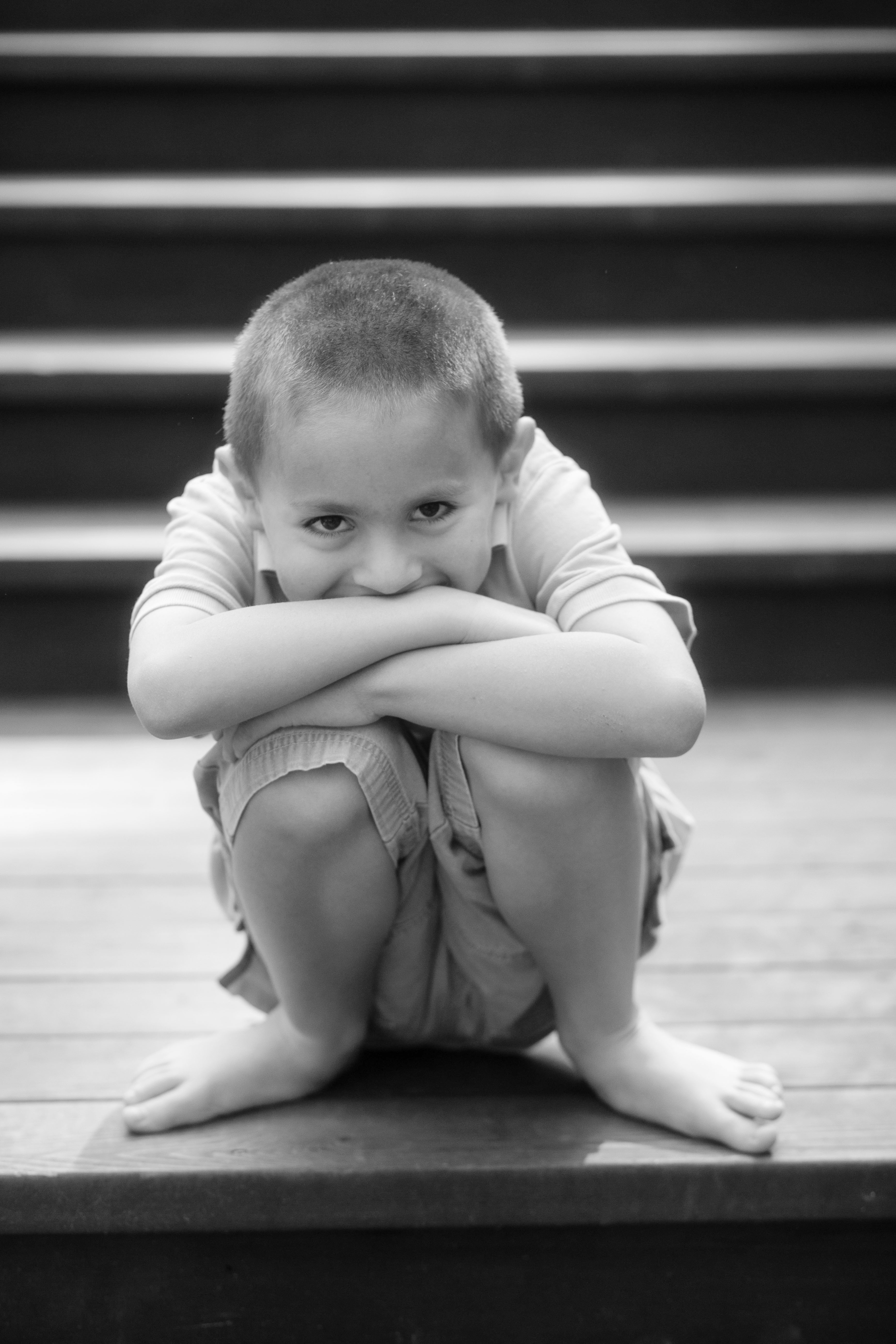 “Why do you have to have surgery tomorrow?” seven year-old Tristan asks from the back seat after we drop off his 11 and 15 year old siblings this morning.
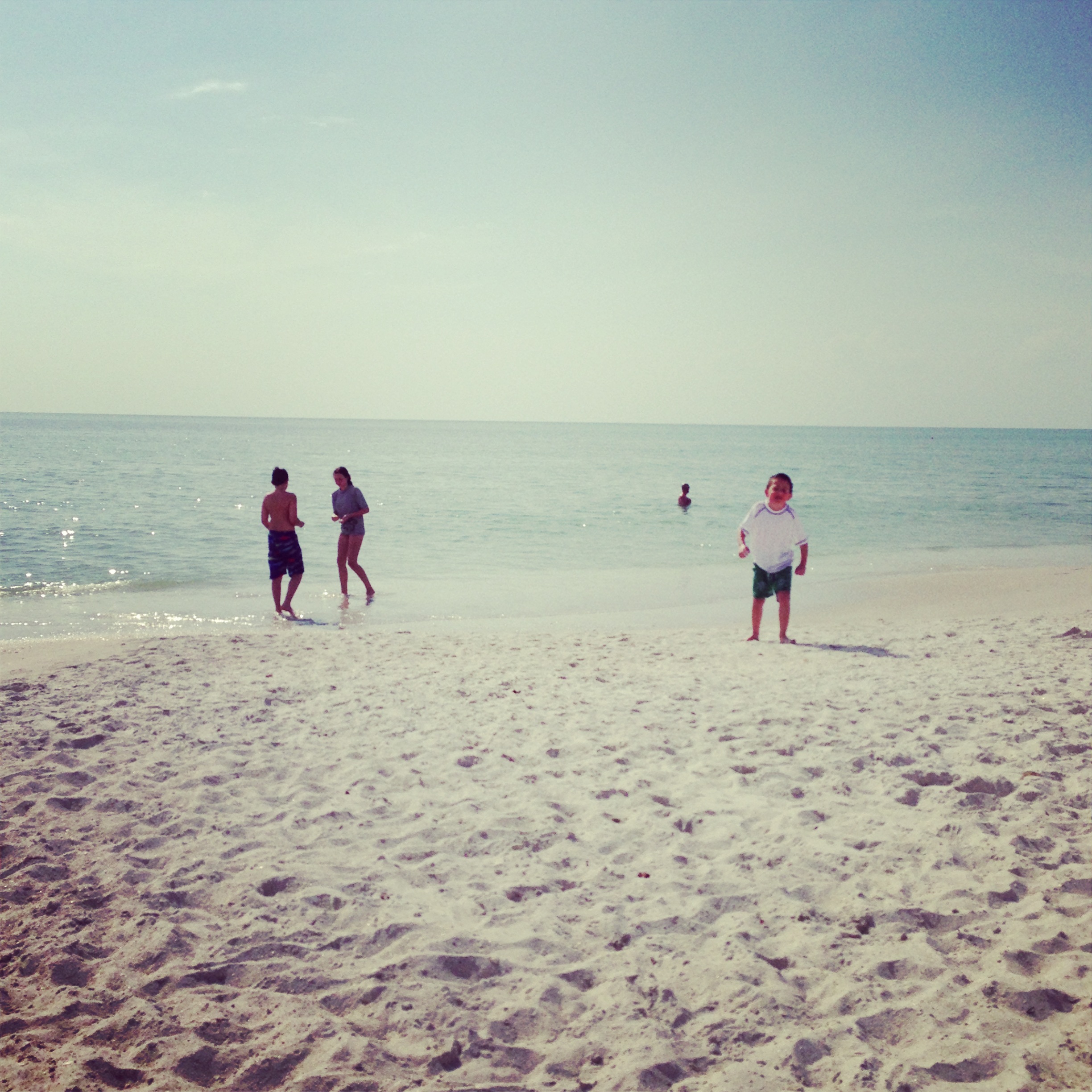
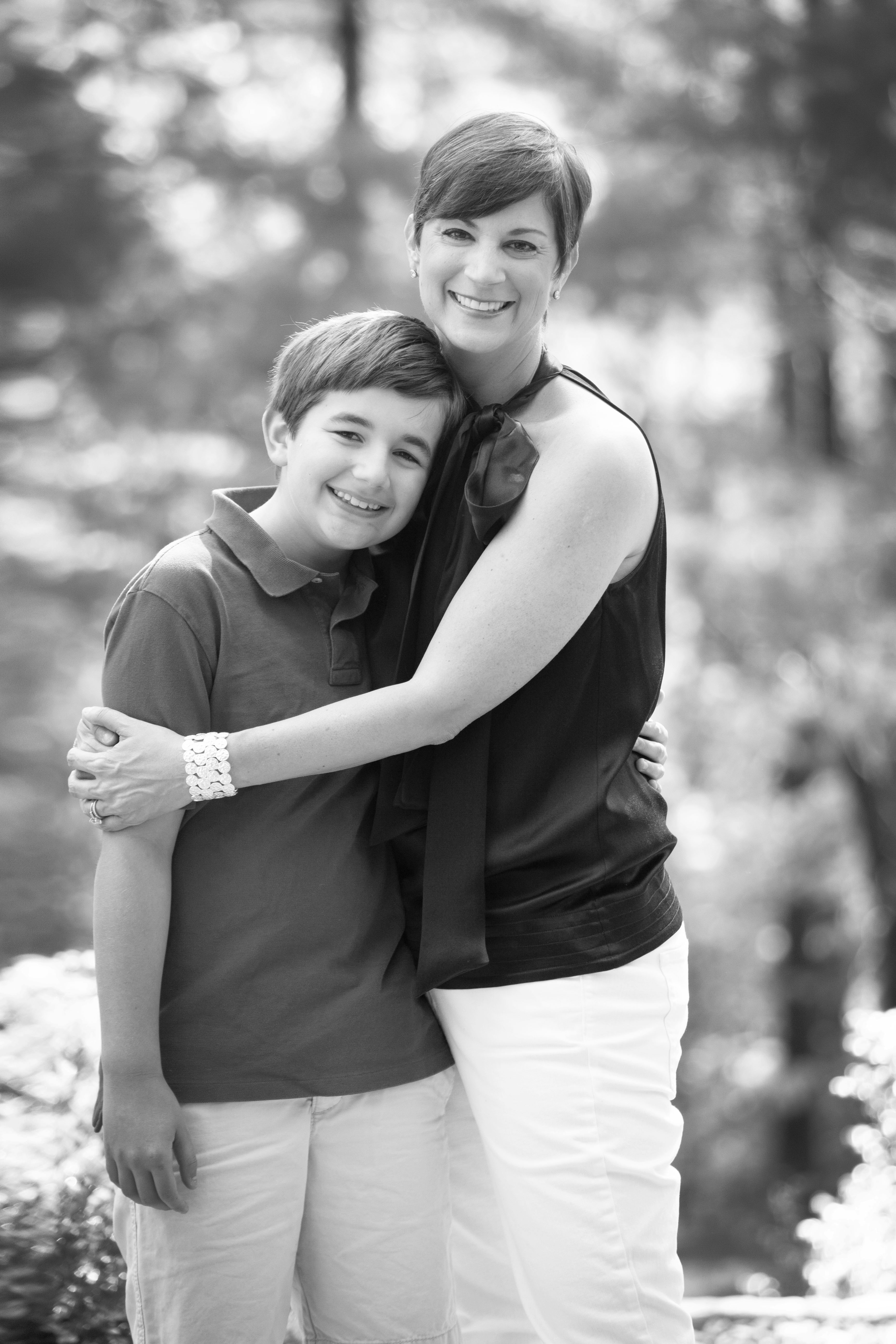

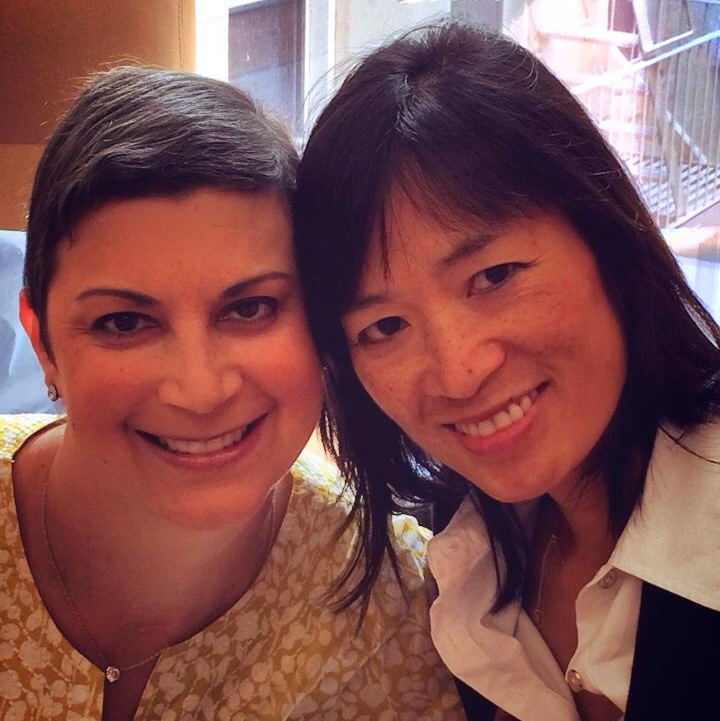

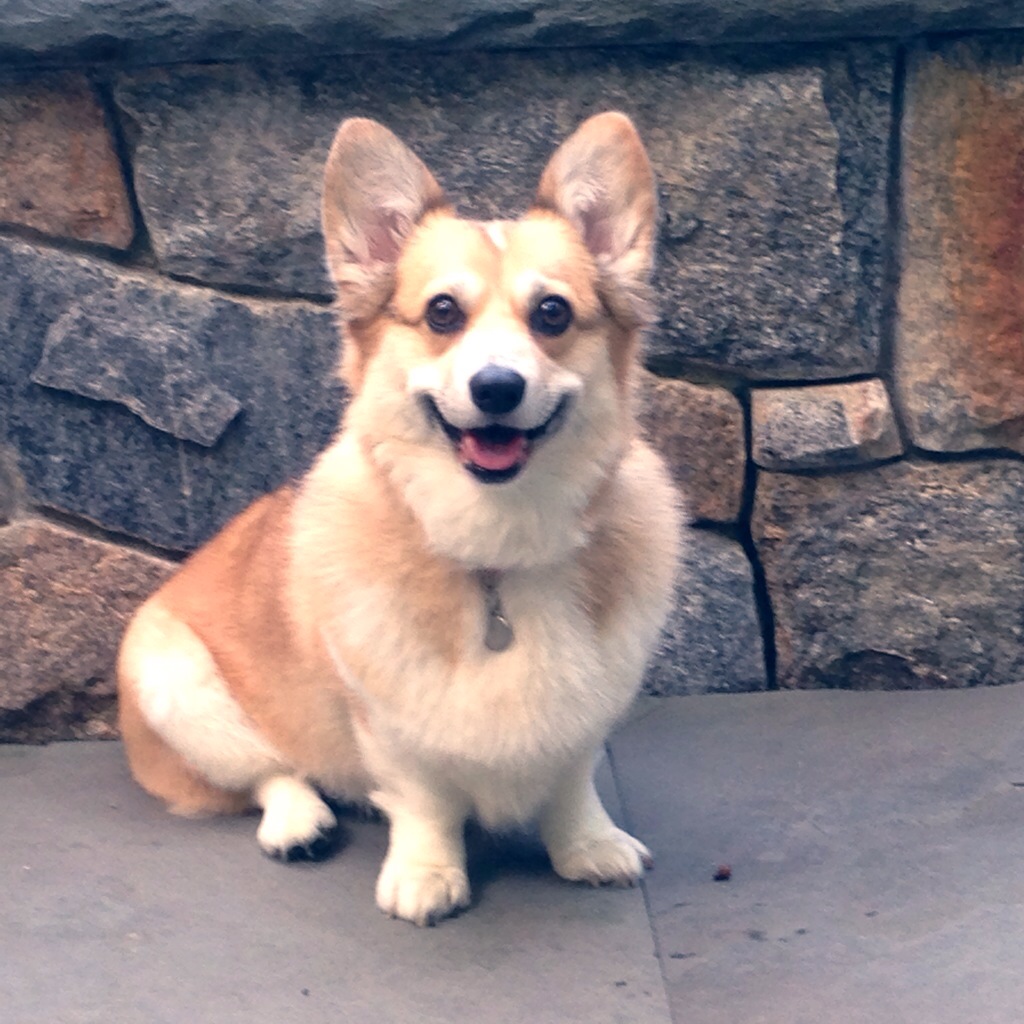

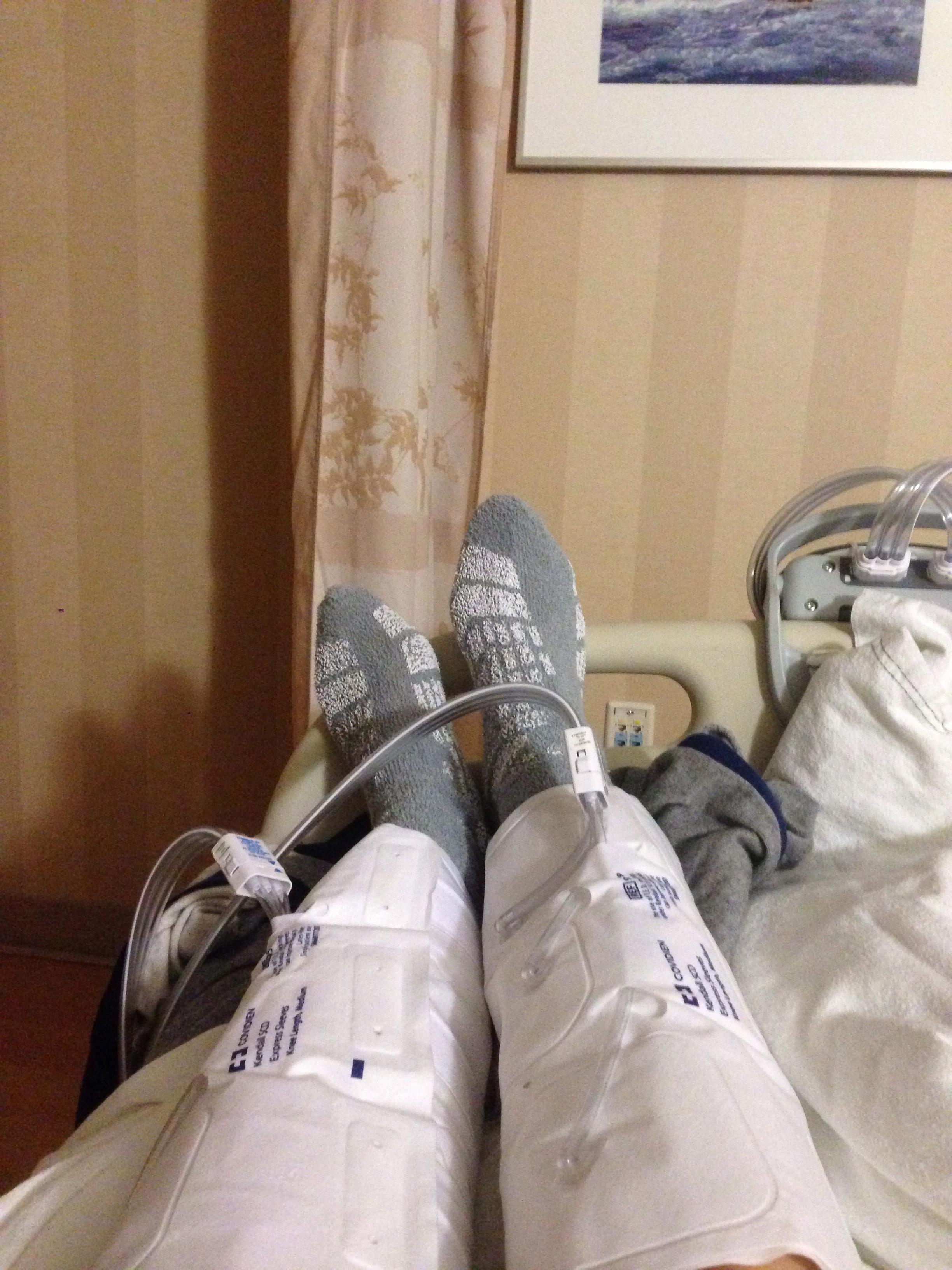
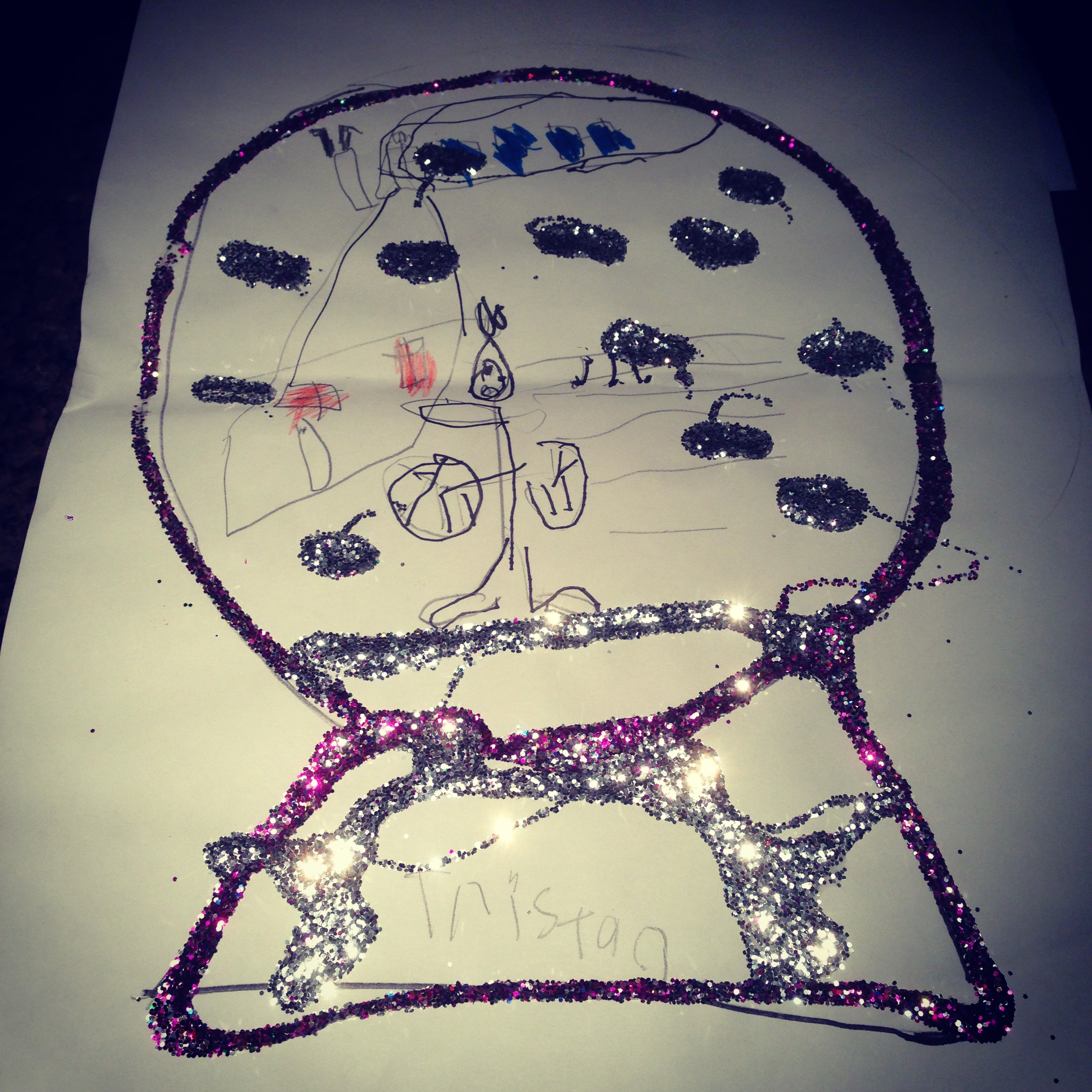
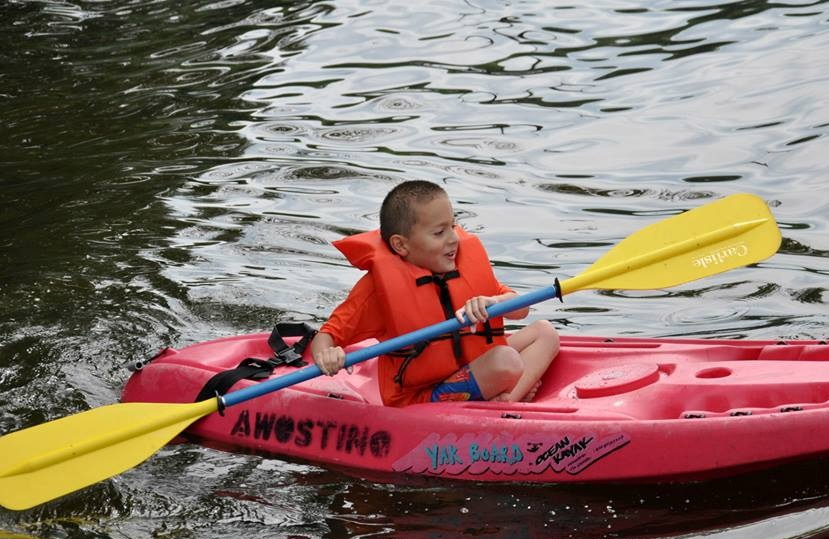
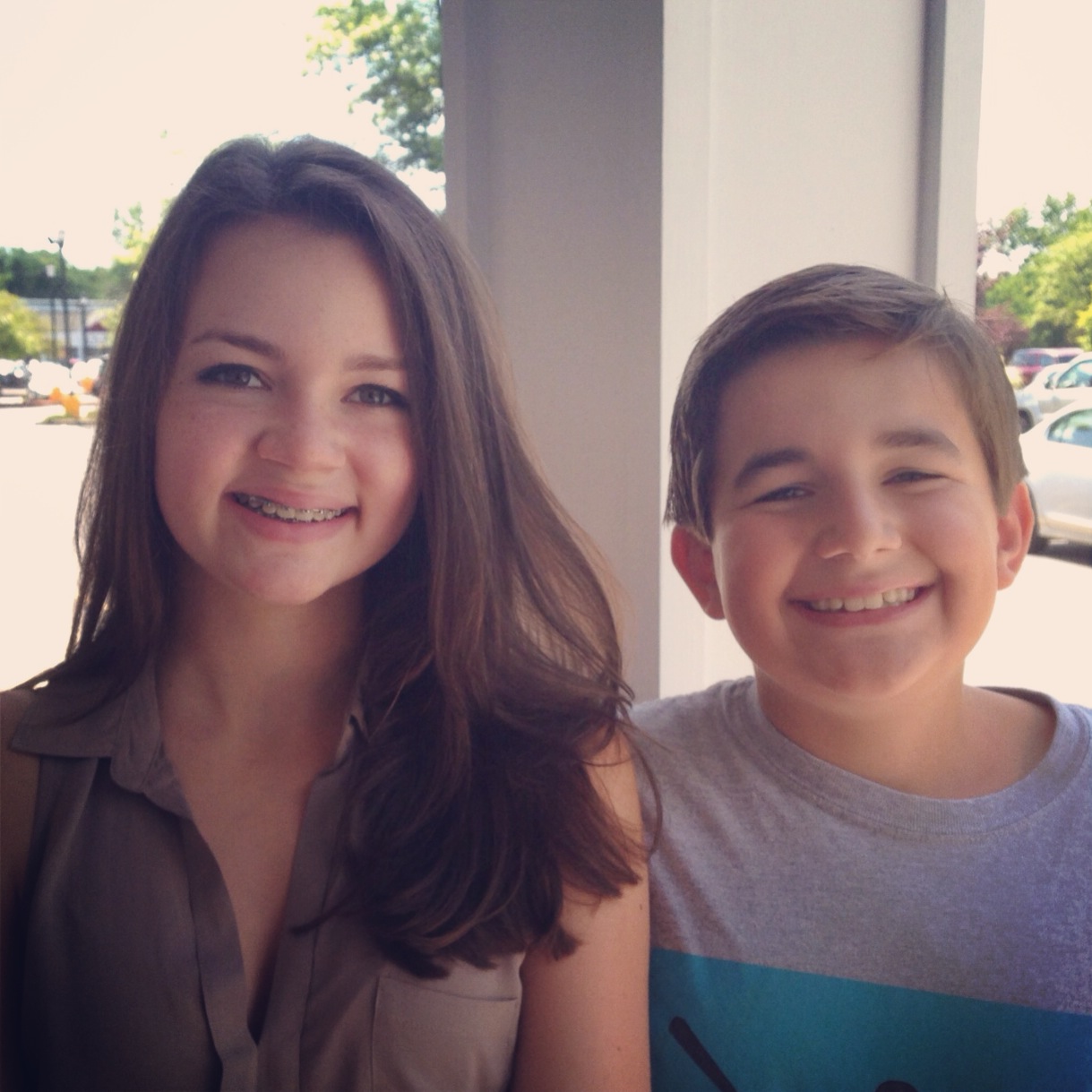
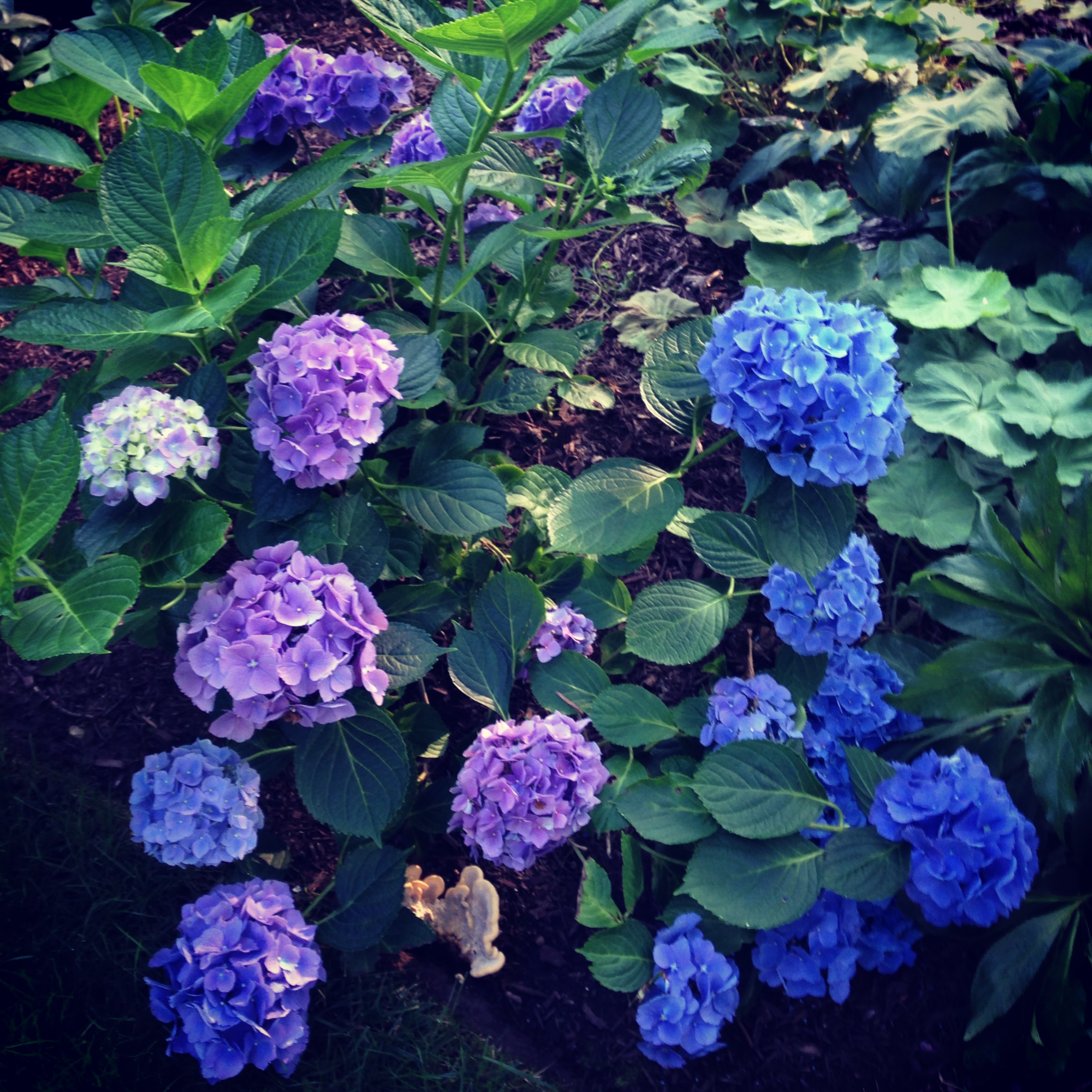



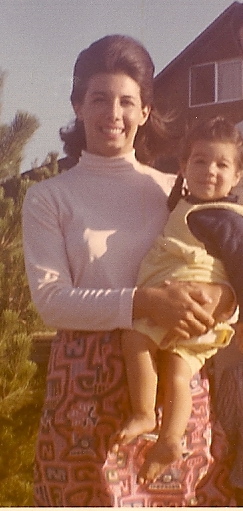
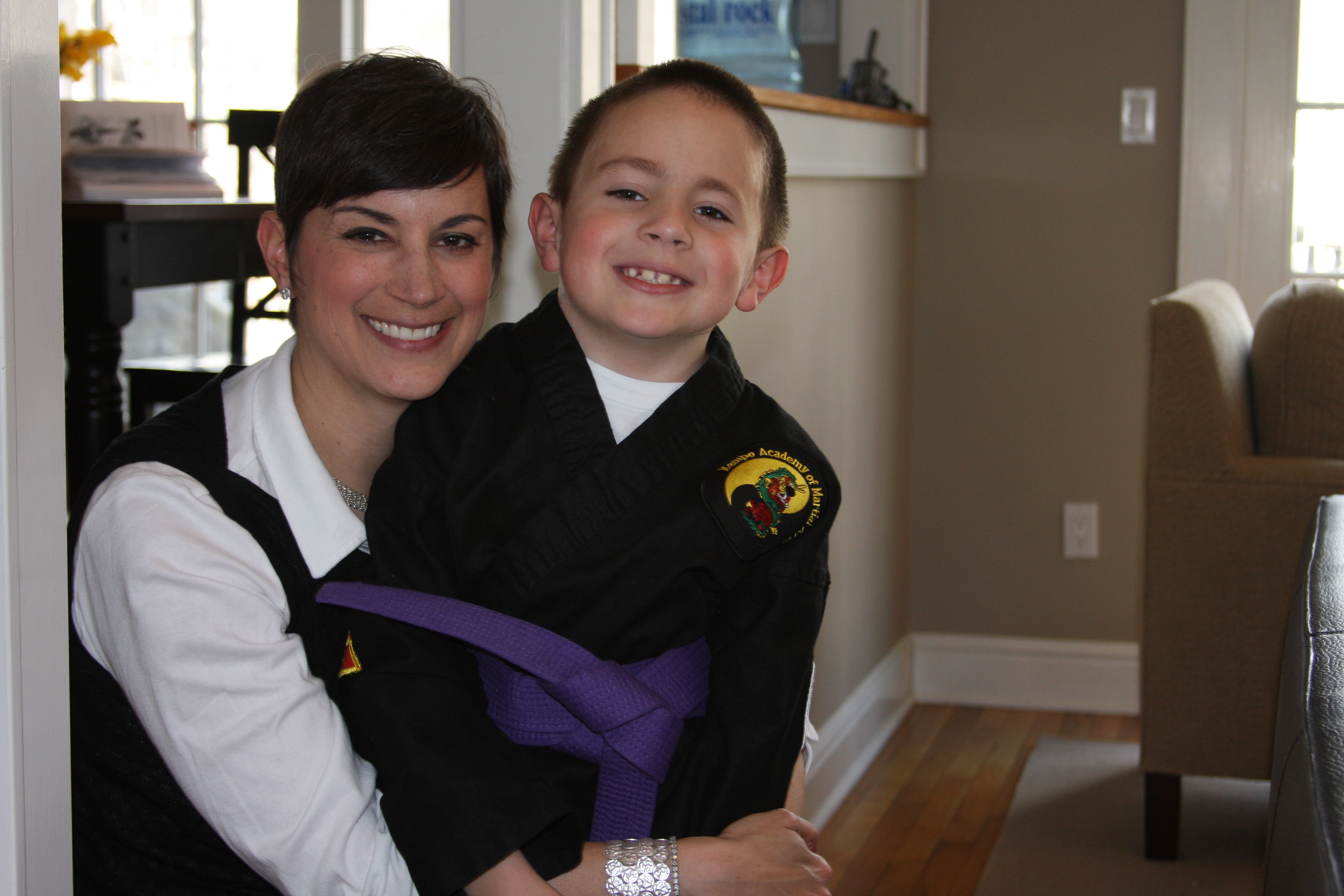



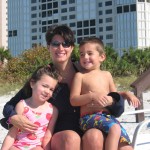





 Link to Twitter