October 22nd, 2014 §
 The past few weeks have been some of the most challenging this year. By the time you read this I will have had my third Navelbine infusion. Unfortunately, we do not have any evidence so far that it is working. Each chemotherapy that I try at this point only has about a 30% chance of working even for a short period of time.
For now, we anxiously wait. But that waiting means that the cancer is progressing. Increased fatigue, pain, nausea, weight loss, shortness of breath and weakness are my companions right now. I do have my team helping me manage these side effects, but there is trial and error involved. Also, at this point an increased cancer load is part of the problem. The only thing that will truly help that is to find a systemic therapy that works, and let it do its thing. For that reason I haven’t been able to post as often as I wanted this week.
I do want to share that the book auction to raise money for my metastatic research fund at Memorial Sloan-Kettering is now live, and it runs through October 24th. This is an exciting event. You can bid by posting a comment including the amount of your bid below the photo of the box you want (you must live in the USA to participate). All proceeds fund research and do NOT go to my personal medical care. Boxes of signed books have been donated by authors and then collected and curated by Erika Robuck. You can click here to go to the Facebook page and then scroll down to see all of the boxes.
Last year the event raised over $4000 and we are on track to blow that out of the water. If you want to donate directly to the research fund but don’t want to participate in the auction, don’t have Facebook, or don’t want to deal with Facebook, please feel free to go here. Donations of any amount are so appreciated.
For today’s October re-post I’ve chosen one of my first pieces, one that readers ask for again and again. I have decided to revise it here, now that my diagnosis has changed. I’m keeping the original post online, though, and you can see that here.
………………………………………….
I wish I had the energy of my youth.
I wish I had the body.
I wish I had the fearlessness, the spunk, the drive.
I wish I could have a conversation with that young girl,
bright-eyed and full of wonder.
I wish I could tell her what lay ahead.
I wish I could tell her to gather strength, and wisdom, and patience like a squirrel gathering acorns for the winter.
“Save those things up,” I’d say, “you are going to need them… every last bit.”
I wish I could share the perspective I’ve gained along with all of the love.
But I can’t go back to that time,
I can’t go back to that place.
I can’t rewrite what’s happened,
I can’t do it all again.
My first diagnosis with breast cancer took its toll on me and I was quite sure I would never, ever be the same.
I had no way to know then that “never, ever the same” would mean something worse, something fateful, a juggernaut.
I told myself “they’re only breasts.”
I said, “I don’t need ovaries, I’m done having children.”
But that obscured the truth.
The truth is that it did matter,
They do matter.
They said my uterus was atrophied.
It almost sounded funny when they said it.
“Who cares? What does that matter?”
It did. It does. It will.
At the time, to get rid of all hormones was thought to give me a better chance at avoiding a recurrence, but there was a price to be paid.
No estrogen mattered more than I ever thought it could.
It felt worse than taking injections to suppress my ovaries, worse than taking Tamoxifen.
Those were easy.
I had no clue what was ahead.
I wore the skirt, I put the makeup on, I walked the walk.
But I did not feel like a woman anymore.
I most certainly do not feel like much of one now.
Make no mistake, I am proud of what this body has done for me.
My three children top the list.
But now I must focus on some of its cells,
now malignant,
throughout this body,
growing at a horrific pace.
My body has now become a personal science experiment.
Sometimes, when things are going well, you could look at me and have no earthly clue.
You see,
Beneath the pretty lies ugly,
the ugly truth of cancer
and what it has taken from me.
While some may be able to go on,
move on,
forget,
I cannot.
My body will not let me.
These things are not tied with a pink ribbon.
These things last longer than a month.
This is part of awareness.
This is just a part of what breast cancer can do.
This is just a part of what breast cancer has done to me.
This is part of what can happen
Even with early detection and treatment.
This is what can happen even years later.
This is why people should not prematurely claim victory.
This is why you are not necessarily safe.
This is what breast cancer could do to you.
This is how what some think they have “beaten” or “bid goodbye to” can still
kill.
This is what it will do to me.
October 6th, 2014 §
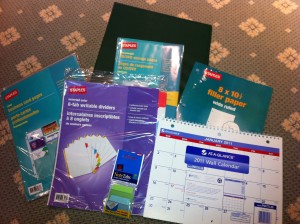 One of the most common questions I get asked by email is, “Someone I know has been diagnosed with cancer. What can I do?” Today I offer one suggestion. I believe this would make a practical gift for someone who has just been diagnosed and it is a necessity if you are the patient or a caregiver.
Being organized is one of the best ways to help yourself once you’ve been diagnosed. When you first hear the words, “You have cancer” your head starts to swim. Everything gets foggy, you have to keep convincing yourself it’s true.
But almost immediately decisions need to be made — decisions about doctors, treatments, and surgeries. Often these choices must be made under time constraints. You may be seeing many different doctors for consultations. Medical oncologists, surgical oncologists, radiation oncologists, recontructive surgeons, internists— there are many different voices that you may hear, and they may be conflicting. It’s hard to keep it all straight in the midst of the emotional news. Not only are you likely to be scared, but also you are suddenly thrust into a world with a whole new vocabulary. By the time you are done with it, you will feel you have mastered a second language.
You can help your care and treatment by being organized. You can also have the psychological bonus of feeling that one part of your care is within your control. Especially if you are juggling different specialists and different medical facilities, you must remember that the common factor in all of this is you. It’s your health. It’s your life. I believe it’s important to travel with a binder of information about your medical history and treatment, as well as notes and questions.
This binder will mean that all of your information about your cancer will be in one place. This will be your resource guide. I cannot tell you how many times physicians have asked about my binder and when I was able to instantly produce test results, pathology reports, or other information they needed, they said, “I wish every patient had one of those.”
I suggest the following:
A heavy 3-ring binder
I think a 1.5″ binder is a good size to start. This size will allow you to easily access reports and pages and have room for the calendar. It will look big at first but you won’t believe how quickly you will fill it up.
Colored tab dividers
I like these to be erasable. I think 8 is the minimum number you will need. If you have a lot of specialists you will need more. The categories you think you will need at the outset may change. It’s easy to erase and reorganize them. Put the categories you will be accessing the most in the front so you aren’t always having to flip to the back. Once the binder is full it will make a difference.
Some starting categories:
- schedules (dates of appointments you have had, when the next ones are due, and how often you need certain tests done)
- test results/pathology (it’s very important to keep copies of MRI, CT, and pathology reports so that you correctly tell other doctors what your diagnosis is. For example, new patients often confuse “grade” with “stage” of cancer)
- insurance (keep copies of all correspondence, denial of claims, appeal letters, explanations of benefits)
- articles and research (handouts, post-surgical information. Ask if there are any websites your doctor does approve of. My own oncologist said, “Do not read anything about cancer on the internet unless it comes from a source I’ve told you is okay. There’s a lot of misinformation out there.”) Keep your post-surgical instructions, any info given to you about aftercare.
- radiation/chemo (keep records of exactly what you had done, number of sessions, dates, drug names, etc. I also asked how my dose was calculated so I knew exactly how much of each drug I received in total)
- medications (drug names, dates you took them, dosage, side effects). I also keep a list of all of my current medications as a “note” in my iPhone. That way I can just copy it down and won’t forget anything on the list. You should always include any vitamins or supplements you take.
- medical history (write out your own medical history and keep it handy so that when you fill out forms asking for the information you won’t forget anything. As part of it, include any relatives that had cancer. Write out what type it was, how old they were at death, and their cause of death. Also in this section include genetic test results, if relevant)
Loose leaf paper
Perfect for note-taking at appointments, jotting down questions you have for each doctor. You can file them in the appropriate category so when you arrive at a doctor your questions are all in one place.
Business card pages
These are one of my best ideas. At every doctor’s office, ask for a business card.Keep a card from every doctor you visit even if you ultimately decide not to return to them. If you have had any consultation or bloodwork there, you should have a card. That way, you will always have contact information when filling out forms at each doctor’s office. For hospitals, get cards from the radiology department and medical records department so if you need to contact them you will have it. Also, you want contact information for all pathology departments that have seen slides from any biopsy you have had. You may need to contact them to have your slides sent out for a second opinion.
This is also a good place to keep your appointment reminder cards.
CD holders
At CT, MRI or other imaging tests, ask them to burn a CD for your records. Hospitals are used to making copies for patients these days and often don’t charge for it. Keep one copy for yourself of each test that you do not give away. If you need a copy to bring to a physician, get an extra made, don’t give yours up. If you need to get it from medical records from the hospital, do that. You want to know you always have a copy of these images.
Keep a copy of most recent bloodwork (especially during chemo), operative notes from your surgeries (you usually have to ask for these), pathology reports, and radiology reports of interpretations of any test (MRI, CT, mammogram, etc.) you may have had. Pathology reports are vital.
Calendar
I suggest a 3-hole calendar to keep in your binder. This will serve not only to keep all of your appointments in one place but also allow you to put reminders of when you need to have follow-up visits. Sometimes doctor’s offices do not have their schedules set 3, 6, or 12 months in advance. You can put a reminder notice to yourself in the appropriate month to call ahead to check/schedule the appointment. Some people like me prefer to use their phones for this, including reminders.
Similarly you can document when you had certain tests (mammograms, bone density, bloodwork) so you will have the date available. I usually keep a piece of lined paper in the “scheduling” section of my binder that lists by month and year every test/appointment that is due and also every test I’ve had and when I had it.
Sticky note tabs
These can be used to easily identify important papers that you will refer to often, including diagnosis and pathology. These stick on the side of the page and can be removed easily. As your binder fills up, they can be very helpful to identify your most recent bloodwork, for example.
Plastic folder sleeves and sheet protectors
These are clear plastic sleeves that you access from the top. They can be useful for storing prescriptions or small notes that your doctor may give you. The sleeves make them easy to see/find and you won’t lose the small slips of paper. Also a good place to store any lab orders that might be given to you ahead of time.
The above suggestions are a good working start to being organized during your cancer treatment. If you want to do something for a friend who is newly diagnosed, go out and buy the supplies, organize the binder and give it to your friend. He or she will most likely appreciate being given a ready-made tool to use in the difficult days ahead.
I also believe a modified version is equally useful for diagnoses other than cancer. When our youngest son was born with defects in his spine and hands it took many specialists and lots of tests to get a correct diagnosis. Having all of his tests and papers in a binder like this was instrumental in keeping his care coordinated. In fact, at his first surgery at The Children’s Hospital of Pennsylvania they gave us a binder to assist in this process. I know some hospitals do this for newly diagnosed patients already.
Maybe my tips will help you or a friend know how to better use the one you already have. You may not need all of these elements depending on the complexity of your case, but I hope you will find some of these suggestions useful.
September 12th, 2014 §
 Hi everyone, a quick update before the weekend…
It’s been a really tough few days after the increased dose of Carboplatin with my Gemzar infusion. Every side effect has come out of the woodwork and I’m doing my best to sleep off as much as I can while still doing the necessary daily activities. I went to one Back to School night this week and hope to attend two more soon. Next week will be chemo again (Gemzar only) and then a transfusion a few days later. I’ll also get a Neulasta shot next week and my usual Xgeva shot as well. That will be a rough week.
It’s too soon to know if the higher dose of chemo is doing anything at this point, so I am just forging ahead. We should know more in the next few weeks. Until then we continue to think about what option makes the most sense to try next.
Terry Teachout featured me in a touching piece he wrote in The Wall Street Journal yesterday called “Mortality and Muse” about those of us who choose to write about unpleasant subjects. He honored me in his support and I wanted to share it with you. To read it click here.
Here, too, is a link to the YouTube video from a panel session at Stanford MedX this month entitled “Communicating the Experience of Illness in the Digital Age.” Towards the end (around 30 minutes in) they directly address my story but anyone who wants to hear more about the topic can watch the panel session. Thank you to Susannah Fox, Colleen Young, and Meredith Gould for addressing some of the real issues and challenges of individuals who choose to share their health stories online.
Autumn is in the air here and I hope wherever you are you are able to find a bit of beauty for the weekend. I will be doing just that.
August 22nd, 2014 §
 Grow up faster,
Need me less,
Reach the sky,
Stand up tall.
Make time go,
Speed it up,
Get it done,
Don’t look back.
Hear my voice,
Feel my embrace,
Know I tried,
Look straight ahead.
Keep forging,
Thinking,
Feeling.
There is no choice,
This world is all there is,
Make it last.
Ours will be far shorter a time than it should be:
Years compressed into months, days, hours, minutes.
It will never be long enough,
It simply could never be enough time with you.
November 24th, 2013 §
 I could not have known at that time the path my life would take. I could not have known how my words were reaching into the future, knowingly, achingly.
I originally wrote about Katie Rosman’s book If You Knew Suzy in 2010. The blogpost was written before my diagnosis with metastatic breast cancer but years after my diagnosis of stage II breast cancer. My fears, articulated below, of my cancer returning and taking me from my family have now come true. It is interesting to read my words now through this new life lens.
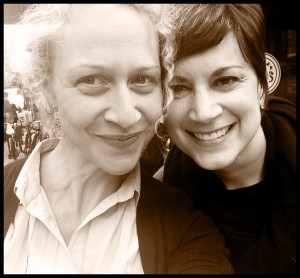
Katie and I have grown so close since I first wrote about her book, her mother, and their effect on me. Our friendship runs deep. I treasure Katie’s thoughtfulness, her compassion, her devotion to her family, her laugh, and yes, I’ll say it: I am very jealous of her curly hair and ability to do handstands.
………………………..
November is Lung Cancer Awareness Month. Misinformation and stigma are still linked with lung cancer.
I get asked all the time, “Why do you think you got cancer so young the first time? Why do you think it metastasized?” I think people are searching desperately for identifiable reasons so they can feel “safe” from the fate I have (Clearly she must have done something to be seeing it once again, right? That won’t happen to me, right? If I just eat this or drink that it won’t happen to me, right?).
There is one question almost universally asked of those diagnosed with lung cancer: “Smoker?” There are many risk factors for lung cancer that have nothing to do with smoking. In fact, I only learned after having an oophorectomy in 2008 that surgically-induced menopause significantly increases the risk of lung cancer (one paper here).
Yes, current smokers are those most likely to be diagnosed with lung cancer. But there are increasing diagnoses of those who have never smoked and many who stopped decades ago. We need much more research into the spectrum of causes of lung cancer (including radon and asbestos exposure) and effective treatments. The stigma associated with it, however, is a barrier to raising money for research compared with other cancers. It is the deadliest cancer; more than 25% of cancer deaths are from lung cancer (more than from colon, breast, and prostate cancer combined) yet receives only a fraction of research funding.
I wanted to share this post again during Lung Cancer Awareness Month to highlight one life. Writing is powerful. Across time and space, without ever having heard each other’s voices or shaken each other’s hand, I have learned so much from Suzy.
Katie’s mother, Suzy Rosin, died from lung cancer.
……………………….
There comes a point in your life when you realize that your parents are people too. Not just chaffeurs, laundresses, baseball-catchers, etc.– but people. And when that happens, it is a lightbulb moment, a moment in which a parent’s humanity, flaws, and individuality come into focus.
If you are lucky, like I am, you get a window into that world via an adult relationship with your parents. In this domain you start to learn more about them; you see them through the eyes of their friends, their employer, their spouse, and their other children.
Yesterday I sat transfixed reading Katherine Rosman’s book If You Knew Suzy: A Mother, A Daughter, A Reporter’s Notebook cover to cover. The book arrived at noon and at 11:00 last night I shut the back cover and went to sleep. But by the middle of the night I was up again, thinking about it.
I had read an excerpt of the book in a magazine and had already been following Katie on Twitter. I knew this was going to be a powerful book for me, and I was right. Katie is a columnist for The Wall Street Journal and went on a mission to learn about her mother after her mother died in 2005 from lung cancer. In an attempt to construct a completed puzzle of who her mother was, Katie travels around the country to talk with those who knew her mother: a golf caddy, some of her Pilates students, her doctors, and even people who interacted with Suzy via Ebay when she started buying up decorative glass after her diagnosis.
Katie learns a lot about her mother; she is able to round out the picture of who her mother was as a friend, an inspiration, a wife, a mother, a strong and humorous woman with an intense, fighting spirit. These revelations sit amidst the narrative of Katie’s experience watching her mother going through treatment in both Arizona and New York, ultimately dying at home one night while Katie and some family members are asleep in another room.
I teared up many times during my afternoon getting to know not only Suzy, but also Katie and her sister Lizzie. There were so many parts of the book that affected me. The main themes that really had the mental gears going were those of fear, regret, control, and wonder.
I fear that what happened to Suzy will happen to me:
my cancer will return.
I will have to leave the ones I love.
I will go “unknown.”
My children and my spouse will have to care for me.
My needs will impinge on their worlds.
The day-to-day caretaking will overshadow my life, and who I was.
I will die before I have done all that I want to do, see all that I want to see.
As I read the book I realized the tribute Katie has created to her mother. As a mother of three children myself, I am so sad that Suzy did not live to see this accomplishment (of course, it was Suzy’s death that spurred the project, so it is an inherent Catch-22). Suzy loved to brag about Katie’s accomplishments; I can only imagine if she could have walked around her daily life bragging that her daughter had written a book about her… and a loving one at that.
Rosman has not been without critics as she went on this fact-finding mission in true reporter-style. One dinner party guest she talked with said, ” … you really have no way of knowing what, if anything, any of your discoveries signify.” True: I wondered as others have, where Suzy’s dearest friends were… but where is the mystery in that? To me, Rosman’s book is “significant” (in the words of the guest) because it shows how it is often those with whom we are only tangentially connected, those with whom we may have a unidimensional relationship (a golf caddy, an Ebay seller, a Pilates student) may be the ones we confide in the most. For example, while Katie was researching, she found that her mother had talked with relative strangers about her fear of dying, but rarely (if ever) had extended conversations about the topic with her own children.
It’s precisely the fact that some people find it easier to tell the stranger next to them on the airplane things that they conceal from their own family that makes Katie’s story so accessible. What do her discoveries signify? For me it was less about the details Katie learned about her mother. For me, the story of her mother’s death, the process of dying, the resilient spirit that refuses to give in, the ways in which our health care system and doctors think about and react to patients’ physical and emotional needs– all of these are significant. The things left unsaid as a woman dies of cancer, the people she leaves behind who mourn her loss, the way one person can affect the lives of others in a unique way… these are things that are “significant.”
I woke up in the middle of the night thinking about the book. My head spun with all of the emotions it raised in me. I think that part of the reason writing has become so important to me is precisely because I do realize that we can die at any moment. And if you don’t have an author in the family who might undertake an enormous project as Katie did, where will that explanation of who you were — what you thought — come from?
Is my writing an extension of my desire to control things when cancer has taken away so much of this ability?
Is part of the reason I write an attempt to document my thoughts, my perspective for after I am gone… am I, in a smaller way, trying to do for myself what Katie did for her mother?
If I don’t do it, who will do it for me?
And in my odd way of thinking, am I trying to save anyone the considerable effort of having to work to figure out who I was– deep down?
[My original blog had] the title “You’d Never Know”: I am telling you things about myself, my worldview, and my life, that you would otherwise have no knowledge of. One of the things people say to me all the time is, “You’d never know to look at you that you had cancer.” After hearing this comment repeatedly I realized that much of our lives are like that:
If we don’t tell someone — share our feelings and experiences — are our lives the proverbial trees falling (unheard) in the forest?
What if you die without being truly understood?
Would that be a life wasted?
If you don’t say things for yourself can you count on others to express them for you?
Further, can anyone really know anyone else in her entirety?
After a loved one dies, there always seems to be at least one mystery person: an individual contacts the family by email, phone, or in person to say, “I knew her: this is how I knew her, this is what I remember about her, and this is what she meant to me.” I know that this happened when Barbara (my beloved mother-in-law) died suddenly in 2009. There are stories to be told, memories to be shared. The living gain knowledge about their loved one. Most often, I think families find these insights comforting and informative.
Katie did the work: she’s made a tribute to her mother that will endure not only in its documentation of the person her mother was (and she was quite a character!) but also in sharing her with all of us. Even after her death, Suzy has the lovely ability to inspire, to entertain, to be present.
I could talk more about the book, Katie’s wonderful writing, and cancer, but I would rather you read it for yourself. I’m still processing it all, making sense of this disease and how it affects families, and being sad that Katie’s children didn’t get to know their grandmother. Katie did have the joy of telling her mother she was pregnant with her first child, but Suzy did not live long enough to see her grandson born. In a heartwarming gesture, Katie names her son Ariel, derived from Suzy’s Hebrew name Ariella Chaya.
I thank Katie for sharing her mother with me, with us. As a writer I learned a lot from reading this book. I had said in years prior that “we don’t need another memoir.” I was wrong. That’s like saying, “I don’t need to meet anyone new. I don’t need another friend.” Truth is, there are many special people. Katie and Suzy Rosman are two of them.
November 4th, 2013 §
 Thanks so much for all of the support and response to the announcement about the song release. It’s really exciting.
I know many of you were waiting for Six Minutes to be available on iTunes. Your wish has been granted. You can search for it with my name or Doug Allen’s name or use this link. It’s also on Spotify.
Yesterday’s post has all of the background about the song and its history if you missed it.
November 2nd, 2013 §
Finally! After months of writing, recording and mastering, Doug Allen and I have released the song Six Minutes for distribution.
It is on iTunes here or you can get it here via CDBaby.
We are really proud of it and grateful to so many people who helped us with it… Donna Bonato at Silver Creative for turning one of my garden photos into the stunning cover art, Dennis Hrbek for his sound work, Anthony Radice for piano and some initial recording tracks, and of course our families and friends for their support along the way.
The background of the song as I wrote it for distribution is this:
I’ve been writing on my blog about my life for a few years and more recently about my diagnosis in 2012 with stage 4 breast cancer (6 years after initial surgery and treatment). Many of the posts I make are more poetic than prose lately. One particular one called “No room for that in this (Six Minutes)” seemed ripe for becoming song lyrics. I’ve never written song lyrics before and don’t even sing or play an instrument. But I did think the words had some potential to tell a good story, something I think is lacking in so much of modern music.
I’m a huge fan of Doug’s personally and professionally. He’s been teaching our son Colin to play guitar for a few years now. We’ve become friends and I love Doug’s sound. After hearing his latest album I knew he was someone who would be able to find the right music. I knew that on occasion he would co-write songs. I asked him, on a lark, if he’d consider working with me on turning the post into a song. He agreed.
We sat at my kitchen table and in that first session I turned that original post into the lyrics for “Six Minutes.” Doug almost immediately got the right feel and sound for the music and it just clicked. We both felt that while the original storyline of the song was about me, the song itself needed to be more universal. That’s why I made the chorus something so approachable, something everyone can relate to.
For me, the six minutes were ones of pain that I wanted to go by quickly. But I regretted that I was wishing my life away in these small increments. What Doug and I knew for sure is that we all can relate to the idea of “taking a trip inside your head” where you just check out during the day. That’s what he and I kept coming back to. Daydreaming, zoning out, whatever it is that helps you take a little break. So the chorus is about that, which is important because those are the words you’re likely to be singing to yourself again and again and need to be able to relate to.
The song came together very easily for us. The words really didn’t change after that first meeting. I think we knew we had the right music for it and the story is now there for sharing.
We hope listeners will enjoy it, we hope it will speak to them. This one is a true collaboration and I’m grateful Doug was able to share my words in a new way. After hearing it hundreds of times now I still find myself singing the chorus again and again at moments throughout the day.
You might enjoy seeing that original post and what the lyrics became in the final version…
Six Minutes
The clock says it’s been six minutes now,
I’m glad that they have passed,
Then I realize I’ve wasted them:
Six minutes gone too fast.
I take a trip inside my head,
I don’t know where I go.
Somewhere else,
Anywhere else,
Far from things I know.
I try to forget for a moment now,
Focus on a spot on the wall,
I lose myself in the emptiness,
Such a painfully long way to fall.
So I take a trip inside my head,
I don’t know where I go.
Somewhere else,
Anywhere else,
Far from things I know.
I find myself in silence,
Tuning out the noise,
No room for anything,
But him, my girl and the boys.
And when I’m gone,
Just no way around it,
So many things they will miss
‘Cause when it comes to being fair,
There’s no room for that in this.
Gonna take a trip inside my head,
I don’t know where I’m gonna go,
Somewhere else,
Anywhere else,
Far from things I know…
August 20th, 2013 §
This is the last week of summer before school begins.
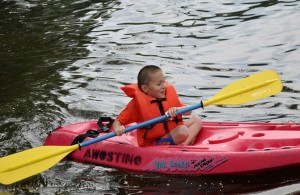 This summer was a big one for us. Youngest Tristan went off to sleepaway camp for one week and loved it so much that in the end, he stayed for a month. Paige and Colin returned to camp as seasoned veterans and had a wonderful time in their home away from home. All learned new skills and made new friends. Paige and Colin’s constant banter of camp stories at the dinner table are now supplemented by Tristan’s own stories.
I’m so pleased they could be in a place where they could just be kids, not worried about me, free to be carefree and happy. It is my gift to let them go, to not keep them here for my own needs. While I want to spend as much time with them as I can, I know that this is what they all needed to do this year.
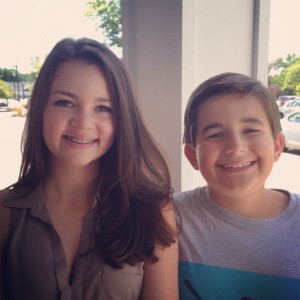 I sit back and smile now, loving that they all have a common reference point of their weeks at camp. Despite the eight year age gap they all find laughs and joy in their summer adventures. They look older to me, of course. And while others are sad about the passage of time and their children growing older and being independent, I say again that I cheer it.
You see, my job now is to prepare them for life without me. My goal is to show them how to accept the help of others but not be reliant on it. I choose to show them every day that there is determination and nobility in facing what life throws you. You may not be able to change the final outcome, but you can change what you do to be ready for it. The strongest way of teaching this right now is by living my life deliberately, making choices and showing them the best I can be. This doesn’t mean denial. Nor does it mean I don’t lose my temper or raise my voice or fall apart sometimes. To be emotionally numb or invariable in my response to what is happening is not healthy. I try to show them that expressing what they feel is a better option. Emotions of anger and sadness and grief and fear are fine to have. It’s beneficial to talk about them, but dwelling on them won’t make things better. Acknowledging their reality, their truth, their basis is what’s needed.
As I always say when I get bad medical test results: a short pity party is good. Then you have to pick yourself up and move on.
 It has been almost eleven months since my diagnosis of stage IV breast cancer, and there isn’t a day that goes by that is free from concern. I notice myself being more and more affected by the daily chemotherapy, feeling more fragile, more vulnerable. I have already had one bad respiratory illness this summer, and I worry about the school year and all of the potential colds and infections that will be transmitted. I don’t want to think about the ways cancer affects my daily life, but I must. The decisions I make about activities, treatments, and chemo all directly affect my life… both in length and quality.
I push myself to do the most I can. I try to do all of the little things that add up to a full day: school supply shopping, back to school haircuts, camp laundry, new shoes, sports registrations, and walking the dog. I also request meetings with school administrators, coaches, and anyone new in my children’s lives for this fall that need to know how my kids’ home life differs from the one they had a year ago.
I’m a planner. I take comfort in routine, the familiar, the predictable. Unfortunately, those are now removed from my life forever. Yes, I know life always tosses everyone curveballs. That’s what life is. But I experience it in a whole new way. I have no way of saying life will ever return to “normal” or even a “new normal.” There will not be a “better”… I am not “sick” in that I cannot recover.
I still feel the drive to help, to counsel, to educate. But am finding it more difficult. I hate saying no but know I will need to start saying this more. In-person interaction is very difficult for me. While no one would know it to look at me, social interaction is extremely draining these days. I try to minimize contact knowing that when I am in public I am under scrutiny. People want to know how I am. They want to be reassured. They look at me for clues as to how things are. There is no reassurance I can offer. This is a disease of progression to the end, a story that will not have a happy ending.
I want the story that I am living to be a good one, to the highest degree it can be. I want the story for my family and friends to be one full of love, memories, and devotion. These people are the center of my world.
I want the story to be different from what it has been, different from what it will be.
As a writer I am used to editing. Revising. Changing what I don’t like.
But I can’t edit this story.
I can’t start it all again.
And so I write through it.
The only way out is through.
But this one… well, this one is quite simply going to have a sad ending, as many stories do.
July 5th, 2013 §
 Something happened to my brain when I heard the words “Your breast cancer has metastasized.” Suddenly, irreparably, it became a sieve. Surgical menopause without the option of hormone replacement seven years ago started the process. But mental anguish and immediate, lifelong chemotherapy been major contributors to my Swiss cheese mind.
I used to read a lot. People think of me as a reader. I am sorry to say I’ve become a fraud.
I love to support authors and their books. That has not changed. It never will.
But when it comes to what I’m actually reading (and finishing)… well, I have a confession to make: it’s not much in the past nine months.
My mind jumps all over the place. It simultaneously wants quiet but is restless. It craves nothingness and distraction. It is hard for me to sustain long conversations; I find them exhausting now. This is one reason Twitter has remained such a wonderful social medium for me; it is defined by short chats that can be stopped and started at will.
When it comes to reading, however, I am having trouble. I hope this ability will return. I spend my focused time writing when I can. Even then, as readers here know, I almost always write brief pieces, expressing thoughts in as few words as possible.
When I was first diagnosed with breast cancer and underwent chemo in 2007 I didn’t read either. I hear from so many people that this is how they felt, too. Those who are newly-diagnosed think they will spend their time catching up on books they want to read during chemotherapy or after surgery. It just rarely happens: either your brain is in a fog or you feel rotten. When you feel good, you want to get out and do things with your family and/or friends.
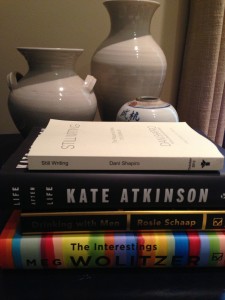
My current stack of “am reading” and “to be read” is shown in the photo above: books by Dani Shapiro (am reading), Kate Atkinson, Rosie Schaap, and Meg Wolitzer (to be read). I’ve cleared out shelves and shelves of books that I know I won’t get to and given these treasures away. It really made me sad to see so many books there, mocking my isolation: tangible reminders of things I will leave undone. And yet, I saved a bookcase or two of books I still want to read. I won’t give up hope completely.
So now I turn it to you, readers: Do you go through phases of reading? What have you noticed about your reading habits when you had bad news? Health issues? Medical treatment of some kind?
On the flip side, what happened to your reading habits after happy events? I didn’t read after the birth of each of my children: middle of the night feedings were accompanied by nodding off, not turning pages of a book. I’m not an audio book person, I should specify. I know how wonderful this format can be, it just doesn’t work for me. I either fall asleep (chemo fatigue and the sound of someone reading to me… isn’t that how we prime our children for bedtime, after all?) or my mind does its trademark wandering and I have to keep rewinding the story.
The beautiful thing about a book is that it endures. It will wait for you. Like a good friend, when you are finally ready, it will share itself with you.
June 24th, 2013 §
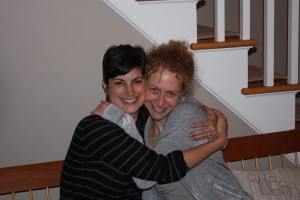 Today is the eight year anniversary of the death of Suzy Rosin. Suzy was special to many different people as anyone who has read the book If You Knew Suzy: A mother, a daughter, a reporter’s notebook knows. One of the ways she is most special to me is that she is the mother of my friend Katie.
I first wrote about these two extraordinary women back in June of 2010 after reading Katie’s memoir about coming to know her mother’s diverse legacies after Suzy died from lung cancer at age 60.
Revisiting old blogposts takes me on an emotional rollercoaster. Being on the other side — having incurable stage IV cancer — gives the pieces a whole new meaning.
This post captures my fervent wish to document my thoughts and feelings for my children. I still feel a strong desire to be understood. I think in many cases people with cancer do not feel understood. Katie’s dedication for the book echoes this wish: “To my mother’s grandchildren, so they may know her.”
Katie and I have become friends. Great friends. We talk about Suzy. We talk about french fries and silly socks and Pilates. We talk about her work and we talk about our kids. We talk about cancer. We talk about the most frivolous parts of life and the most serious. As I write below, “Even after her death, Suzy has the lovely ability to inspire, to entertain, to be present.” In life, so does her daughter, Katie.
………………………………….
Originally published June, 2010
There comes a point in your life when you realize that your parents are people too. Not just chaffeurs, laundresses, baseball-catchers, etc.– but people. And when that happens, it is a lightbulb moment, a moment in which a parent’s humanity, flaws, and individuality come into focus.
If you are lucky, like I am, you get a window into that world via an adult relationship with your parents. In this domain you start to learn more about them; you see them through the eyes of their friends, their employer, their spouse, and their other children.
Yesterday I sat transfixed reading Katherine Rosman’s book If You Knew Suzy: A Mother, A Daughter, A Reporter’s Notebook cover to cover. The book arrived at noon and at 11:00 last night I shut the back cover and went to sleep. But by the middle of the night I was up again, thinking about it.
I had read an excerpt of the book in a magazine and had already been following Katie on Twitter. I knew this was going to be a powerful book for me, and I was right. Katie is a columnist for The Wall Street Journal and went on a mission to learn about her mother after her mother died in June, 2005 from lung cancer. In an attempt to assemble a completed puzzle of who her mother was, Katie travels around the country to talk with those who knew her mother: a golf caddy, some of her Pilates students, her doctors, and even people who interacted with Suzy via Ebay when she started buying up decorative glass after her diagnosis.
Katie learns a lot about her mother; she is able to round out the picture of who her mother was as a friend, a wife, a mother, a strong and humorous woman with an intense, fighting spirit. These revelations sit amidst the narrative of Katie’s experience watching her mother going through treatment in both Arizona and New York, ultimately dying at home one night while Katie and some family members are asleep in another room.
I teared up many times during my afternoon getting to know not only Suzy, but also Katie and her sister Lizzie. There were so many parts of the book that affected me. The main themes that really had the mental gears going were those of fear, regret, control, and wonder.
I fear that what happened to Suzy will happen to me:
My cancer will return.
I will have to leave the ones I love.
I will go “unknown.”
My children and my spouse will have to care for me.
My needs will impinge on their worlds.
The day-to-day caretaking will overshadow my life, and who I was.
I will die before I have done all that I want to do, see all that I want to see.
As I read the book I realized the tribute Katie has created to her mother. As a mother of three children myself, I am so sad that Suzy did not live to see this accomplishment (of course, it was Suzy’s death that spurred the project, so it is an inherent Catch-22). Suzy loved to brag about Katie’s accomplishments; I can only imagine if she could have walked around her daily life bragging that her daughter had written a book about her… and a loving one at that.
Rosman has not been without critics as she went on this fact-finding mission in true reporter-style. One dinner party guest she talked with said, ” … you really have no way of knowing what, if anything, any of your discoveries signify.” True: I wondered as others have, where Suzy’s dearest friends were… but where is the mystery in that? To me, Rosman’s book is “significant” (in the words of the guest) because it shows how it is often those with whom we are only tangentially connected, those with whom we may have a unidimensional relationship (a golf caddy, an Ebay seller, a Pilates student) may be the ones we confide in the most. For example, while Katie was researching, she found that her mother had talked with relative strangers about her fear of dying, but rarely (if ever) had extended conversations about the topic with her own children.
It’s precisely the fact that some people find it easier to tell the stranger next to them on the airplane things that they conceal from their own family that makes Katie’s story so accessible. What do her discoveries signify? For me it was less about the details Katie learned about her mother. For me, the story of her mother’s death, the process of dying, the resilient spirit that refuses to give in, the ways in which our health care system and doctors think about and react to patients’ physical and emotional needs– all of these are significant. The things left unsaid as a woman dies of cancer, the people she leaves behind who mourn her loss, the way one person can affect the lives of others in a unique way… these are things that are “significant.”
I woke up in the middle of the night thinking about the book. My head spun with all of the emotions it raised in me. I think that part of the reason writing has become so important to me is precisely because I do realize that cancer can return at any moment. And if you don’t have an author in the family who might undertake an enormous project as Katie did, where will that explanation of who you were — what you thought — come from?
Is my writing an extension of my desire to control things when cancer has taken away so much of this ability?
Is part of the reason I write an attempt to document my thoughts, my perspective for after I am gone… am I, in a smaller way, trying to do for myself what Katie did for her mother?
If I don’t do it, who will do it for me?
And in my odd way of thinking, am I trying to save anyone the considerable effort of having to work to figure out who I was– deep down?
My blog originally had the title “You’d Never Know”: I am telling you things about myself, my worldview, and my life, that you would otherwise have no knowledge of. One of the things people say to me all the time is, “You’d never know to look at you that you have cancer.” After hearing this comment repeatedly I realized that much of our lives are like that:
If we don’t tell someone — share our feelings and experiences — are our lives the proverbial trees falling (unheard) in the forest?
What if you die without being truly understood?
Would that be a life wasted?
If you don’t say things for yourself can you count on others to express them for you?
Further, can anyone really know anyone else in her entirety?
After a loved one dies, there always seems to be at least one mystery person: an individual contacts the family by email, phone, or in person to say, “I knew your loved one: this is how I knew her, this is what I remember about her, and this is what she meant to me.” There are stories to be told, memories to be shared. The living gain knowledge about their loved one. Most often, I think families find these insights comforting and informative.
Katie did the work: she’s made a tribute to her mother that will endure not only in its documentation of the person her mother was (and she was quite a character!) but also in sharing her with all of us.
Even after her death, Suzy has the lovely ability to inspire, to entertain, to be present.
I could talk more about the book, Katie’s wonderful writing, and cancer, but I would rather you read it for yourself. I’m still processing it all, making sense of this disease and how it affects families, and being sad that Katie’s children didn’t get to know their grandmother. Katie did have the joy of telling her mother she was pregnant with her first child, but Suzy did not live long enough to see her grandson born. In a heartwarming gesture, Katie names her son Ariel, derived from Suzy’s Hebrew name Ariella Chaya.
I thank Katie for sharing her mother with me, with us. As a writer I learned a lot from reading this book. I’ve said many times recently that “we don’t need another memoir.” I was so wrong. That’s like saying, “I don’t need to meet anyone new. I don’t need another friend.” Truth is, there are many special people. Katie and Suzy are two of them.
March 19th, 2013 §
Alone.
Willing myself to recharge, gather strength, get ready, be stronger.
Chemo starts again.
One more week.
My relationship status with chemo on Facebook would read: It’s complicated.
Chemo keeps me alive.
Buys me time.
Gives me days, weeks, months.
But
Makes me sick.
Causes my hands and feet to numb, get tender, peel, redden, swell, ache, burn, throb.
Tires me, sickens me, weakens me.
How can I hate that which gives me hope?
I check in with friends on Twitter.
I see photos of beautiful people in watercolor places doing things I want to be doing.
I am jealous.
The light hits her hair so perfectly, magically, like a mermaid.
It makes me cry.
I literally weep at the beauty of a friend,
wishing I could be with her,
with them,
anywhere but here.
I had a dream of being at Sirenland.
I set a goal, but it has come and gone, unfulfilled.
I cannot decide if stage IV means I must downsize my dreams or shoot for the moon.
Is there nothing left to lose or simply nothing left?
It is late night in Positano now.
They have done their work for the day.
They have their late European dinner, their drinks, their views of the water shimmering at the base of the hill.
I was supposed to go on a trip there once, coincidentally.
A fifteen year anniversary present and celebration of finishing cancer surgeries and chemo six years ago.
Plans were made, everything was set.
Four days before planned departure, our (then) five year old son’s appendix ruptured.
Nine days of round the clock hospital bedside vigils followed.
No trip. No rebooking. No celebration.
But no regrets at being where our son needed us to be.
Wistful I remain.
Unsure I will see that place now.
I envy those who are there.
I wonder if they know.
How I envy them.
March 2nd, 2013 §
 By now many of you have heard the news that my blog was chosen to be included in the New York Times Motherlode Blogroll. I’m so thrilled that editor KJ Dell’Antonia chose to share my writing with a wider audience. The original web announcement appears here, and the text appears below.
It’s exciting to see the readership grow. I’ve been busy reading the emails, tweets, and comments from readers who connect with what I’ve written. The notes of suppport and appeals to “keep doing what I’m doing” cheer me. When someone writes, “you’ve expressed what I’m feeling” or “I’m learning from you” I know that what I’m doing is right. I try to answer emails, even if it’s just a sentence or two, but sometimes I just cannot. Please know I read EVERY word you write to me, if I can’t respond individually all the time, I ask your forgiveness.
If you haven’t read my essay The mentor I never met about my own introduction to a blogger with cancer, please do. It’s one of the most important things I’ve written. It explores the connection between a reader and a blogger. I know there are thousands of you reading these words that don’t know me personally. But that doesn’t matter. I understand how reading a diary of the innermost thoughts of someone facing stage 4 cancer brings us together. My readers here and followers on Twitter understand me in a way that even my close friends cannot. It’s one reason I love social media. There is a connection that can be made (at least the way that I use social media).
I welcome new readers who’ve come here after seeing KJ’s announcement. I treasure the readers who have been with me, encouraging me from the start.
A bit of housekeeping before I turn you over to the Times profile: my bloodwork this week showed stable tumor marker (CA 15-3) numbers. This is good. Side effects from the chemo have varied from annoying/challenging/painful to quite tolerable. This is as much as I can hope for. 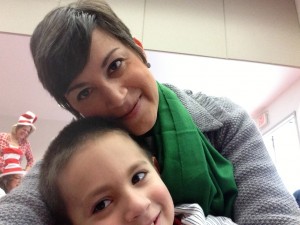 I was able to spend a lot of time with my family this week and enjoyed being at school for conferences and a reading celebration of Dr. Seuss’s birthday.
I will continue with the dosing that I have done for the last two rounds (I’m on round 11). I take 27,000 mg (54 pills) of Xeloda over the course of a week and then have one week off. Before starting the next round I do bloodwork, make any adjustments to the dose based on tolerability of side effects, and repeat the process. I will do this as long as the cancer responds to the drug and does not spread further. I will be on some form of chemotherapy for the rest of my life. 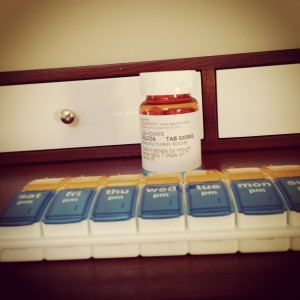
I received my monthly Xgeva injection for my bones which I’ve tolerated much better this month than the Zometa intravenous infusions I was getting since October. Those treatments were giving me difficult side effects.
Thanks to you all for reading. I appreciate all of the warm greetings I’ve had so far.
……………………………………..
Blogging Her Life With Cancer
by KJ Dell/Antonia
When I called on readers to submit the blogs they loved for the Motherlode blogroll, one name came up more than any other: Lisa B. Adams. And I can understand why. The best personal blogs come from people on a journey through something that is as intense as anything they’ve ever experienced, and Lisa is on a journey none of us want to be on. She has breast cancer, and last fall she learned that the cancer had metastasized to her bones, becoming Stage 4 breast cancer.
It’s hard for me not to resort to clichés in talking about Lisa’s blog — to say things like “she’s taking it one day at a time” and “she’s playing the hand she was dealt.” I suspect that those clichés are an excellent way to distance myself from her experience. But it is Lisa’s gift that she does not allow that distance between herself and the reader. She has a directness that draws you in, and she tells her story in a way that is never maudlin. It’s just … her story. It could be anyone’s, but it’s hers, and she’s willing to simply tell us how it is to be her.
I wrote Lisa, and asked her to tell us how her blog began and what it means to her, and to describe a few of her favorite posts.
From Lisa:
I probably started blogging in the reverse order many people do. Rather than it mattering intensely to me and then later realizing it mattered to others, I started by doing it for others and then realized how much it was part of me.
I’ll explain a bit. When you have had cancer and are one of the first ones to have it, you become the reference point as others are diagnosed. “Oh, Lisa had breast cancer… you should talk to her. Do you know her?” This is a natural branching out of social circles based on disease.
As a person who gets asked for advice all the time (most frequently about medical information), I was asked repeatedly for advice about cancer and how to help people who had friends or relatives who were diagnosed. Once I started writing informative pieces to share with them and saw their reactions, I realized I filled a void in the cancer blogging community at that time. As a result, my interactions with readers and the writing process itself became fulfilling in a way that my prior academic work never had.
I strive in my writing not to always focus on cancer per se. A few of my posts are, in fact, technical updates on my condition. These are the posts I like writing the least. I focus on the emotions of cancer … the disease itself is not usually what’s important. Instead, what I try to focus on are the emotions that accompany these hardships: fear, anger, despair, hope, grief, love.
A few of my favorite posts:
“These Things Are Not Tied With a Pink Ribbon” is an emotional reaction to Breast Cancer Awareness Month and details why I think those campaigns don’t relate to me.
“If You Knew Suzy, If You Knew Me” is a reaction piece to the Wall Street Journal reporter Katie Rosman’s book about her mother’s life, “If You Knew Suzy.” This piece is special because it really explores the very reasons why I write. If you want to know why I do what I do, you need only read this piece. I write to be known. I write to be understood. I fear others won’t be able to do that for me, I must do it for myself. In the process, I’ve found that others can learn and grow. I am glad that we all can do that together, even if the circumstances are not the ones I want.
“The Hardest Conversation” (published in The Huffington Post) details a long talk I had with my oldest child (age 14) shortly after I received the news that my cancer had metastasized. I think one of the reasons people like to read my blog is that they want a window into a family where difficult topics are discussed openly and honestly. We are a society which often does not treat children as if they can handle illness, death and tragedy. I believe teaching children coping skills is one of the most important things I can do as a parent. This piece has been one of the most personal and important ones I’ve written.
Some parents feel their job is to protect their children. I believe protection should not equate with hiding information. To me, protecting means educating them how to deal with what the difficult things life hands them.
“To My Dearest Children” talks about some of the joys of parenting and explains to them that being their mom is the best thing I’ve ever done. It’s the one job I haven’t quit, and the role I think I do best.
You can find Lisa’s blog here, and soon on the Motherlode blogroll, which will appear in the sidebar just as soon as I’ve welcomed a few more blogs. That main blogroll will be short, strong and as broad as I can make it. We’ll also be adding a page of resources — blogs and other sites you can look to for specific topics or to find some new reads. I’ll keep that as current as possible — so if you ever click through to a dead or abandoned blog, let me know.
February 4th, 2013 §
I awaken to the sound of the snowplow scraping,
Metal on asphalt, grotesque.
I didn’t move last night.
Soft bedding, peaceful house, drained body.
I lay in bed not wanting to start the day.
Friends will gather,
We will share and learn and grow.
But before we do,
when we eat,
I know I must dive headlong into the abyss.
My breakfast will come with a side dish of chemo,
A higher dose than last time.
It’s time to begin again.
Back to reality some will say when we part.
I never left it behind.
January 7th, 2013 §
Revisiting old blogposts is taking me on an emotional rollercoaster. Being on the other side — having things I was most afraid of actually coming true — gives the pieces a whole new meaning. Of course one of my main fears was that my cancer would return. Of course, it has, and worse. The metastases I have now are exactly what I feared most after my treatment was complete the first time around.
Again, I’d like to say that even when I feared it, as I would think most people who have had cancer do have fear of cancer returning/metastasizing, hearing the words “You have Stage IV cancer” bears no relationship whatsoever to the fear you have when it’s a hypothetical. The anxiety, the panic, the worry… all of those were only a fraction of what it felt like to be told it was actually true. This is what my life will be.
As I re-read the post below I got emotional. The words I wrote here over two years ago are still so true for me. This post captures my fervent wish to document my thoughts and feelings for my children. I still feel a strong desire to be understood. Perhaps some of this is because I think in many cases people with cancer do not feel understood.
Katie and I became friends after I read her book. Great friends. We talk about Suzy. We talk about french fries and silly socks and Pilates. We talk about her work and we talk about our kids. We talk about cancer. We talk about the most frivolous parts of life and the most serious. As I write below, “Even after her death, Suzy has the lovely ability to inspire, to entertain, to be present.” In life, so does her daughter, Katie.
………………………………….
There comes a point in your life when you realize that your parents are people too. Not just chaffeurs, laundresses, baseball-catchers, etc.– but people. And when that happens, it is a lightbulb moment, a moment in which a parent’s humanity, flaws, and individuality come into focus.
If you are lucky, like I am, you get a window into that world via an adult relationship with your parents. In this domain you start to learn more about them; you see them through the eyes of their friends, their employer, their spouse, and their other children.
Yesterday I sat transfixed reading Katherine Rosman’s book If You Knew Suzy: A Mother, A Daughter, A Reporter’s Notebook cover to cover. The book arrived at noon and at 11:00 last night I shut the back cover and went to sleep. But by the middle of the night I was up again, thinking about it.
I had read an excerpt of the book in a magazine and had already been following Katie on Twitter. I knew this was going to be a powerful book for me, and I was right. Katie is a columnist for The Wall Street Journal and went on a mission to learn about her mother after her mother died in June, 2005 from lung cancer. In an attempt to assemble a completed puzzle of who her mother was, Katie travels around the country to talk with those who knew her mother: a golf caddy, some of her Pilates students, her doctors, and even people who interacted with Suzy via Ebay when she started buying up decorative glass after her diagnosis.
Katie learns a lot about her mother; she is able to round out the picture of who her mother was as a friend, a wife, a mother, a strong and humorous woman with an intense, fighting spirit. These revelations sit amidst the narrative of Katie’s experience watching her mother going through treatment in both Arizona and New York, ultimately dying at home one night while Katie and some family members are asleep in another room.
I teared up many times during my afternoon getting to know not only Suzy, but also Katie and her sister Lizzie. There were so many parts of the book that affected me. The main themes that really had the mental gears going were those of fear, regret, control, and wonder.
I fear that what happened to Suzy will happen to me:
My cancer will return.
I will have to leave the ones I love.
I will go “unknown.”
My children and my spouse will have to care for me.
My needs will impinge on their worlds.
The day-to-day caretaking will overshadow my life, and who I was.
I will die before I have done all that I want to do, see all that I want to see.
As I read the book I realized the tribute Katie has created to her mother. As a mother of three children myself, I am so sad that Suzy did not live to see this accomplishment (of course, it was Suzy’s death that spurred the project, so it is an inherent Catch-22). Suzy loved to brag about Katie’s accomplishments; I can only imagine if she could have walked around her daily life bragging that her daughter had written a book about her… and a loving one at that.
Rosman has not been without critics as she went on this fact-finding mission in true reporter-style. One dinner party guest she talked with said, ” … you really have no way of knowing what, if anything, any of your discoveries signify.” True: I wondered as others have, where Suzy’s dearest friends were… but where is the mystery in that? To me, Rosman’s book is “significant” (in the words of the guest) because it shows how it is often those with whom we are only tangentially connected, those with whom we may have a unidimensional relationship (a golf caddy, an Ebay seller, a Pilates student) may be the ones we confide in the most. For example, while Katie was researching, she found that her mother had talked with relative strangers about her fear of dying, but rarely (if ever) had extended conversations about the topic with her own children.
It’s precisely the fact that some people find it easier to tell the stranger next to them on the airplane things that they conceal from their own family that makes Katie’s story so accessible. What do her discoveries signify? For me it was less about the details Katie learned about her mother. For me, the story of her mother’s death, the process of dying, the resilient spirit that refuses to give in, the ways in which our health care system and doctors think about and react to patients’ physical and emotional needs– all of these are significant. The things left unsaid as a woman dies of cancer, the people she leaves behind who mourn her loss, the way one person can affect the lives of others in a unique way… these are things that are “significant.”
I woke up in the middle of the night thinking about the book. My head spun with all of the emotions it raised in me. I think that part of the reason writing has become so important to me is precisely because I do realize that cancer can return at any moment. And if you don’t have an author in the family who might undertake an enormous project as Katie did, where will that explanation of who you were — what you thought — come from?
Is my writing an extension of my desire to control things when cancer has taken away so much of this ability?
Is part of the reason I write an attempt to document my thoughts, my perspective for after I am gone… am I, in a smaller way, trying to do for myself what Katie did for her mother?
If I don’t do it, who will do it for me?
And in my odd way of thinking, am I trying to save anyone the considerable effort of having to work to figure out who I was– deep down?
My blog originally had the title “You’d Never Know”: I am telling you things about myself, my worldview, and my life, that you would otherwise have no knowledge of. One of the things people say to me all the time is, “You’d never know to look at you that you had cancer.” After hearing this comment repeatedly I realized that much of our lives are like that:
If we don’t tell someone — share our feelings and experiences — are our lives the proverbial trees falling (unheard) in the forest?
What if you die without being truly understood?
Would that be a life wasted?
If you don’t say things for yourself can you count on others to express them for you?
Further, can anyone really know anyone else in her entirety?
After a loved one dies, there always seems to be at least one mystery person: an individual contacts the family by email, phone, or in person to say, “I knew your loved one: this is how I knew her, this is what I remember about her, and this is what she meant to me.” I know that this happened when Barbara (my beloved mother-in-law) died suddenly in a 2009 car crash. There are stories to be told, memories to be shared. The living gain knowledge about their loved one. Most often, I think families find these insights comforting and informative.
Katie did the work: she’s made a tribute to her mother that will endure not only in its documentation of the person her mother was (and she was quite a character!) but also in sharing her with all of us.
Even after her death, Suzy has the lovely ability to inspire, to entertain, to be present.
I could talk more about the book, Katie’s wonderful writing, and cancer, but I would rather you read it for yourself. I’m still processing it all, making sense of this disease and how it affects families, and being sad that Katie’s children didn’t get to know their grandmother. Katie did have the joy of telling her mother she was pregnant with her first child, but Suzy did not live long enough to see her grandson born. In a heartwarming gesture, Katie names her son Ariel, derived from Suzy’s Hebrew name Ariella Chaya.
I thank Katie for sharing her mother with me, with us. As a writer I learned a lot from reading this book. I’ve said many times recently that “we don’t need another memoir.” I was so wrong. That’s like saying, “I don’t need to meet anyone new. I don’t need another friend.” Truth is, there are many special people. Katie and Suzy Rosman are two of them.
January 6th, 2013 §
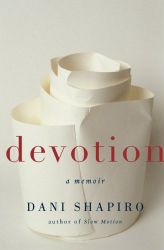
I love books. I love reading. I love the power of words to transport us, change us, connect us.
One author I admire in every way — personally and professionally — is Dani Shapiro. This post from 2011 doesn’t talk about the details of her latest book Devotion, but I still want to repost it not only to encourage you to read the book for yourself but also because I think it’s intersting to think about how we interact with what we read. Dani has a new book coming out called Still Writing. There isn’t anyone to me who can capture the art of writing the way she can.
…………………………….
I’m not the kind of person who reads books twice. My husband wears down the fibers in the covers of some of his books, corners frayed by his hands as he holds and bends the written pages. Me? I barely have enough time to read a book once. My attention span is short, my free time small. With three children and a house to take care of there just doesn’t seem to be time to do everything I want.
This morning I awoke knowing what I wanted to do. I wanted to re-read sections of Dani Shapiro‘s second memoir, Devotion. About twenty pages into it I realized I was literally itching to do something: write in the book. I hadn’t allowed myself to do that the first time. Lately I had felt that my books (especially ones written by people I knew in person or on Twitter, even moreso if signed by the author) should remain pristine. I have eschewed e-readers in every form for this very reason… typing notes in margins is not as satisfying as using colored ink to have my interactive conversation with the author. Sometimes exclamation points or “YES!” will interrupt the creamy expanse of the margin, but more often than that my graduate school training has led me to issue challenges to the author. Questions that start with “But what about…” or the challenging, “Does not take into account…” are what you will find in my books. As I try to process what the author says I imagine I am conversing with them. And, in fact, I am; writers write to start a conversation with the reader. If all the reader does is absorb without processing I think the author might be disappointed.
As I started Dani’s book this morning I realized the pristine condition of my hardcover was getting in my way. I needed to interact with it to really get the full benefit of her words. It seems the right thing to do. Only pages in to this second time through, I was already finding questions I want to ask her. I was, after all, a different person by my second reading. I was coming to the book with more experiences, different concerns and thoughts than I previously had. I came to the book with many of the same questions Dani herself was seeking to answer when she started writing. I realized that in the same way she had made sense of what happened to her by writing, I needed to do that too. Writing in the margins was my microcosm of that experience; without “talking back” I had missed a lot of the beauty and significance of her words.
I already feel myself digesting her words in a different way. The same way I cannot experience major events in my life without writing I realized this morning I cannot make sense of words without reacting. As my memory has declined and my mental capacities have suffered over the past few years I can’t rely on them to retain the memories of the sentences and paragraphs that have spoken to me. I need to wrestle with them, tease them out, formulate responses.
My book will be riddled with ink by the time I am done. But I realized today that is precisely as it should be. I think Dani would like that. I think it means I’m learning.
December 22nd, 2012 §
I’ve decided to compile some lists here for readers new and old but I need your help.
I thought it might help new readers if they had a landing point when they first get to the site. Old readers might find posts they’d missed or forgotten, or ones they liked that have earned a second read. That idea blossomed into thinking about posting a list of my own favorites, but realize you as readers might have your own.
As I spend the next few days working on this job, please comment below with nominations you have for which post was your favorite. You don’t have to limit it to one. You can list as many as you like. I’d love to know what “hit home” with you, which ones affected you, or educated you the most. I’ll take those and work them into my lists.
It also is a gift to me to see which ones resonated so much that weeks, months, years later you still remember them. I’d love to know. If there are suggestions for topics you’d like to see me write more about, I’ll take those too. Even if someone else has suggested it, please add your vote… I am trying to see which ones are the favorites.
I think this is a great end of year activity.
I appreciate your readership and input as always and can’t wait to see what you have to say. I’ll be back to you with lists (in some form or another as I see what comes in) by the end of the year.
I wish you all a healthy, happy 2013.
Lisa
December 17th, 2012 §
My father had a story published in The New York Times Metropolitan Diary today (12/17/2012). I will be at Shriners Hospital with Tristan on Tuesday for his orthopaedic check so I’ll leave Dad’s story with you for your reading pleasure. Here is the link to the original story or you can read the text below.
………………………………..
Dear Diary:
As a heart surgeon, the closing of the Stage Deli reminds me of the annual meeting of the American Association for Thoracic Surgery in 1975.
Having grown up in Manhattan, I sought out the Stage Deli for lunch with a friend, also a cardiothoracic surgeon. In the midst of pastrami on rye, I noticed an older gent at the next table keel over. In front of his horrified wife, and long before 911, public defibrillators or E.M.T.s, my friend and I put him on the floor and began CPR. Someone called an ambulance, and – leaving our food behind – we desperately maintained CPR while the ambulance careened through the city streets to the then St. Clare’s Hospital on 51st Street.
As soon as we reached the emergency room and got the drugs into him that we needed, we were able to defibrillate his heart. It transpired that he was a tourist from California who arrested in the right place at the right time – in front of two cardiothoracic surgeons. We learned later that he recovered completely and lived 11 more years. (His wife sent greeting cards on each anniversary.)
Gratified, we returned hurriedly to the Stage Deli, where the customers who remained from the earlier episode were delighted with news of the outcome. TV camera crews were filming, and the event later made the nightly news, giving the Stage Deli considerable publicity. Fresh sandwiches were brought to us, and we felt – transiently – that we were being treated royally.
But we were brought down to earth when we went up to the cashier and learned that there is no such thing as a free lunch – at least not in New York. He offered us a 50 percent discount!
— Lawrence I. Bonchek, M.D.
November 24th, 2012 §
I can see how isolating metastatic cancer can be already.
It has become hard for me to be around other people.
I find myself hiding as much as possible.
When I am in the company of others my mind wanders.
I can’t focus. I feel the need to retreat.
For the time being I just can’t relate to others’ lives which only 6 weeks ago were so similar to my own. Now… we are a world apart.
It’s not their fault. It’s just that circumstances make it so that I am selfish. I try to conserve my energy as much as I can.
Already I can see relationships suffering. There is a fine line between giving space and putting distance. Some are already dropping away, and we’ve only just begun. Others have risen to the occasion and helped more than I could have dreamed. Only true friendships are going to make it under these circumstances. Sometimes the isolation comes from being shut out. Sometimes it comes from locking yourself away.
Phone calls go unanswered, emails often do too. Thank you notes don’t always get written, social commitments get canceled or never scheduled in the first place.
I know that people cannot truly understand.
I don’t want a support group right now because metastatic cancer has a wide range of outcomes. I don’t know if I will be in a rapidly progressing group or not. I don’t know whom to look to that is “like me.” There is no way to know which group I will be in, who my peers are.
Right now I am very sensitive to death, to pain, to suffering. It’s very hard for me to see right now. I’m too raw. I just don’t think I’m ready for a group. But I won’t say I never will be. I need to talk to my oncologists about whether they have patients like me.
It’s difficult to listen to people complain about trivial things, normal things, things I was complaining about two months ago.
Now those complaints just annoy me, or make me sad.
I want to scream, “I want your problems!” And I do. I want that life back. I want to turn back the clock. I just don’t want it to be this right now.
One of the things that bothers me the most about this disease is the knowledge that the way I feel right now is the best I will ever feel for the rest of my life. It’s only going to get worse. That thought terrifies me.
When you feel crappy you want the time to go faster. You just want to get through it.
The problem is that what you may not have is time.
It’s a conundrum. You want the time to pass, but this is the only time you have.
I know so many people say, “No one ever knows how much time they have. You have to make the most of every day, of every moment.” I know that’s true. But the knowledge that there is something identifiable in your body that is a threat, is most likely to be that which kills you, bears a different weight. Of course the doctors don’t know exactly how much time it will be. There is no crystal ball.
Everyone tells me the stories of friends and relatives who were told they only had months and years later they are still alive and doing okay. I am told these stories every single day. I get it. I do. And I love them, they give me hope. But often those people’s diagnoses and particulars bear no relation to mine. Additionally, there are also stories of the people in the other group, the ones who thought they had years and didn’t. People probably have the good sense not to tell me those stories. But they are out there. It’s not that I focus on the negative. It’s not that I necessarily think I will be in that group. But anything is possible. On both sides.
The part that scares me: I’m only at the beginning. I hope that I will get stronger, gain acceptance as I get used to this diagnosis. But I’m not sure about that. I truly believe I could handle this better if I didn’t have so much worry about my children and what effect this will have on them. I wish I could protect them, shield them from this agony.
There are good days and bad days. I must do my best. But being the one everyone is watching takes a toll. Everyone will take their cues from me. I will set the stage for how my friends and family will deal with this: how I handle metastatic cancer matters. I am laying groundwork. I must do it right.
Some days that is an overwhelming task.
“Doing it right” doesn’t mean I have to be positive all the time. Doing it right means I have to be honest. It means I get up each day and do the best I can. For myself, for my husband, for my children, for others who may have cancer and those who will get it. It’s okay to be scared, and angry, and sad, and everything else.
It’s all part of this.
And for me, so is sharing.
May 4th, 2012 §
Regrets are most often over things we have not done, rather than things we have.
Inaction, it seems, is harder to tolerate than action.
Doing something, even if it’s ultimately a mistake, is better than doing nothing.
I’m constantly torn between taking chances and staying nestled in the warm comfort of habit. I am a lover of routine, constancy, predictability. One of the many reasons I fell in love with my husband is his admirable and enduring sense of calm. I am more hot-headed, far quicker to be annoyed, get frustrated, to yell. I strive to be more like him in his ability to go with the flow, but most often I fail miserably.
I’m not a risk-taker. I tend to over-think things. If there is something unpleasant that needs to be done, I do it immediately so I can move on. If I were still a child I would eat the green vegetables first so I could enjoy the rest of the meal.
Making drastic changes often doesn’t work. I’ve been trying to branch out in a few ways over the past few months and I’m happier for it. I’ve started doing Pilates weekly, sometimes twice a week, and I’m loving it. I am physically stronger, have a teacher I adore, and many weeks get to take the lesson as a duet (semi-private) with a dear friend.
I’ve been taking lots of photos and enjoying not only the images I’m capturing, but also the social element of sharing them on Instagram. I enjoy seeing the slivers of beauty that are around us every day and am taking time to appreciate them more.
I’m taking more chances with my writing. I’ve been privately writing about a wider variety of topics, and trying out longer-form work. I recently read a story I wrote out loud to a group for the first time.
I curse middle age a few times a day, mostly about my body and how things just don’t work like they used to. But the perspective I have through my life experiences, the wisdom that I have after 42 years of ups and downs, the confidence to say, “I am flawed, I will try to be better, but I also know who I am” are all valuable.
I enjoy having others in my life but also know that when it comes time to take a chance, I can wrap my arms around myself and jump.
January 13th, 2012 §
 Today’s post is one of the rare ones that discusses a book I’ve read. I’ve previously written about Dani Shapiro’s Devotion and Katie Rosman’s If You Knew Suzy. Today I share some thoughts I have after reading Darin Strauss’s memoir Half a Life. The book won The National Book Critics’ Circle Award. If you’d like to hear some excerpts, you can listen to an NPR podcast here. It’s gripping radio.
I’m not a book reviewer, and this post isn’t a review; I consider it more of a response piece. Half a Life touched me in many ways and I still find myself thinking about it weeks after closing the cover.
One reason I like to write about books is because our reading of them is so personal. We bring our own experiences to bear on an author’s words; passages which seem to have been written just for us may go unnoticed or unappreciated by others. Reading is a solitary activity, yet we are a community of readers. I welcome comments about this book and/or the general topics.
………………………………
I think the Zilke family is lucky.
You might think that is a crazy statement if you know the story of how more than twenty years ago their teenage daughter Celine suddenly jerked her bicycle across two lanes of traffic and into the immediate path of fellow classmate Darin Strauss’s car. He couldn’t hit the brake in time; in truth, there was no time. Whether or not Celine intended to die on that day remains a mystery, we will never know what caused her to swerve. But die she did, with Darin behind the wheel, on that road, on that day, at that moment.
It wasn’t Darin’s fault; it could have been anyone in that particular place at that particular time. If his shoe had been untied and he’d taken a moment to tie it, if he’d forgotten his wallet upstairs, if he’d decided to use the bathroom one more time before heading out with his friends for a round of mini-golf, if… well, if anything… things might have been different.
If games are so common with grief: If only _____, things would be different. We create counterfactuals in our minds, imagining an alternate reality to the one that we just don’t want to accept. We hide away our truth, conceal the reality of pain. Darin did this for half of his life. For all that time he felt the pressure to live his life for two people; to make his life special, meaningful, and worthy of the fact that he lived while a schoolmate did not. Although Celine’s family originally absolved him of blame (and he was never criminally charged after the accident), they later sued him, settling out of court.
So why do I think they are they lucky?
Well, you have to know a little bit about me, and about my grief. If you’re a regular reader you know that my mother-in-law was killed in a car crash (I don’t ever call it an accident, unlike Darin’s case) when a man was driving in the wrong lane on a Wyoming highway in 2009. He was trying to pass an oversized load and was alongside that load at highway speed around a curve. His view obscured by the load, he didn’t know there was a car carrying my inlaws directly in front of him. The newspaper account appears here.
My mother-in-law was killed instantly; my father-in-law, seriously injured. The driver of the other car was charged with the misdemeanor charge of vehicular homicide and later sentenced to 90 days in jail. My account of that heartwrenching day and my visit to the crash site appears here.
Bruce Carter, the man who killed Barbara, didn’t say a word at the sentencing. He never said he was sorry.
I wonder if he thinks about her. I wonder if he thinks about us, the ones left behind.
I think the Zilkes are lucky because now they know. They know Strauss’s grief, some of his thoughts, his emotional shift from guilt to regret. Celine’s parents don’t need to worry, as I do, that their loved one has been forgotten by the person who took his/her life. Strauss’s agonizingly honest description of his thoughts about his actions and their aftermath resonate because they are so well-analyzed. Though the loss of a child in an accident is difficult, perhaps knowing that Celine’s life became a litmus test for so many events in Strauss’s own life would be a speck of reassurance. As Strauss grows older, Celine’s memory becomes his partner in a 3-legged race, bound together, their lives pulled awkwardly into tandem. I think the worst thing is to be forgotten. With this analysis of his life in the last 20 years, Strauss documents the changing nature of his grief.
……………………….
The theme of living one’s life for two people– of making his life “count” for two after the accident is one that is especially intriguing. Eventually Darin realizes this is impossible. As a high schooler he had reflexively promised Celine’s mother that he would make his life count for two, but this is the knee-jerk automatic response of a young person agreeing with something he doesn’t understand. Just like the ineffective shrink who pigeonholed Darin’s responses (ultimately making therapy a worthless endeavor), Celine’s mother obtained the answer she wanted from a person unable to fully understand what he was agreeing to. In a similar fashion, when a child dies, a sibling often feels he/she now has to carry the added weight of the unfinished life of the deceased family member. This psychological burden can be overwhelming.
We become responsible for others in many ways– as their friends, siblings, children, and especially as parents– but we do not truly understand these obligations when we first enter these relationships, most certainly when we are young. Growing into the recognition and acceptance of these responsibilities is part of the process. In so many ways we are wholly unprepared for the roles we step into both personally and professionally.
Others had been quick to forgive Darin– to tell him it couldn’t have happened any other way. Like the legal standard of the “reasonable man,” Darin had passed the test; there was nothing he could have done to avoid hitting her. However, his own timetable of forgiveness was much longer. While others instantly granted it to him, it took twenty years for Darin to forgive himself.
………………………
Regret and guilt play a large role in Strauss’s book, I did often disagree with his frequent interchangeable use of the terms. Regular readers may remember the guest post my mother (a psychologist specializing in grief and loss, death and dying) wrote about the difference between guilt and regret (full post here). I have certainly come to accept those distinctions and to use them accordingly:
People use the word “guilt” more often than is appropriate. Improperly using the word “guilt” can result in unnecessary emotional distress and harsh self-criticism. The word “guilt” refers to something you did, something which you feel you shouldn’t have done because it was morally or legally wrong. But what if the experience you feel guilty about was not something you caused or had control over? Then you would feel regret, not guilt.
Througout the book Strauss uses the terms interchangeably. He ends up with a painful stomach disorder requiring surgery. He later suffers from IBS and then CPPS (chronic pelvic pain syndrome) summarizing, “That’s the force of guilt for you.” I’d argue that it’s regret he feels; the accident wasn’t his fault. I wonder if Strauss would describe the book as I do, one which documents the evolution from guilt to regret; a journey toward making peace with the fact that things couldn’t have been different on that day.
I couldn’t help but wonder if counseling could have helped him see his actions in the proper light and helped to relieve some of this literal gut-eating self-criticism he’d been experiencing for years. At various points, Strauss believes Celine may have committed suicide, there are clues that this may have been the case. In the end, the only emotion Strauss is justified in feeling is regret; he writes, “Regret doesn’t budge things; it seems crazy that the force of all that human want can’t amend a moment, can’t even stir a pebble.”
Given my upbringing, I couldn’t help but be bothered by the lack of good psychological support for Strauss after the accident– could an insightful therapist trained in grief counseling have helped him negotiate some these feelings? Strauss says in a footnote, “I’d started going to therapy… though not (I really don’t think) as a response to the accident. I’d gone with pretty boilerplate stuff: your typical mid-thirties complaints… my therapy attempts had always been near-misses, fizz-outs if not outright failures.” A psychologist specializing in grief would have certainly been able to show that while Strauss may not have himself seen that he was seeking therapy as a response to the accident, it certainly could not be removed from his problems. While the problems in his thirties may have been boilerplate, the accident which haunted him for twenty years until that point was not.
……………………….
Writing about grief, regret, shame, and inner turmoil can be difficult. By their very nature our most personal and private thoughts can be difficult to express. However, they can also be the most rewarding to document, for these are challenges most people face at some point in their lives. The road maps we have for navigating life’s challenges are some combination of our own instincts, observations of others, and advice along the way.
I would think Strauss has heard hundreds, if not thousands, of stories since he finally began sharing his own. Tragedy invites sharing, camaraderie. I have found a similar experience with cancer; there is a natural tendency for others to connect and say “I have been there too.”
………………………….
Strauss is now a father. I wonder how Celine’s death will impact his next twenty years. Will he be more safety-conscious? What will it be like the first time his sons drive a car? Ride a bike on a busy street? How will he navigate parenthood differently because of this experience? And what are the triggers now for making him think of Celine? There must certainly be a pattern to those. Perhaps because therapy was ineffective in his youth, I was left wondering if parenthood will cause some of these unresolved emotional landmines to crop up yet again.
While time has a way of allowing us to move into a different stage of grief where we can go through minutes, hours, and days without being consumed with emotion, the feelings are always there, just below the surface, ready to rise at a moment’s notice. We can’t possibly always know what might trigger the flood, but it will come.
I started this post saying the Zilkes are lucky; they have a window into the mind of the person who accidentally killed their child. My own unanswered questions about Barbara’s death certainly affected my reading of this book. If I can’t have my own answers, I wanted to read Strauss’s. The truth is that we have to find our own answers, our own ways of weaving experiences into the tapestry of our lives so that we are resilient for what is yet to come.
I really enjoyed reading this book and grappling with some of these difficult questions as I read. The themes of death, regret, perseverance, responsibility, and decision-making are endlesslessly fascinating to me.
November 20th, 2011 §
Last week Darien was lucky enough to have the Fabulous Beekman Boys (Dr. Brent Ridge and Josh Kilmer-Purcell) come to do a book signing at the Darien Library. My friend Aimee did a great blog post with more pictures on her own site but I wanted to share the picture she took of the three of us.
I love the photo! Brent and Josh have a farm in Sharon Springs, NY and their business is based there too. When they found and fell in love with the historic hotel/farm, the two men rearranged their lives to make their dream of owning a working farm come true. Brent left his medical practice in geriatrics to be at the farm full-time. Josh divides his time between the farm and working in advertisting and an author. They also had a TV show on Planet Green for a few seasons which chronicled their time getting the farm established. It’s wonderful and I always enjoyed watching it.
Josh has written two memoirs I Am Not Myself These Days (which is about his life as a drag queen) and the book about their farm, The Bucolic Plague. They have a new cookbook (The Beekman 1802 Heirloom Cookbook) which I love because the recipes are very simple and take advantage of foods that are in season. Every detail of the book is beautiful from the sewn pages to the cover which is designed to look like cheese cloth (their handmade cheese called Blaak is a favorite of mine. They make it in limited edition each year; its black ash rind is beautiful).
Josh and Brent were warm, entertaining, and funny… just as I thought (hoped) they would be. They are very involved with their fans on Twitter and Facebook and work very hard not only at the farm but also now on tour. Josh had just gotten off the train in Darien after a full day of work at his office in the city. They are tireless advocates for small town businesses and the craftspeople who make fine wares.
You can find them at www.beekman1802.com
here is a link to Aimee’s post about the evening: The Fabulous Beekman Boys
November 20th, 2011 §
I am re-posting this piece now that Katie’s book is available in paperback. So many of these questions have been swirling around in my mind (Hmmm, I sound like Herman Cain?) while I try to decide whether to write a book. I think about why I write, what I can contribute, if there is an audience for the things I think about. I do write for you, my readers, and am so thankful you take the time to read what I say. But I also realize that I write for my children.
With the sudden death of my mother-in-law two years ago, I realize that “things left unsaid” are a heartbreaking prospect to me. When I was diagnosed with breast cancer nearly five years ago I made many decisions about treatment with the goal of living as many years as I could to parent my three young children. I chose more aggressive surgeries (including an oophorectomy) because I felt they would give me better odds at not only avoiding a recurrence, but surviving.
I realize as I age that my memory is fickle. I make endless lists of items I need to buy and things I need to do. Similarly, I find I rely on writing down my feelings so that I can look back and accurately remember the emotional experiences I’ve had. I worry that if I don’t, not only with those memories be lost to me, but also they will be lost for my children. In the crazy, hectic life of raising three children there is so much that goes unsaid, not only to the kids, but also to my husband. It’s not the actions of driving to football practice or tennis lessons that make me unique; anyone can do those tasks. It’s the thoughts in my head, the way I express them on the page, that are mine, and mine alone. If I don’t express my thoughts for someone else to read I cannot truly be known.
Most days I think my thoughts get lost. I have them here as an insurance policy of sorts. I write because it is my explanation of who I really am… to my children, to my family, and to my readers.
My discussion of Katie Rosman’s book, originally published June 24, 2010
There comes a point in your life when you realize that your parents are people too. Not just chaffeurs, laundresses, baseball-catchers, etc.– but people. And when that happens, it is a lightbulb moment, a moment in which a parent’s humanity, flaws, and individuality come into focus.
If you are lucky, like I am, you get a window into that world via an adult relationship with your parents. In this domain you start to learn more about them; you see them through the eyes of their friends, their employer, their spouse, and their other children.
Yesterday I sat transfixed reading Katherine Rosman’s book If You Knew Suzy: A Mother, A Daughter, A Reporter’s Notebook cover to cover. The book arrived at noon and at 11:00 last night I shut the back cover and went to sleep. But by the middle of the night I was up again, thinking about it.
I had read an excerpt of the book in a magazine and had already been following Katie on Twitter. I knew this was going to be a powerful book for me, and I was right. Katie is a columnist for The Wall Street Journal and went on a mission to learn about her mother after her mother died (on today’s date in 2005) from lung cancer. In an attempt to construct a completed puzzle of who her mother was, Katie travels around the country to talk with those who knew her mother: a golf caddy, some of her Pilates students, her doctors, and even people who interacted with Suzy via Ebay when she started buying up decorative glass after her diagnosis.
Katie learns a lot about her mother; she is able to round out the picture of who her mother was as a friend, an inspiration, a wife, a mother, a strong and humorous woman with an intense, fighting spirit. These revelations sit amidst the narrative of Katie’s experience watching her mother going through treatment in both Arizona and New York, ultimately dying at home one night while Katie and some family members are asleep in another room.
I teared up many times during my afternoon getting to know not only Suzy, but also Katie and her sister Lizzie. There were so many parts of the book that affected me. The main themes that really had the mental gears going were those of fear, regret, control, and wonder.
I fear that what happened to Suzy will happen to me:
My cancer will return.
I will have to leave the ones I love.
I will go “unknown.”
My children and my spouse will have to care for me.
My needs will impinge on their worlds.
The day-to-day caretaking will overshadow my life, and who I was.
I will die before I have done all that I want to do, see all that I want to see.
As I read the book I realized the tribute Katie has created to her mother. As a mother of three children myself, I am so sad that Suzy did not live to see this accomplishment (of course, it was Suzy’s death that spurred the project, so it is an inherent Catch-22). Suzy loved to brag about Katie’s accomplishments; I can only imagine if she could have walked around her daily life bragging that her daughter had written a book about her… and a loving one at that.
Rosman has not been without critics as she went on this fact-finding mission in true reporter-style. One dinner party guest she talked with said, ” … you really have no way of knowing what, if anything, any of your discoveries signify.” True: I wondered as others have, where Suzy’s dearest friends were… but where is the mystery in that? To me, Rosman’s book is “significant” (in the words of the guest) because it shows how it is often those with whom we are only tangentially connected, those with whom we may have a unidimensional relationship (a golf caddy, an Ebay seller, a Pilates student) may be the ones we confide in the most. For example, while Katie was researching, she found that her mother had talked with relative strangers about her fear of dying, but rarely (if ever) had extended conversations about the topic with her own children.
It’s precisely the fact that some people find it easier to tell the stranger next to them on the airplane things that they conceal from their own family that makes Katie’s story so accessible. What do her discoveries signify? For me it was less about the details Katie learned about her mother. For me, the story of her mother’s death, the process of dying, the resilient spirit that refuses to give in, the ways in which our health care system and doctors think about and react to patients’ physical and emotional needs– all of these are significant. The things left unsaid as a woman dies of cancer, the people she leaves behind who mourn her loss, the way one person can affect the lives of others in a unique way… these are things that are “significant.”
I woke up in the middle of the night thinking about the book. My head spun with all of the emotions it raised in me. I think that part of the reason writing has become so important to me is precisely because I do realize that we can die at any moment. And if you don’t have an author in the family who might undertake an enormous project as Katie did, where will that explanation of who you were — what you thought — come from?
Is my writing an extension of my desire to control things when cancer has taken away so much of this ability?
Is part of the reason I write an attempt to document my thoughts, my perspective for after I am gone… am I, in a smaller way, trying to do for myself what Katie did for her mother?
If I don’t do it, who will do it for me?
And in my odd way of thinking, am I trying to save anyone the considerable effort of having to work to figure out who I was– deep down?
My blog has the title “You’d Never Know”: I am telling you things about myself, my worldview, and my life, that you would otherwise have no knowledge of. One of the things people say to me all the time is, “You’d never know to look at you that you had cancer.” After hearing this comment repeatedly I realized that much of our lives are like that:
If we don’t tell someone — share our feelings and experiences — are our lives the proverbial trees falling (unheard) in the forest?
What if you die without being truly understood?
Would that be a life wasted?
If you don’t say things for yourself can you count on others to express them for you?
Further, can anyone really know anyone else in her entirety?
After a loved one dies, there always seems to be at least one mystery person: an individual contacts the family by email, phone, or in person to say, “I knew your loved one: this is how I knew her, this is what I remember about her, and this is what she meant to me.” I know that this happened when Barbara (my beloved mother-in-law) died suddenly last fall. There are stories to be told, memories to be shared. The living gain knowledge about their loved one. Most often, I think families find these insights comforting and informative.
Katie did the work: she’s made a tribute to her mother that will endure not only in its documentation of the person her mother was (and she was quite a character!) but also in sharing her with all of us. Even after her death, Suzy has the lovely ability to inspire, to entertain, to be present.
I could talk more about the book, Katie’s wonderful writing, and cancer, but I would rather you read it for yourself. I’m still processing it all, making sense of this disease and how it affects families, and being sad that Katie’s children didn’t get to know their grandmother. Katie did have the joy of telling her mother she was pregnant with her first child, but Suzy did not live long enough to see her grandson born. In a heartwarming gesture, Katie names her son Ariel, derived from Suzy’s Hebrew name Ariella Chaya.
I thank Katie for sharing her mother with me, with us. As a writer I learned a lot from reading this book. I’ve said many times recently that “we don’t need another memoir.” I was wrong. That’s like saying, “I don’t need to meet anyone new. I don’t need another friend.” Truth is, there are many special people. Katie and Suzy Rosman are two of them.
October 12th, 2011 §
Last week I returned to my alma mater, Franklin & Marshall College, to introduce a speaker at their Common Hour lecture series. My new friend Seth Mnookin was the featured guest and it was great fun to spend time with him during my visit. I had been introduced to Seth on Twitter by author Rebecca Skloot and knew he would be a great fit for the school’s series and suggested him to the Center for Liberal Arts & Society committee.
Seth spent time with students on three different occasions and I know everyone judged the tour a success. Seth primarily talked about his new(ish) book The Panic Virus which focuses on the irrational fear surrounding the MMR vaccine. I encourage you to read this book; issues of myth, fear, public policy, and expert knowledge are all at play in this fascinating and well-researched piece.
If you are interested in seeing Seth’s talk, including my introduction and the student question/answer segment, you can watch it by clicking here.
August 19th, 2011 §
Much writing comes from pain. Much of mine has.
I initially started this blog when I was dealing with the after-effects of my cancer diagnosis, chemotherapy, and surgeries. Later I wrote about my grief when my mother-in-law Barbara was killed suddenly almost two years ago. Back then — and now once again — there is a line I have always tried to walk between exploring my own feelings about my life and those in it while not divulging too much information about people who might not want to be so public with their thoughts as I have.
I haven’t posted much this month; it’s not just because it’s summer vacation time. I’ve been struggling with some issues and unsure how I can write about them while still allowing those I love their privacy.
I try to be the quiet wheel– you know, the one who doesn’t get the grease. With neighbor disputes, school and coaching situations, I do my best to be neutral, to just get along with people. When it comes right down to it, I just hate drama. I could never go on a reality show because my idea of a great day is one that most would term “boring.” I just want quiet and peace, a good cup of coffee and good health for my friends and family.
But lately that’s not possible and there’s a knot in my stomach all the time. And what I’m realizing is that it’s hard for me to write when I can’t be completely open and honest. It’s hard for me to carve out a part of my life and say “but I won’t touch that subject.”
The varied parts of our lives are intertwined; the strands are knotted. It’s one big heaping mess of togetherness.
And so, I want you to know I’m working on it. I’m trying to figure out how to navigate this time in my life.
August 10th, 2011 §
I never wrote about cancer when I was diagnosed.
I never wrote about my body before the surgeon cut into it.
I never wrote about chemo when I was going through it.
I never wrote about dying when I was most afraid.
This morning I was angry at myself. Why didn’t I write during these times? Why didn’t I capture the raw emotion as it was happening? Why did I let this emotional gold mine slip through my fingers?
First, of course, was the pain. When I was in physical pain, I couldn’t be analytical. I couldn’t be intelligent. I couldn’t even be upright. When that pain dulled, and I started to feel better, I didn’t want to be self-indulgent. I didn’t want to think about me anymore. When I felt well, I wanted to be with my family. I wanted to give my children everything I had when I had it. I didn’t want to take time away from them, sit in my office, and write.
So I waited.
What have I gained from waiting? By writing about past experiences, am I living in the past, dwelling on it, and anchoring myself to a difficult stage of my life?
No, I quickly thought. I’m not.
In fact, it is only now that I can look at the past four years clearly. Now that the pain of recovery has shifted I can see it for what it was— for what it is.
Only now can I put the past in perspective. But what does “having perspective” really mean?
Being in the right spot makes all of the objects in your vision align properly, in correct proportion to one another. If the perspective is “off” it means you’re not viewing it from the right place.
Without perspective, your point of view is literally wrong.
What’s changed? The objects you are looking at haven’t changed. Your stance relative to them has. And in looking at the same objects from a different place, you see them differently. When we put life experiences in perspective, we are doing the same thing. By taking a few steps back, putting some distance between us and our experiences, we are better observers, we are more accurate.
My point of view was wrong before. When I was ticking off the boxes of surgeries, procedures, and treatments I was “too close” to them in space and time. Had I written about them then, I would have remembered more details of conversations, dates, and my surroundings. But that’s not what I feel passionately about. I don’t write about what it’s like to go through these things as they happen.
Gene Weingarten writes, “A writer has to figure out what that piece is before she can begin to report her story. Only then can she know what questions to ask and what things to notice; only then will she see how to test her thesis and how to change it if it is wrong. That’s what nonfiction storytelling is about. It is not enough for you to observe and report: You must also think.”
I love to write about what life is like after these events happen– after you live through them and come out the other side… how you go on after, and what it feels like when you look back.
I can see this part more clearly because my emotions are separated from the pain, from the chaos, from the shock.
For a moment I regretted that I didn’t write about all of this while it was happening. Now I know it was the right thing to do for me. Only now, with a bit of distance, can I put it all in perspective.
May 10th, 2011 §
I left last Friday morning for a very special weekend. For 48 hours I went to Lenox, Massachusetts for a writing workshop for about 50 people taught by author Dani Shapiro on crafting memoir. I knew Dani, but hadn’t met any of the other attendees in person. I’d started chatting with a few of the women on Twitter in the weeks before the workshop and was excited to meet them.
Kripalu itself was new to me; as a person who doesn’t practice yoga I hadn’t heard of the well-known destination. I’ll write more about the details of the weekend in another post; suffice it to say that it rejuvenated me as a writer and a person. I spent my days with four special women (click on their individual names below to visit their blogs); the picture below was taken on Saturday night when Denise, Lindsey, and I stayed up late gabbing like college girls.
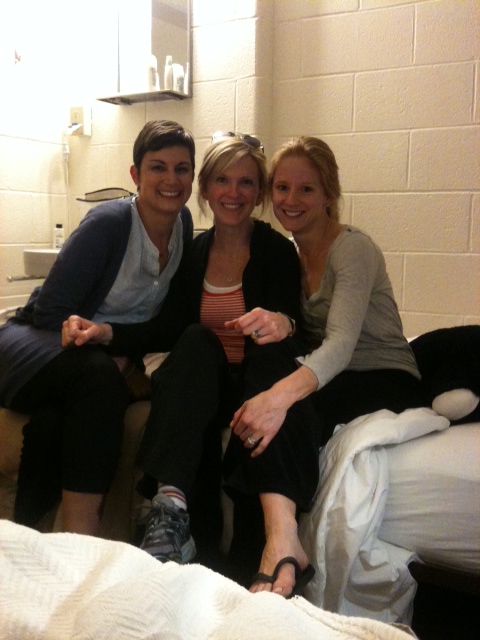
One of the many thought-provoking exercises that Dani Shapiro gave us while at Kripalu was to write for 10 minutes, without stopping, sentences that begin with “I remember.” (An exercise inspired by Joe Brainard’s classic book, I Remember). Denise, Christine, Sarah, Lindsey, and I all found this both fun and surprising – we discovered that we wrote down both long-cherished memories and ones we had not even realized we remembered. Katrina Kenison (who was also at Kripalu this weekend) also recently wrote her own “I remember” list.
We think this is a powerful and revealing exercise, and wanted to share a few of our “I remembers” as well as invite you to participate. Please join us – either by writing a post on your blog about what you remember or by adding a few of your memories to our comments. Start with 5 “I Remember”s and if you get a good rhythm and flow, keep going! If you write your own post, please come back and link it here – and we look forward to reading and responding to your memories.
………………………………………………
I remember the purple fingerprints up and down the tape measure the surgeon used to mark me for surgery.
I remember going to Legoland.
I remember walking down the aisle.
I remember less than I used to.
I remember my mother’s light blue Cadillac and the way she put newspaper down on the floor of the backseat so my riding boots would not get them messy.
I remember mowing the lawn of my childhood home and being paid 25 cents for each of the four portions.
I remember visiting my brother at college and falling asleep to the sound of his girlfriend repeating “Mmmmm” as I told stories.
I remember pralines and cream ice cream.
I remember the way Clarke’s voice sounded the night he told me his mother had been killed in a car crash.
I remember how he almost fainted when Paige was born.
I remember my father telling me he thought my one year old daughter was too chubby and laughing about it once she grew so skinny she couldn’t find pants to fit.
I remember thinking that marrying Clarke would mean nothing bad would ever happen to me. I remember learning that I could not have been farther from the truth.
I remember how great it felt the first time a reader left a comment on my blog.
I remember my grandmother telling my mother and me she thought we were too close.
I remember the epidural. I remember not having the epidural. I remember which one I liked more.
I remember the bathrobe-style gown they use at Sloan Kettering.
I remember the last night I looked down and saw my breasts.
I remember waking up after they were gone.
I remember sleeping in Colin’s hospital room. And Tristan’s.
I remember being called “Mom” for the first time.
I remember hearing the words, “I know what’s wrong with your son.”
I remember thinking, “But what do people do on Twitter?”
I remember the strong smell of Steve’s cologne in high school and how you could smell him before you saw him.
I remember Bill’s white Ford Pinto.
I remember telling my parents I didn’t believe in God.
I remember my first serious boyfriend, James, telling me he loved Jesus more than he loved me. I remember telling him our relationship wasn’t going to work, then.
I remember clipping my grandmother’s toenails a few weeks before she died. I remember how the nail on her big toe was about to fall off and how I just couldn’t leave it hanging there.
I remember getting the phone call that my grandfather had died.
I remember my mother turning down the volume of the radio when my father would come home from work when I was growing up.
I remember missing my college graduation.
I remember my father giving me a list titled “10 Maxims for Our College Girl” when I went off to college.
I remember that my birthday cake had a horse on it.
I remember sitting for hours while my hair got permed in high school.
I remember thinking I would never weigh more than 100 pounds.
I remember my first blind date. I remember my last blind date. I remember that they were the same date.
Powered by Linky Tools
April 9th, 2011 §
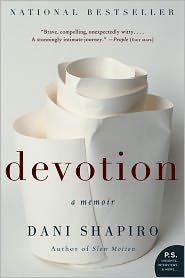 I’m not the kind of person who reads books twice. My husband wears down the fibers in the covers of some of his books, corners frayed by his hands as he holds and bends the written pages. Me? I barely have enough time to read a book once. My attention span is short, my free time small. With three children and a house to take care of there just doesn’t seem to be time to do everything I want.
This morning I awoke knowing what I wanted to do. I wanted to re-read sections of Dani Shapiro‘s second memoir, Devotion. About twenty pages into it I realized I was literally itching to do something: write in the book. I hadn’t allowed myself to do that the first time. Lately I had felt that my books (especially ones written by people I knew in person or on Twitter, even moreso if signed by the author) should remain pristine. I have eschewed e-readers in every form for this very reason… typing notes in margins is not as satisfying as using colored ink to have my interactive conversation with the author. Sometimes exclamation points or “YES!” will interrupt the creamy expanse of the margin, but more often than that my graduate school training has led me to issue challenges to the author. Questions that start with “But what about…” or the challenging, “Does not take into account…” are what you will find in my books. As I try to process what the author says I imagine I am conversing with them. And, in fact, I am; writers write to start a conversation with the reader. If all the reader does is absorb without processing I think the author might be disappointed.
As I started Dani’s book this morning I realized the pristine condition of my hardcover was getting in my way. I needed to interact with it to really get the full benefit of her words. It seems the right thing to do. Only pages in to this second time through, I was already finding questions I want to ask her. I was, after all, a different person by my second reading. I was coming to the book with more experiences, different concerns and thoughts than I previously had. I came to the book with many of the same questions Dani herself was seeking to answer when she started writing. I realized that in the same way she had made sense of what happened to her by writing, I needed to do that too. Writing in the margins was my microcosm of that experience; without “talking back” I had missed a lot of the beauty and significance of her words.
I already feel myself digesting her words in a different way. The same way I cannot experience major events in my life without writing I realized this morning I cannot make sense of words without reacting. As my memory has declined and my mental capacities have suffered over the past few years I can’t rely on them to retain the memories of the sentences and paragraphs that have spoken to me. I need to wrestle with them, tease them out, formulate responses.
My book will be riddled with ink by the time I am done. But I realized today that is precisely as it should be. I think Dani would like that. I think it means I’m learning.

 The past few weeks have been some of the most challenging this year. By the time you read this I will have had my third Navelbine infusion. Unfortunately, we do not have any evidence so far that it is working. Each chemotherapy that I try at this point only has about a 30% chance of working even for a short period of time.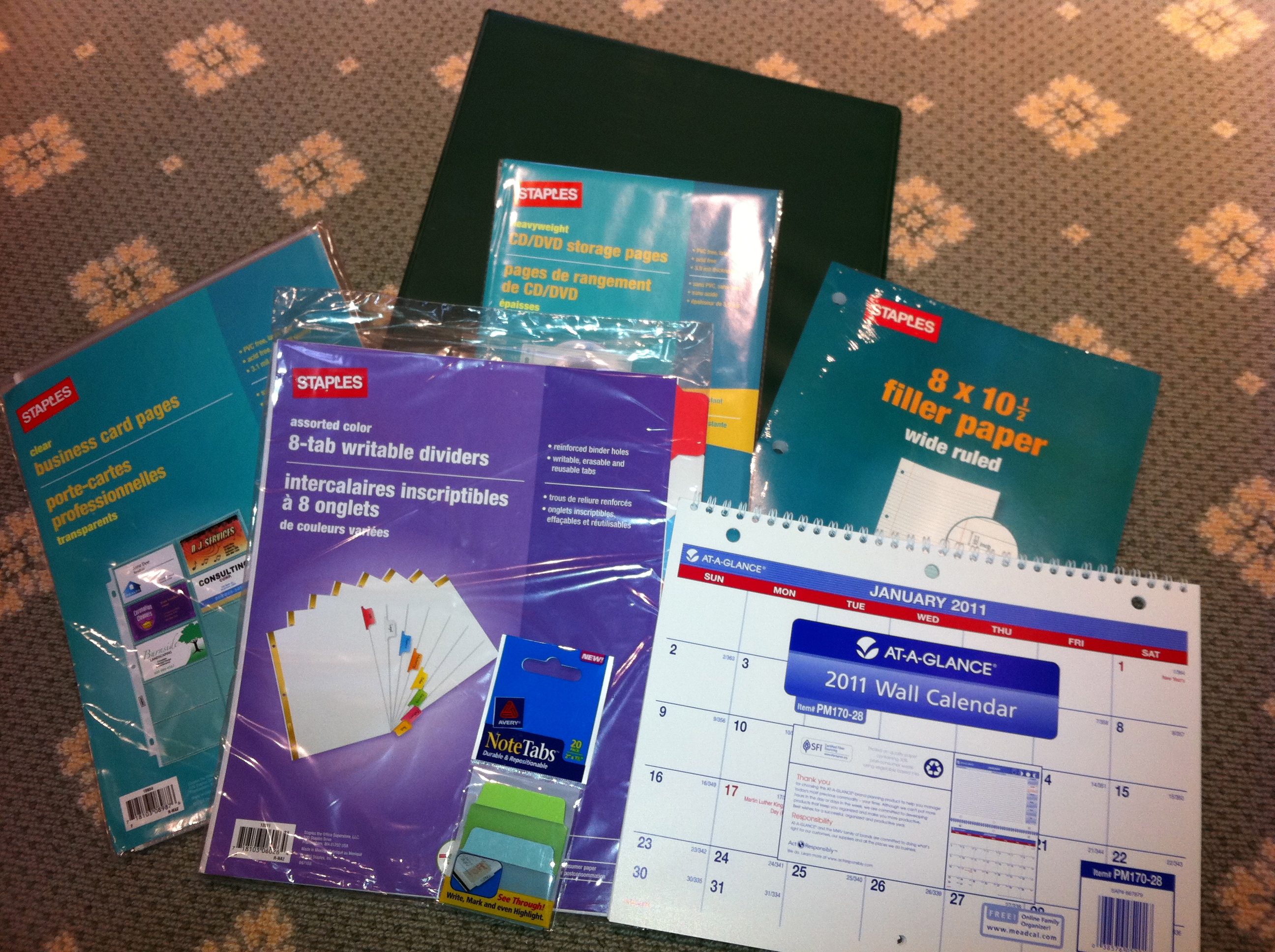
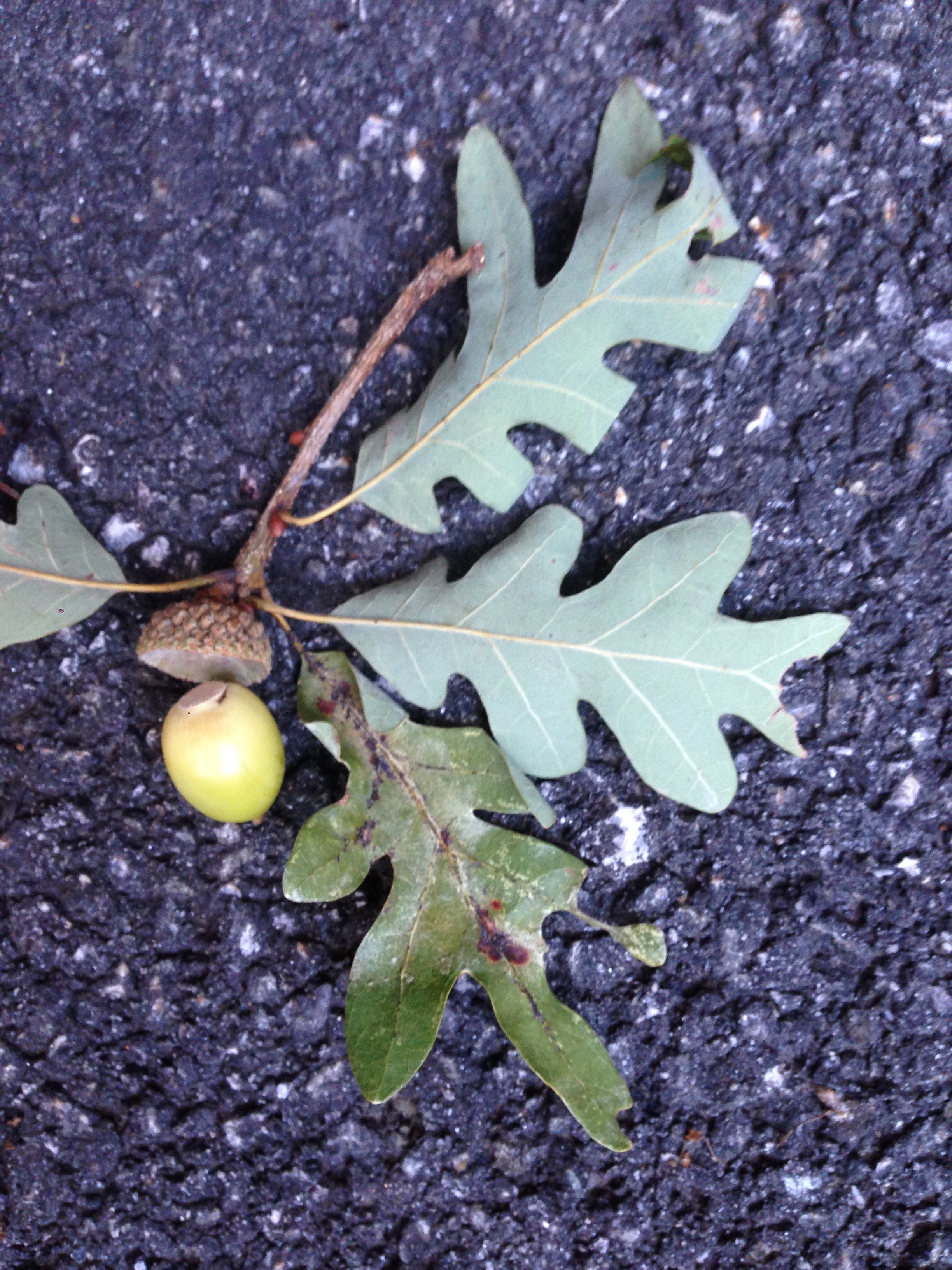
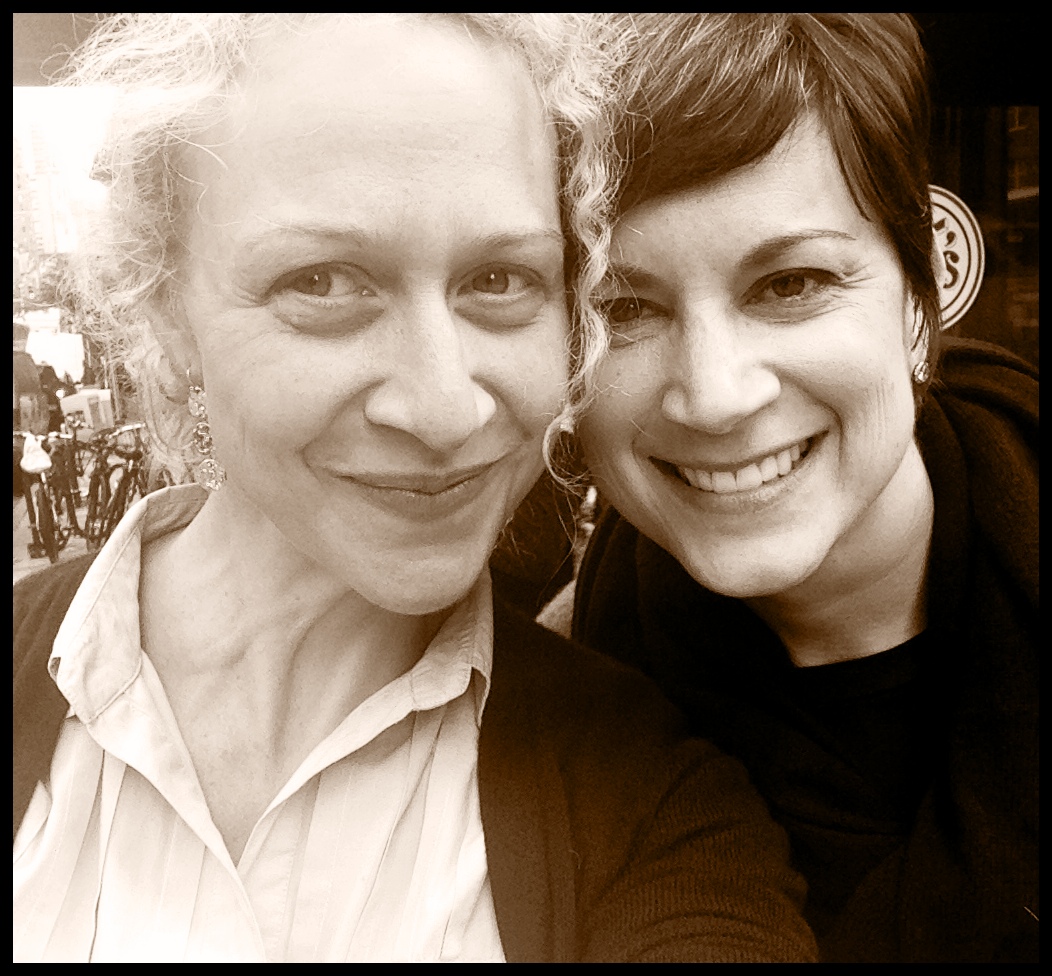

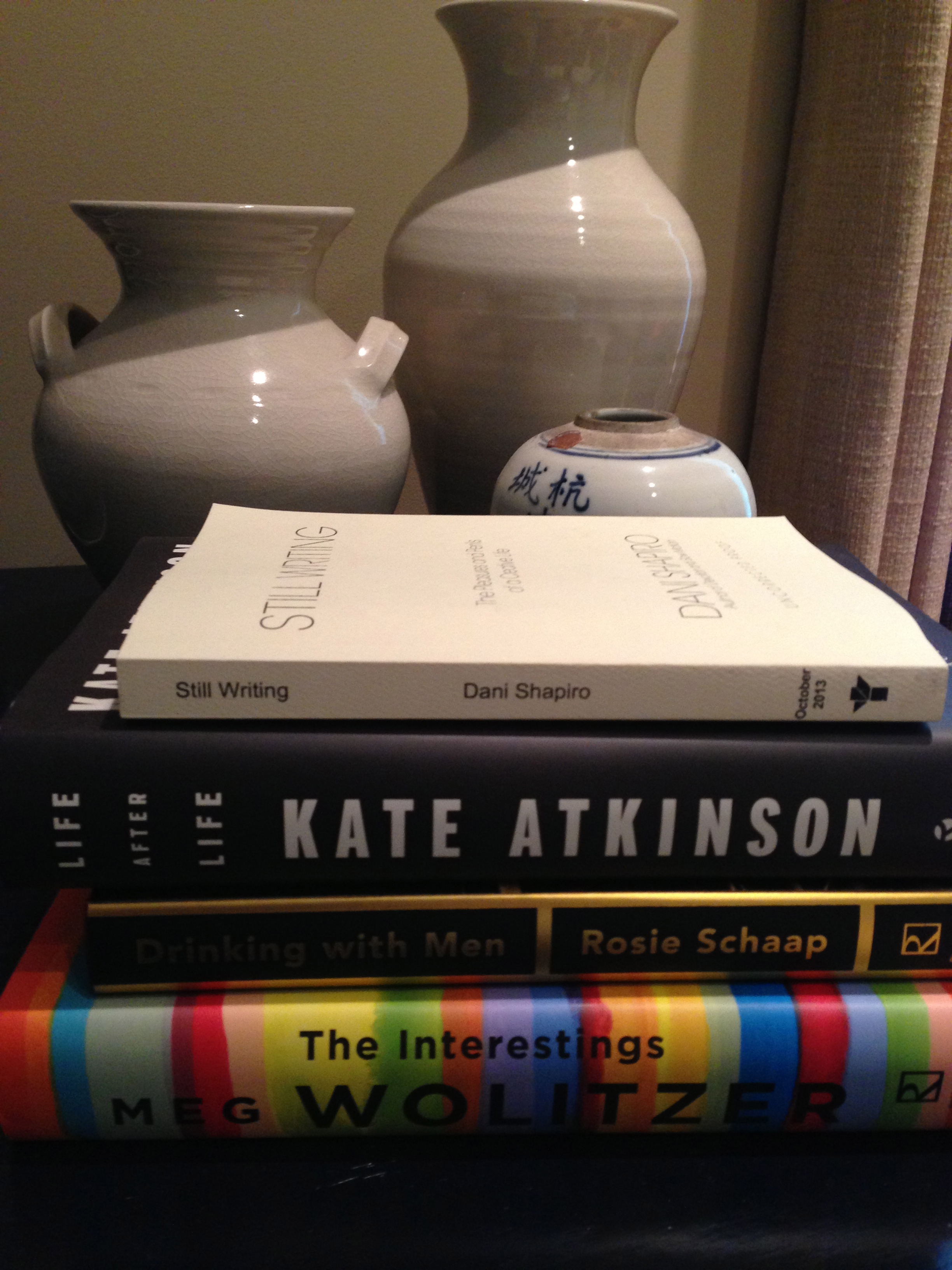
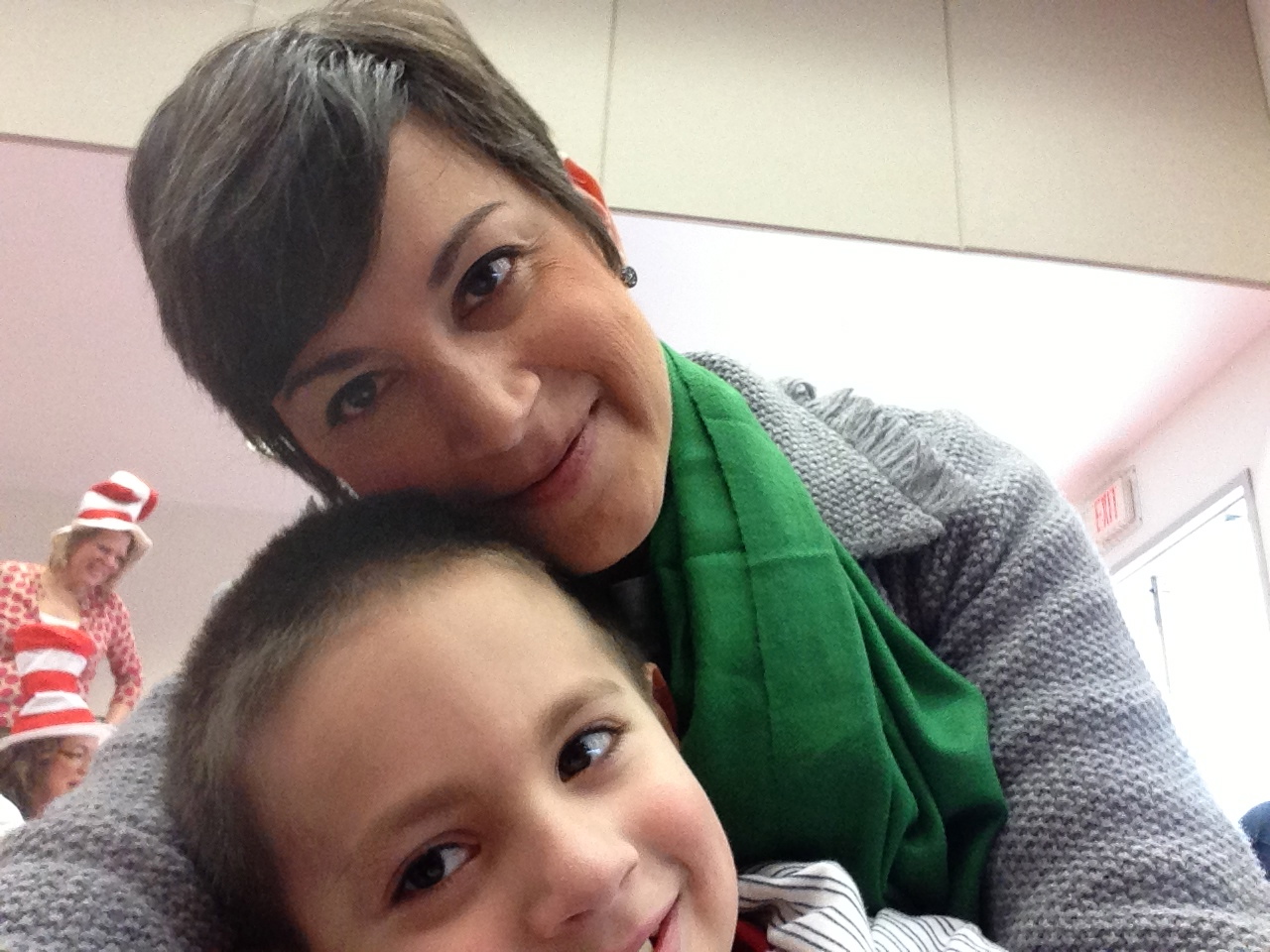
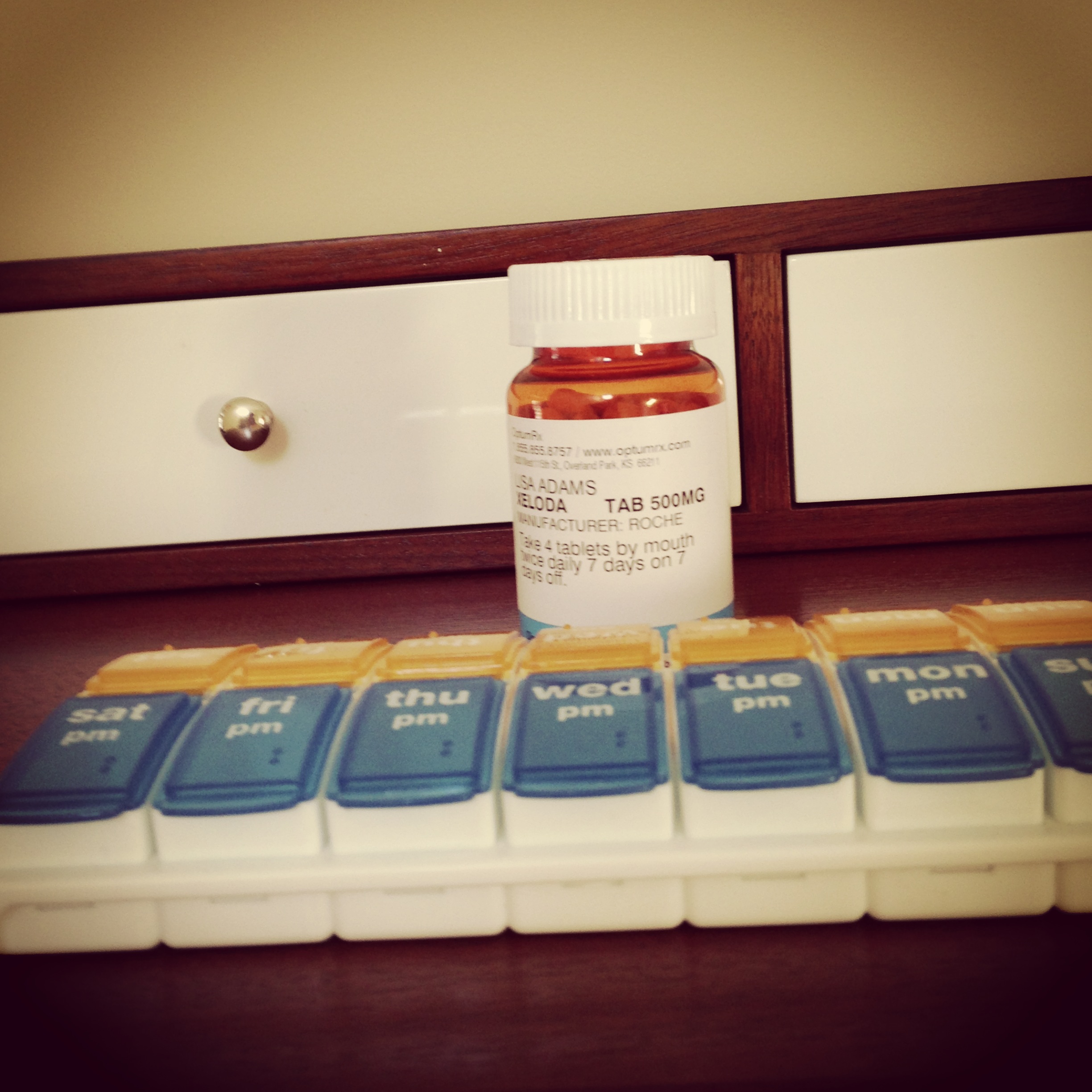
 Link to Twitter