November 2nd, 2013 §
 Finally! After months of writing, recording and mastering, Doug Allen and I have released the song Six Minutes for distribution.
It is on iTunes here or you can get it here via CDBaby.
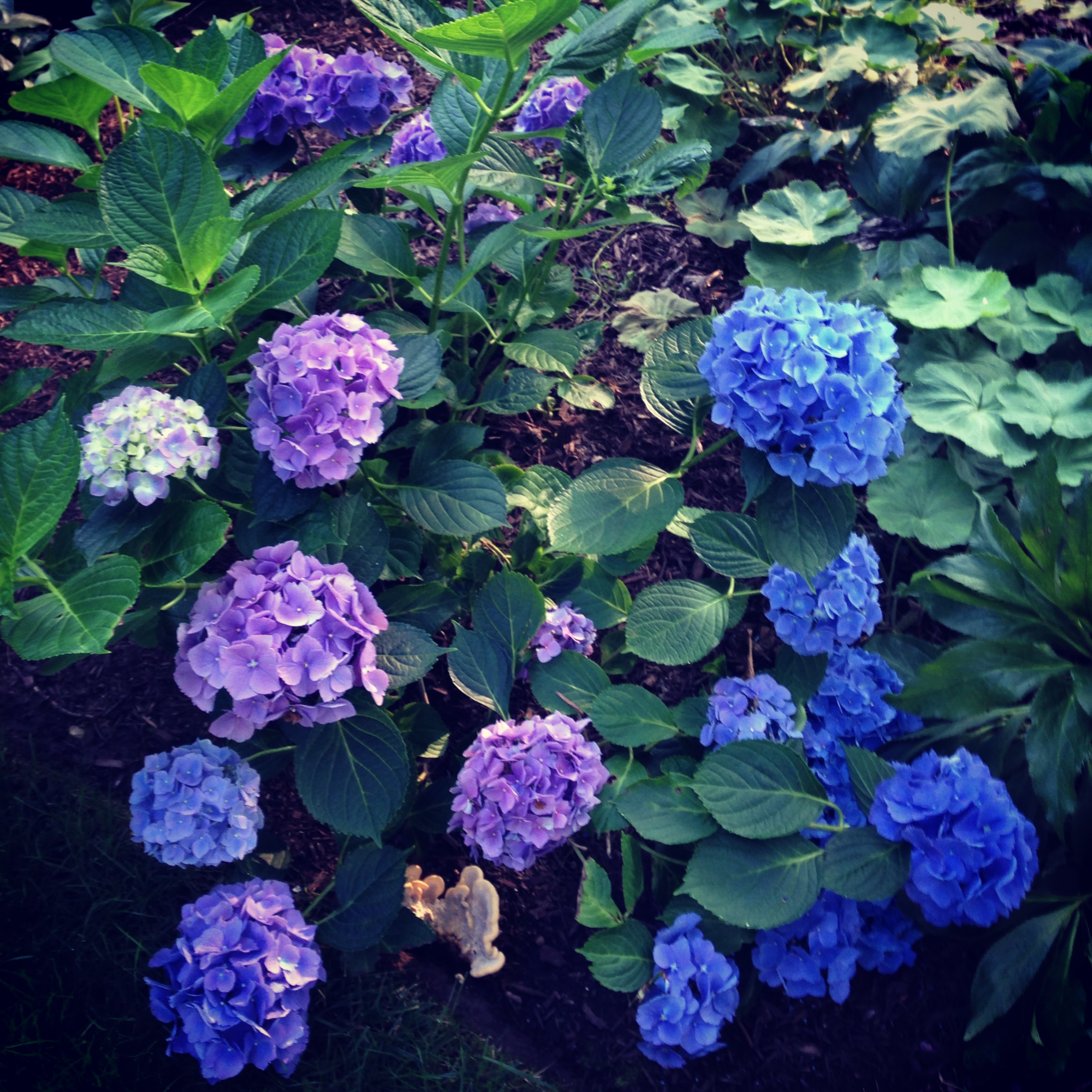
We are really proud of it and grateful to so many people who helped us with it… Donna Bonato at Silver Creative for turning one of my garden photos into the stunning cover art, Dennis Hrbek for his sound work, Anthony Radice for piano and some initial recording tracks, and of course our families and friends for their support along the way.
The background of the song as I wrote it for distribution is this:
I’ve been writing on my blog about my life for a few years and more recently about my diagnosis in 2012 with stage 4 breast cancer (6 years after initial surgery and treatment). Many of the posts I make are more poetic than prose lately. One particular one called “No room for that in this (Six Minutes)” seemed ripe for becoming song lyrics. I’ve never written song lyrics before and don’t even sing or play an instrument. But I did think the words had some potential to tell a good story, something I think is lacking in so much of modern music.
I’m a huge fan of Doug’s personally and professionally. He’s been teaching our son Colin to play guitar for a few years now. We’ve become friends and I love Doug’s sound. After hearing his latest album I knew he was someone who would be able to find the right music. I knew that on occasion he would co-write songs. I asked him, on a lark, if he’d consider working with me on turning the post into a song. He agreed.
We sat at my kitchen table and in that first session I turned that original post into the lyrics for “Six Minutes.” Doug almost immediately got the right feel and sound for the music and it just clicked. We both felt that while the original storyline of the song was about me, the song itself needed to be more universal. That’s why I made the chorus something so approachable, something everyone can relate to.
For me, the six minutes were ones of pain that I wanted to go by quickly. But I regretted that I was wishing my life away in these small increments. What Doug and I knew for sure is that we all can relate to the idea of “taking a trip inside your head” where you just check out during the day. That’s what he and I kept coming back to. Daydreaming, zoning out, whatever it is that helps you take a little break. So the chorus is about that, which is important because those are the words you’re likely to be singing to yourself again and again and need to be able to relate to.
The song came together very easily for us. The words really didn’t change after that first meeting. I think we knew we had the right music for it and the story is now there for sharing.
We hope listeners will enjoy it, we hope it will speak to them. This one is a true collaboration and I’m grateful Doug was able to share my words in a new way. After hearing it hundreds of times now I still find myself singing the chorus again and again at moments throughout the day.
You might enjoy seeing that original post and what the lyrics became in the final version…
Six Minutes
The clock says it’s been six minutes now,
I’m glad that they have passed,
Then I realize I’ve wasted them:
Six minutes gone too fast.
I take a trip inside my head,
I don’t know where I go.
Somewhere else,
Anywhere else,
Far from things I know.
I try to forget for a moment now,
Focus on a spot on the wall,
I lose myself in the emptiness,
Such a painfully long way to fall.
So I take a trip inside my head,
I don’t know where I go.
Somewhere else,
Anywhere else,
Far from things I know.
I find myself in silence,
Tuning out the noise,
No room for anything,
But him, my girl and the boys.
And when I’m gone,
Just no way around it,
So many things they will miss
‘Cause when it comes to being fair,
There’s no room for that in this.
Gonna take a trip inside my head,
I don’t know where I’m gonna go,
Somewhere else,
Anywhere else,
Far from things I know…
August 20th, 2013 §
This is the last week of summer before school begins.
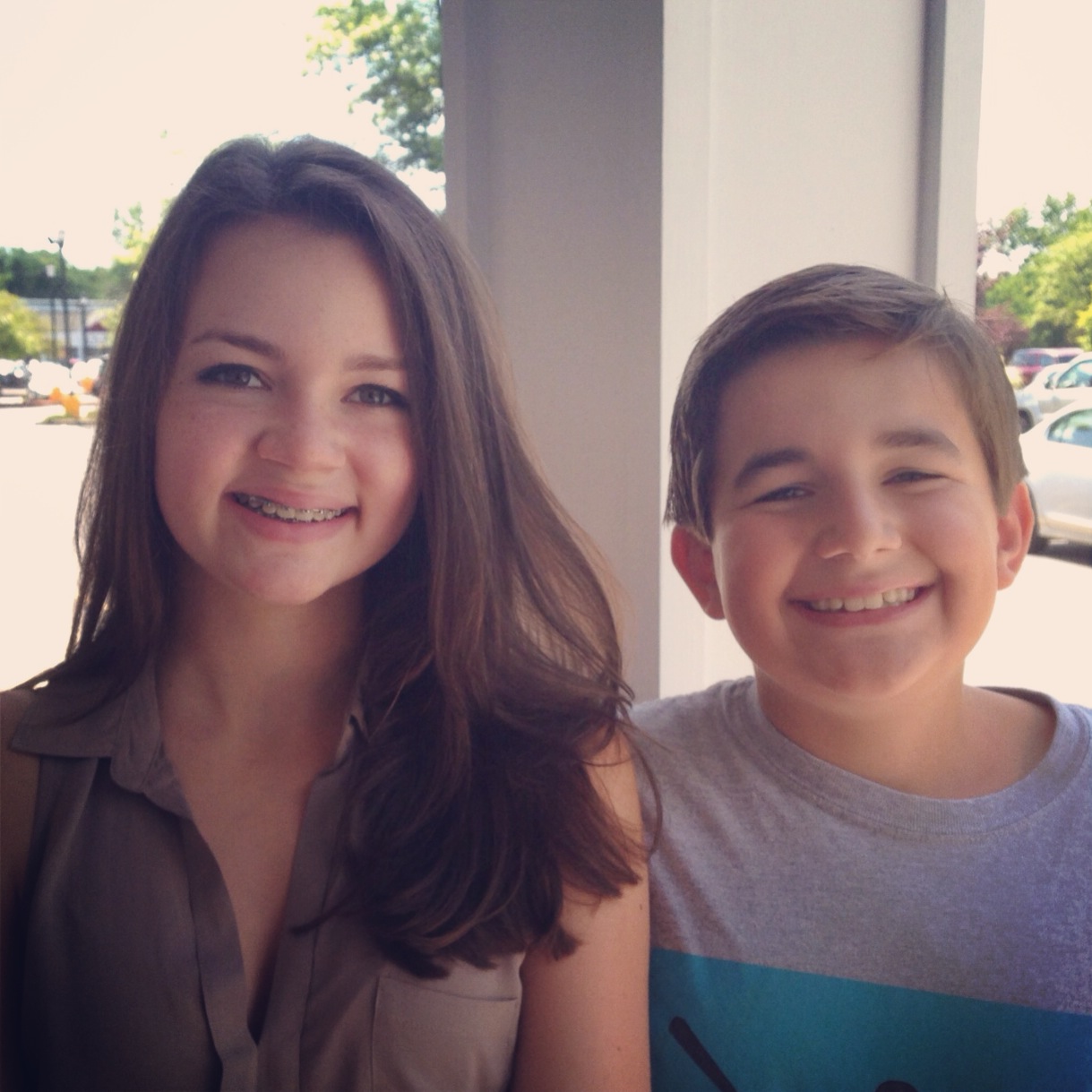
 This summer was a big one for us. Youngest Tristan went off to sleepaway camp for one week and loved it so much that in the end, he stayed for a month. Paige and Colin returned to camp as seasoned veterans and had a wonderful time in their home away from home. All learned new skills and made new friends. Paige and Colin’s constant banter of camp stories at the dinner table are now supplemented by Tristan’s own stories.
I’m so pleased they could be in a place where they could just be kids, not worried about me, free to be carefree and happy. It is my gift to let them go, to not keep them here for my own needs. While I want to spend as much time with them as I can, I know that this is what they all needed to do this year.
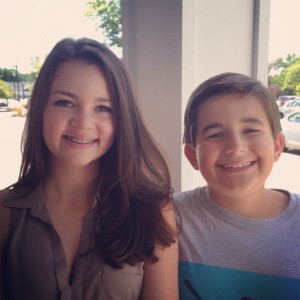 I sit back and smile now, loving that they all have a common reference point of their weeks at camp. Despite the eight year age gap they all find laughs and joy in their summer adventures. They look older to me, of course. And while others are sad about the passage of time and their children growing older and being independent, I say again that I cheer it.
You see, my job now is to prepare them for life without me. My goal is to show them how to accept the help of others but not be reliant on it. I choose to show them every day that there is determination and nobility in facing what life throws you. You may not be able to change the final outcome, but you can change what you do to be ready for it. The strongest way of teaching this right now is by living my life deliberately, making choices and showing them the best I can be. This doesn’t mean denial. Nor does it mean I don’t lose my temper or raise my voice or fall apart sometimes. To be emotionally numb or invariable in my response to what is happening is not healthy. I try to show them that expressing what they feel is a better option. Emotions of anger and sadness and grief and fear are fine to have. It’s beneficial to talk about them, but dwelling on them won’t make things better. Acknowledging their reality, their truth, their basis is what’s needed.
As I always say when I get bad medical test results: a short pity party is good. Then you have to pick yourself up and move on.
 It has been almost eleven months since my diagnosis of stage IV breast cancer, and there isn’t a day that goes by that is free from concern. I notice myself being more and more affected by the daily chemotherapy, feeling more fragile, more vulnerable. I have already had one bad respiratory illness this summer, and I worry about the school year and all of the potential colds and infections that will be transmitted. I don’t want to think about the ways cancer affects my daily life, but I must. The decisions I make about activities, treatments, and chemo all directly affect my life… both in length and quality.
I push myself to do the most I can. I try to do all of the little things that add up to a full day: school supply shopping, back to school haircuts, camp laundry, new shoes, sports registrations, and walking the dog. I also request meetings with school administrators, coaches, and anyone new in my children’s lives for this fall that need to know how my kids’ home life differs from the one they had a year ago.
I’m a planner. I take comfort in routine, the familiar, the predictable. Unfortunately, those are now removed from my life forever. Yes, I know life always tosses everyone curveballs. That’s what life is. But I experience it in a whole new way. I have no way of saying life will ever return to “normal” or even a “new normal.” There will not be a “better”… I am not “sick” in that I cannot recover.
I still feel the drive to help, to counsel, to educate. But am finding it more difficult. I hate saying no but know I will need to start saying this more. In-person interaction is very difficult for me. While no one would know it to look at me, social interaction is extremely draining these days. I try to minimize contact knowing that when I am in public I am under scrutiny. People want to know how I am. They want to be reassured. They look at me for clues as to how things are. There is no reassurance I can offer. This is a disease of progression to the end, a story that will not have a happy ending.
I want the story that I am living to be a good one, to the highest degree it can be. I want the story for my family and friends to be one full of love, memories, and devotion. These people are the center of my world.
I want the story to be different from what it has been, different from what it will be.
As a writer I am used to editing. Revising. Changing what I don’t like.
But I can’t edit this story.
I can’t start it all again.
And so I write through it.
The only way out is through.
But this one… well, this one is quite simply going to have a sad ending, as many stories do.
May 10th, 2013 §
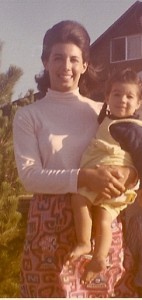 My mother, Dr. Rita Bonchek, is a psychologist who specializes in grief and loss. A career discussing death and dying, however, was insufficient preparation for hearing the words, “Mom, I have metastatic breast cancer.”
Mom and I have reacted very differently to the news of my stage IV cancer. I was online within days writing posts about the steps I was taking. I wrote immediately about how to help children in the days following a diagnosis like mine. As my readers know, I’m very open about this part of my life.
My mother, on the other hand, is much more private. She would never write a blog the way I do. She didn’t want to share this news with people; she wasn’t ready to talk about it. I respect her decision but that approach doesn’t work for me. Sometimes our different ways of thinking lead to disagreements. Despite our differences we always support each other.
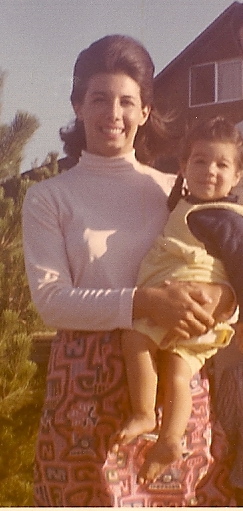
I thought it might be helpful for readers to hear what she has to say about reading my posts. Some of us with cancer choose to be very public with our daily lives but our parents are often forgotten in the discussion. I think the timing of Mother’s Day weekend is perfect to share this piece. I love you, Mom (photo at left: 1970).
…………………………………….
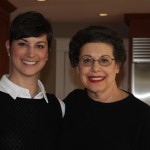 I am Lisa’s proud mother and I have followed her blog from its first day. As her mother, I read her blog from a unique point of view, and I want to share my perspective with you.
Those of you who are reading this blog follow Lisa and her incredible writing. It is her understanding of human behavior, her expression of feelings of her heart and thoughts of her mind that make so many people want another blog from her as soon as the one being read is finished.
Yet, as the mother of this outstanding-in-all-aspects daughter, my reading of Lisa’s blogposts is complicated because each piece contains an extra layer of heart-wrenching pain for me. Lisa’s blog is a precious sharing of her everyday life, of medical explanation and analysis of each and every test result, of measured consideration of her hopes, fears, etc. Parents rarely get the opportunity to get “up close and personal” to this extent with a child. As Lisa’s mother, knowing her innermost thoughts is a gift and a curse.
If you (or anyone else but Lisa) were writing about a life journey with a cancer diagnosis, I could handle reading about the physical assaults on your body and the emotional assaults on your psyche because I would be more objective and not involved in your everyday life. I could read your blog, feel empathy and sorrow for the diagnosis, but step away from it. However, I am enmeshed in Lisa’s writing.
Lisa’s father stopped having the blogposts sent directly to his e-mail because he was often caught unaware with heavy emotional subject matter arriving at inappropriate times. He now accesses the blogposts only when he feels emotionally prepared for whatever he may find.
While this would also be a very reasonable decision for me to make, I have the ambivalent feelings of wanting to be close and share every moment of what Lisa thinks and feels at that moment versus retreating from the declarations of how her life is now and her fears for the future for her and the family – her family and my family.
Lisa and I share the personality trait of always wanting to know the truth so we are as well prepared for the worst as we can be. Lisa and I promised each other that we would never withhold any information to protect each other. The honesty Lisa promised me is the honesty she has promised to all of you, her readers.
On one level, her blog reveals to me everything I want to know, but on another level what I unconsciously don’t want to know. This emotional see-saw of wanting to read it but not wanting to read it is a decision that I must make each time a new blog-post appears in my inbox.
Why is this “to know or not to know” decision so difficult for me? When I read Lisa’s writings, I imagine the sub-text that she does not reveal: how she is managing to keep her family’s lives as “normal” (whatever that means) as possible.
Lisa is, as most mothers are, the hub of her family’s life. When Lisa writes in a blog-post that she was very tired and rested for hours, I know that her closed bedroom door makes every family member who sees that closed door go into overdrive with founded or unfounded concern and fear.
Lisa and I share the goals to make the most of each day and to cherish and to love one another. These are life affirmations within our control when so much of life is out of our control. Share our goals as you and I, Lisa’s readers, benefit from Lisa’s greatest gift to us: who she is and how she lives her life, in sickness and in health.
March 19th, 2013 §
Alone.
Willing myself to recharge, gather strength, get ready, be stronger.
Chemo starts again.
One more week.
My relationship status with chemo on Facebook would read: It’s complicated.
Chemo keeps me alive.
Buys me time.
Gives me days, weeks, months.
But
Makes me sick.
Causes my hands and feet to numb, get tender, peel, redden, swell, ache, burn, throb.
Tires me, sickens me, weakens me.
How can I hate that which gives me hope?
I check in with friends on Twitter.
I see photos of beautiful people in watercolor places doing things I want to be doing.
I am jealous.
The light hits her hair so perfectly, magically, like a mermaid.
It makes me cry.
I literally weep at the beauty of a friend,
wishing I could be with her,
with them,
anywhere but here.
I had a dream of being at Sirenland.
I set a goal, but it has come and gone, unfulfilled.
I cannot decide if stage IV means I must downsize my dreams or shoot for the moon.
Is there nothing left to lose or simply nothing left?
It is late night in Positano now.
They have done their work for the day.
They have their late European dinner, their drinks, their views of the water shimmering at the base of the hill.
I was supposed to go on a trip there once, coincidentally.
A fifteen year anniversary present and celebration of finishing cancer surgeries and chemo six years ago.
Plans were made, everything was set.
Four days before planned departure, our (then) five year old son’s appendix ruptured.
Nine days of round the clock hospital bedside vigils followed.
No trip. No rebooking. No celebration.
But no regrets at being where our son needed us to be.
Wistful I remain.
Unsure I will see that place now.
I envy those who are there.
I wonder if they know.
How I envy them.
February 4th, 2013 §
I awaken to the sound of the snowplow scraping,
Metal on asphalt, grotesque.
I didn’t move last night.
Soft bedding, peaceful house, drained body.
I lay in bed not wanting to start the day.
Friends will gather,
We will share and learn and grow.
But before we do,
when we eat,
I know I must dive headlong into the abyss.
My breakfast will come with a side dish of chemo,
A higher dose than last time.
It’s time to begin again.
Back to reality some will say when we part.
I never left it behind.
January 6th, 2013 §
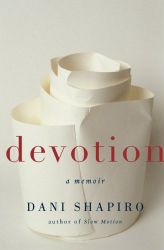
I love books. I love reading. I love the power of words to transport us, change us, connect us.
One author I admire in every way — personally and professionally — is Dani Shapiro. This post from 2011 doesn’t talk about the details of her latest book Devotion, but I still want to repost it not only to encourage you to read the book for yourself but also because I think it’s intersting to think about how we interact with what we read. Dani has a new book coming out called Still Writing. There isn’t anyone to me who can capture the art of writing the way she can.
…………………………….
I’m not the kind of person who reads books twice. My husband wears down the fibers in the covers of some of his books, corners frayed by his hands as he holds and bends the written pages. Me? I barely have enough time to read a book once. My attention span is short, my free time small. With three children and a house to take care of there just doesn’t seem to be time to do everything I want.
This morning I awoke knowing what I wanted to do. I wanted to re-read sections of Dani Shapiro‘s second memoir, Devotion. About twenty pages into it I realized I was literally itching to do something: write in the book. I hadn’t allowed myself to do that the first time. Lately I had felt that my books (especially ones written by people I knew in person or on Twitter, even moreso if signed by the author) should remain pristine. I have eschewed e-readers in every form for this very reason… typing notes in margins is not as satisfying as using colored ink to have my interactive conversation with the author. Sometimes exclamation points or “YES!” will interrupt the creamy expanse of the margin, but more often than that my graduate school training has led me to issue challenges to the author. Questions that start with “But what about…” or the challenging, “Does not take into account…” are what you will find in my books. As I try to process what the author says I imagine I am conversing with them. And, in fact, I am; writers write to start a conversation with the reader. If all the reader does is absorb without processing I think the author might be disappointed.
As I started Dani’s book this morning I realized the pristine condition of my hardcover was getting in my way. I needed to interact with it to really get the full benefit of her words. It seems the right thing to do. Only pages in to this second time through, I was already finding questions I want to ask her. I was, after all, a different person by my second reading. I was coming to the book with more experiences, different concerns and thoughts than I previously had. I came to the book with many of the same questions Dani herself was seeking to answer when she started writing. I realized that in the same way she had made sense of what happened to her by writing, I needed to do that too. Writing in the margins was my microcosm of that experience; without “talking back” I had missed a lot of the beauty and significance of her words.
I already feel myself digesting her words in a different way. The same way I cannot experience major events in my life without writing I realized this morning I cannot make sense of words without reacting. As my memory has declined and my mental capacities have suffered over the past few years I can’t rely on them to retain the memories of the sentences and paragraphs that have spoken to me. I need to wrestle with them, tease them out, formulate responses.
My book will be riddled with ink by the time I am done. But I realized today that is precisely as it should be. I think Dani would like that. I think it means I’m learning.
November 24th, 2012 §
I can see how isolating metastatic cancer can be already.
It has become hard for me to be around other people.
I find myself hiding as much as possible.
When I am in the company of others my mind wanders.
I can’t focus. I feel the need to retreat.
For the time being I just can’t relate to others’ lives which only 6 weeks ago were so similar to my own. Now… we are a world apart.
It’s not their fault. It’s just that circumstances make it so that I am selfish. I try to conserve my energy as much as I can.
Already I can see relationships suffering. There is a fine line between giving space and putting distance. Some are already dropping away, and we’ve only just begun. Others have risen to the occasion and helped more than I could have dreamed. Only true friendships are going to make it under these circumstances. Sometimes the isolation comes from being shut out. Sometimes it comes from locking yourself away.
Phone calls go unanswered, emails often do too. Thank you notes don’t always get written, social commitments get canceled or never scheduled in the first place.
I know that people cannot truly understand.
I don’t want a support group right now because metastatic cancer has a wide range of outcomes. I don’t know if I will be in a rapidly progressing group or not. I don’t know whom to look to that is “like me.” There is no way to know which group I will be in, who my peers are.
Right now I am very sensitive to death, to pain, to suffering. It’s very hard for me to see right now. I’m too raw. I just don’t think I’m ready for a group. But I won’t say I never will be. I need to talk to my oncologists about whether they have patients like me.
It’s difficult to listen to people complain about trivial things, normal things, things I was complaining about two months ago.
Now those complaints just annoy me, or make me sad.
I want to scream, “I want your problems!” And I do. I want that life back. I want to turn back the clock. I just don’t want it to be this right now.
One of the things that bothers me the most about this disease is the knowledge that the way I feel right now is the best I will ever feel for the rest of my life. It’s only going to get worse. That thought terrifies me.
When you feel crappy you want the time to go faster. You just want to get through it.
The problem is that what you may not have is time.
It’s a conundrum. You want the time to pass, but this is the only time you have.
I know so many people say, “No one ever knows how much time they have. You have to make the most of every day, of every moment.” I know that’s true. But the knowledge that there is something identifiable in your body that is a threat, is most likely to be that which kills you, bears a different weight. Of course the doctors don’t know exactly how much time it will be. There is no crystal ball.
Everyone tells me the stories of friends and relatives who were told they only had months and years later they are still alive and doing okay. I am told these stories every single day. I get it. I do. And I love them, they give me hope. But often those people’s diagnoses and particulars bear no relation to mine. Additionally, there are also stories of the people in the other group, the ones who thought they had years and didn’t. People probably have the good sense not to tell me those stories. But they are out there. It’s not that I focus on the negative. It’s not that I necessarily think I will be in that group. But anything is possible. On both sides.
The part that scares me: I’m only at the beginning. I hope that I will get stronger, gain acceptance as I get used to this diagnosis. But I’m not sure about that. I truly believe I could handle this better if I didn’t have so much worry about my children and what effect this will have on them. I wish I could protect them, shield them from this agony.
There are good days and bad days. I must do my best. But being the one everyone is watching takes a toll. Everyone will take their cues from me. I will set the stage for how my friends and family will deal with this: how I handle metastatic cancer matters. I am laying groundwork. I must do it right.
Some days that is an overwhelming task.
“Doing it right” doesn’t mean I have to be positive all the time. Doing it right means I have to be honest. It means I get up each day and do the best I can. For myself, for my husband, for my children, for others who may have cancer and those who will get it. It’s okay to be scared, and angry, and sad, and everything else.
It’s all part of this.
And for me, so is sharing.
November 20th, 2011 §
I am re-posting this piece now that Katie’s book is available in paperback. So many of these questions have been swirling around in my mind (Hmmm, I sound like Herman Cain?) while I try to decide whether to write a book. I think about why I write, what I can contribute, if there is an audience for the things I think about. I do write for you, my readers, and am so thankful you take the time to read what I say. But I also realize that I write for my children.
With the sudden death of my mother-in-law two years ago, I realize that “things left unsaid” are a heartbreaking prospect to me. When I was diagnosed with breast cancer nearly five years ago I made many decisions about treatment with the goal of living as many years as I could to parent my three young children. I chose more aggressive surgeries (including an oophorectomy) because I felt they would give me better odds at not only avoiding a recurrence, but surviving.
I realize as I age that my memory is fickle. I make endless lists of items I need to buy and things I need to do. Similarly, I find I rely on writing down my feelings so that I can look back and accurately remember the emotional experiences I’ve had. I worry that if I don’t, not only with those memories be lost to me, but also they will be lost for my children. In the crazy, hectic life of raising three children there is so much that goes unsaid, not only to the kids, but also to my husband. It’s not the actions of driving to football practice or tennis lessons that make me unique; anyone can do those tasks. It’s the thoughts in my head, the way I express them on the page, that are mine, and mine alone. If I don’t express my thoughts for someone else to read I cannot truly be known.
Most days I think my thoughts get lost. I have them here as an insurance policy of sorts. I write because it is my explanation of who I really am… to my children, to my family, and to my readers.
My discussion of Katie Rosman’s book, originally published June 24, 2010
There comes a point in your life when you realize that your parents are people too. Not just chaffeurs, laundresses, baseball-catchers, etc.– but people. And when that happens, it is a lightbulb moment, a moment in which a parent’s humanity, flaws, and individuality come into focus.
If you are lucky, like I am, you get a window into that world via an adult relationship with your parents. In this domain you start to learn more about them; you see them through the eyes of their friends, their employer, their spouse, and their other children.
Yesterday I sat transfixed reading Katherine Rosman’s book If You Knew Suzy: A Mother, A Daughter, A Reporter’s Notebook cover to cover. The book arrived at noon and at 11:00 last night I shut the back cover and went to sleep. But by the middle of the night I was up again, thinking about it.
I had read an excerpt of the book in a magazine and had already been following Katie on Twitter. I knew this was going to be a powerful book for me, and I was right. Katie is a columnist for The Wall Street Journal and went on a mission to learn about her mother after her mother died (on today’s date in 2005) from lung cancer. In an attempt to construct a completed puzzle of who her mother was, Katie travels around the country to talk with those who knew her mother: a golf caddy, some of her Pilates students, her doctors, and even people who interacted with Suzy via Ebay when she started buying up decorative glass after her diagnosis.
Katie learns a lot about her mother; she is able to round out the picture of who her mother was as a friend, an inspiration, a wife, a mother, a strong and humorous woman with an intense, fighting spirit. These revelations sit amidst the narrative of Katie’s experience watching her mother going through treatment in both Arizona and New York, ultimately dying at home one night while Katie and some family members are asleep in another room.
I teared up many times during my afternoon getting to know not only Suzy, but also Katie and her sister Lizzie. There were so many parts of the book that affected me. The main themes that really had the mental gears going were those of fear, regret, control, and wonder.
I fear that what happened to Suzy will happen to me:
My cancer will return.
I will have to leave the ones I love.
I will go “unknown.”
My children and my spouse will have to care for me.
My needs will impinge on their worlds.
The day-to-day caretaking will overshadow my life, and who I was.
I will die before I have done all that I want to do, see all that I want to see.
As I read the book I realized the tribute Katie has created to her mother. As a mother of three children myself, I am so sad that Suzy did not live to see this accomplishment (of course, it was Suzy’s death that spurred the project, so it is an inherent Catch-22). Suzy loved to brag about Katie’s accomplishments; I can only imagine if she could have walked around her daily life bragging that her daughter had written a book about her… and a loving one at that.
Rosman has not been without critics as she went on this fact-finding mission in true reporter-style. One dinner party guest she talked with said, ” … you really have no way of knowing what, if anything, any of your discoveries signify.” True: I wondered as others have, where Suzy’s dearest friends were… but where is the mystery in that? To me, Rosman’s book is “significant” (in the words of the guest) because it shows how it is often those with whom we are only tangentially connected, those with whom we may have a unidimensional relationship (a golf caddy, an Ebay seller, a Pilates student) may be the ones we confide in the most. For example, while Katie was researching, she found that her mother had talked with relative strangers about her fear of dying, but rarely (if ever) had extended conversations about the topic with her own children.
It’s precisely the fact that some people find it easier to tell the stranger next to them on the airplane things that they conceal from their own family that makes Katie’s story so accessible. What do her discoveries signify? For me it was less about the details Katie learned about her mother. For me, the story of her mother’s death, the process of dying, the resilient spirit that refuses to give in, the ways in which our health care system and doctors think about and react to patients’ physical and emotional needs– all of these are significant. The things left unsaid as a woman dies of cancer, the people she leaves behind who mourn her loss, the way one person can affect the lives of others in a unique way… these are things that are “significant.”
I woke up in the middle of the night thinking about the book. My head spun with all of the emotions it raised in me. I think that part of the reason writing has become so important to me is precisely because I do realize that we can die at any moment. And if you don’t have an author in the family who might undertake an enormous project as Katie did, where will that explanation of who you were — what you thought — come from?
Is my writing an extension of my desire to control things when cancer has taken away so much of this ability?
Is part of the reason I write an attempt to document my thoughts, my perspective for after I am gone… am I, in a smaller way, trying to do for myself what Katie did for her mother?
If I don’t do it, who will do it for me?
And in my odd way of thinking, am I trying to save anyone the considerable effort of having to work to figure out who I was– deep down?
My blog has the title “You’d Never Know”: I am telling you things about myself, my worldview, and my life, that you would otherwise have no knowledge of. One of the things people say to me all the time is, “You’d never know to look at you that you had cancer.” After hearing this comment repeatedly I realized that much of our lives are like that:
If we don’t tell someone — share our feelings and experiences — are our lives the proverbial trees falling (unheard) in the forest?
What if you die without being truly understood?
Would that be a life wasted?
If you don’t say things for yourself can you count on others to express them for you?
Further, can anyone really know anyone else in her entirety?
After a loved one dies, there always seems to be at least one mystery person: an individual contacts the family by email, phone, or in person to say, “I knew your loved one: this is how I knew her, this is what I remember about her, and this is what she meant to me.” I know that this happened when Barbara (my beloved mother-in-law) died suddenly last fall. There are stories to be told, memories to be shared. The living gain knowledge about their loved one. Most often, I think families find these insights comforting and informative.
Katie did the work: she’s made a tribute to her mother that will endure not only in its documentation of the person her mother was (and she was quite a character!) but also in sharing her with all of us. Even after her death, Suzy has the lovely ability to inspire, to entertain, to be present.
I could talk more about the book, Katie’s wonderful writing, and cancer, but I would rather you read it for yourself. I’m still processing it all, making sense of this disease and how it affects families, and being sad that Katie’s children didn’t get to know their grandmother. Katie did have the joy of telling her mother she was pregnant with her first child, but Suzy did not live long enough to see her grandson born. In a heartwarming gesture, Katie names her son Ariel, derived from Suzy’s Hebrew name Ariella Chaya.
I thank Katie for sharing her mother with me, with us. As a writer I learned a lot from reading this book. I’ve said many times recently that “we don’t need another memoir.” I was wrong. That’s like saying, “I don’t need to meet anyone new. I don’t need another friend.” Truth is, there are many special people. Katie and Suzy Rosman are two of them.
April 9th, 2011 §
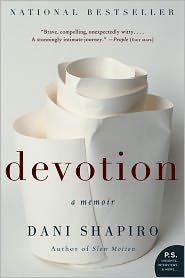 I’m not the kind of person who reads books twice. My husband wears down the fibers in the covers of some of his books, corners frayed by his hands as he holds and bends the written pages. Me? I barely have enough time to read a book once. My attention span is short, my free time small. With three children and a house to take care of there just doesn’t seem to be time to do everything I want.
This morning I awoke knowing what I wanted to do. I wanted to re-read sections of Dani Shapiro‘s second memoir, Devotion. About twenty pages into it I realized I was literally itching to do something: write in the book. I hadn’t allowed myself to do that the first time. Lately I had felt that my books (especially ones written by people I knew in person or on Twitter, even moreso if signed by the author) should remain pristine. I have eschewed e-readers in every form for this very reason… typing notes in margins is not as satisfying as using colored ink to have my interactive conversation with the author. Sometimes exclamation points or “YES!” will interrupt the creamy expanse of the margin, but more often than that my graduate school training has led me to issue challenges to the author. Questions that start with “But what about…” or the challenging, “Does not take into account…” are what you will find in my books. As I try to process what the author says I imagine I am conversing with them. And, in fact, I am; writers write to start a conversation with the reader. If all the reader does is absorb without processing I think the author might be disappointed.
As I started Dani’s book this morning I realized the pristine condition of my hardcover was getting in my way. I needed to interact with it to really get the full benefit of her words. It seems the right thing to do. Only pages in to this second time through, I was already finding questions I want to ask her. I was, after all, a different person by my second reading. I was coming to the book with more experiences, different concerns and thoughts than I previously had. I came to the book with many of the same questions Dani herself was seeking to answer when she started writing. I realized that in the same way she had made sense of what happened to her by writing, I needed to do that too. Writing in the margins was my microcosm of that experience; without “talking back” I had missed a lot of the beauty and significance of her words.
I already feel myself digesting her words in a different way. The same way I cannot experience major events in my life without writing I realized this morning I cannot make sense of words without reacting. As my memory has declined and my mental capacities have suffered over the past few years I can’t rely on them to retain the memories of the sentences and paragraphs that have spoken to me. I need to wrestle with them, tease them out, formulate responses.
My book will be riddled with ink by the time I am done. But I realized today that is precisely as it should be. I think Dani would like that. I think it means I’m learning.
December 15th, 2010 §
Some of my friends read my blog. Some of them don’t.
My mother reads regularly. My father only reads if I send him a specific link or if my mother tells him about a post. He says it’s often too hard for him to read my posts– they are too raw, too personal. It’s a window into my suffering and he doesn’t want to see me experience so much pain.
Some of my friends find it educational to read about the experiences I’ve had whether it’s to learn about me or learn about the subjects I write about. Some friends find it an easy way to keep up with me in the midst of our busy, family-filled, hectic lives. Friends that live far away subscribe or check in every so often to catch up on how I am and what issues are the current focus of my attention.
But what about those who don’t read the blog at all? I have many friends who don’t. There are many moms I see on a daily basis that don’t even know I have been writing here for 3 years.
One of my closest friends said she almost never reads it because she wants to hear it all from me in person. She wants the opportunity to hear about my thoughts and activities without having to learn by reading on a screen. To her, it’s almost like snooping on my life when she would rather knock on the front door and come in for a visit.
For other people, I think it’s just not their cup of tea; my writing style, subject matter, or format just aren’t appealing. They might like me, they just don’t like this.
There are other explanations, of course, but I am interested to hear from those of you who have blogs: do your friends and family read it? Do they comment to you about it/bring the topics up in conversation? Are your feelings hurt if friends don’t read your work? And does your spouse or partner read your posts? Does he/she comment? Bring it up at the dinner table?
I can’t wait to hear your thoughts on this topic.

 Finally! After months of writing, recording and mastering, Doug Allen and I have released the song Six Minutes for distribution.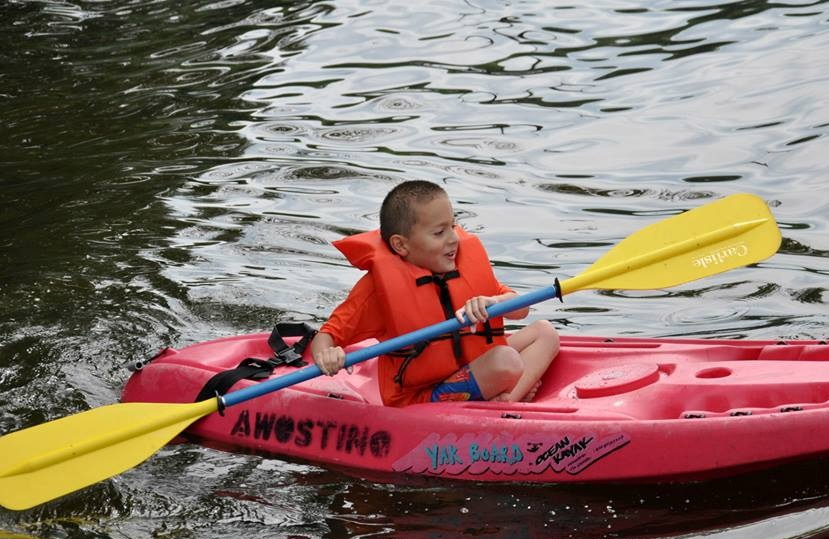

 Link to Twitter